

an
on / at
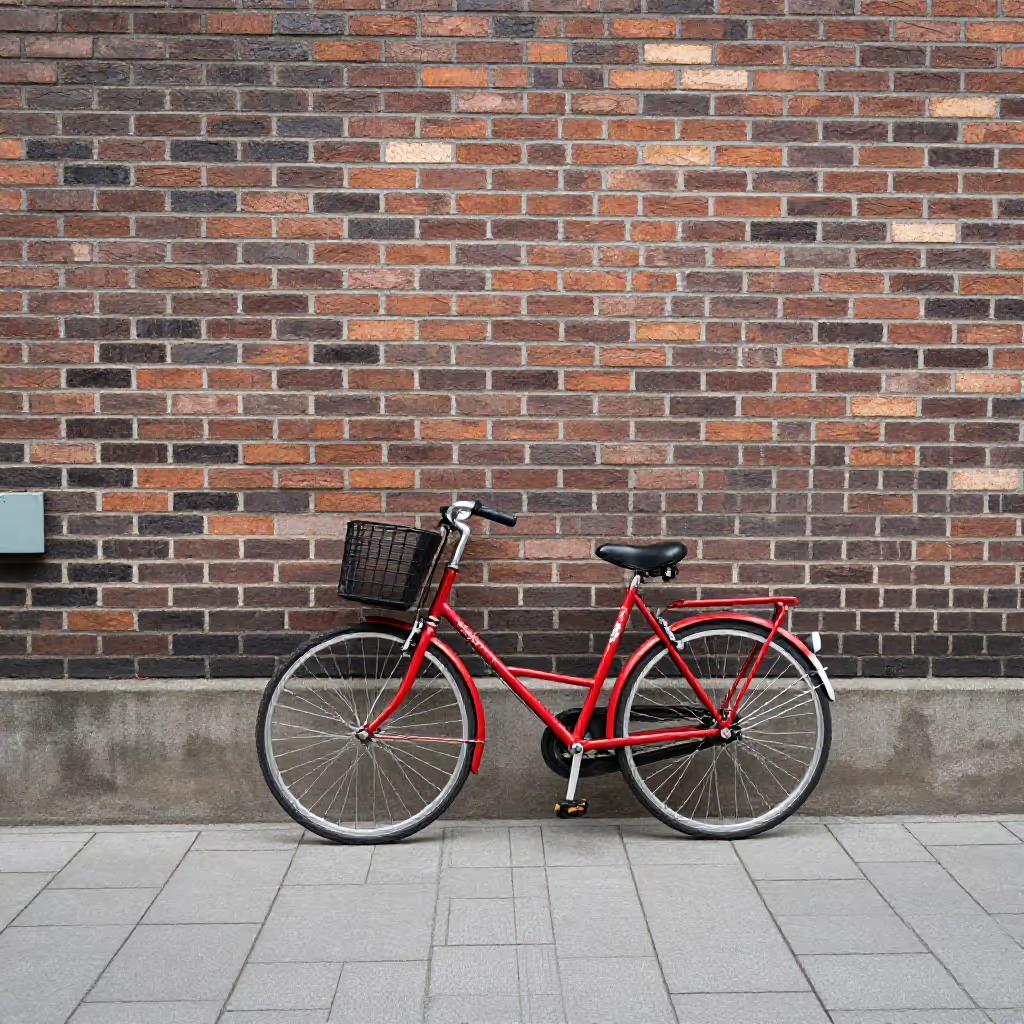
Indicates a position on a vertical surface or at a boundary (e.g., water, edge). Answers 'Wo?' (where?) and is used with the dative.
EXAMPLE
Das Bild hängt an der Wand.
The picture is hanging on the wall.
at / on
Loading your saved state.
on / at
Indicates a position on a vertical surface or at a boundary (e.g., water, edge). Answers 'Wo?' (where?) and is used with the dative.
Das Bild hängt an der Wand.
The picture is hanging on the wall.
to / against
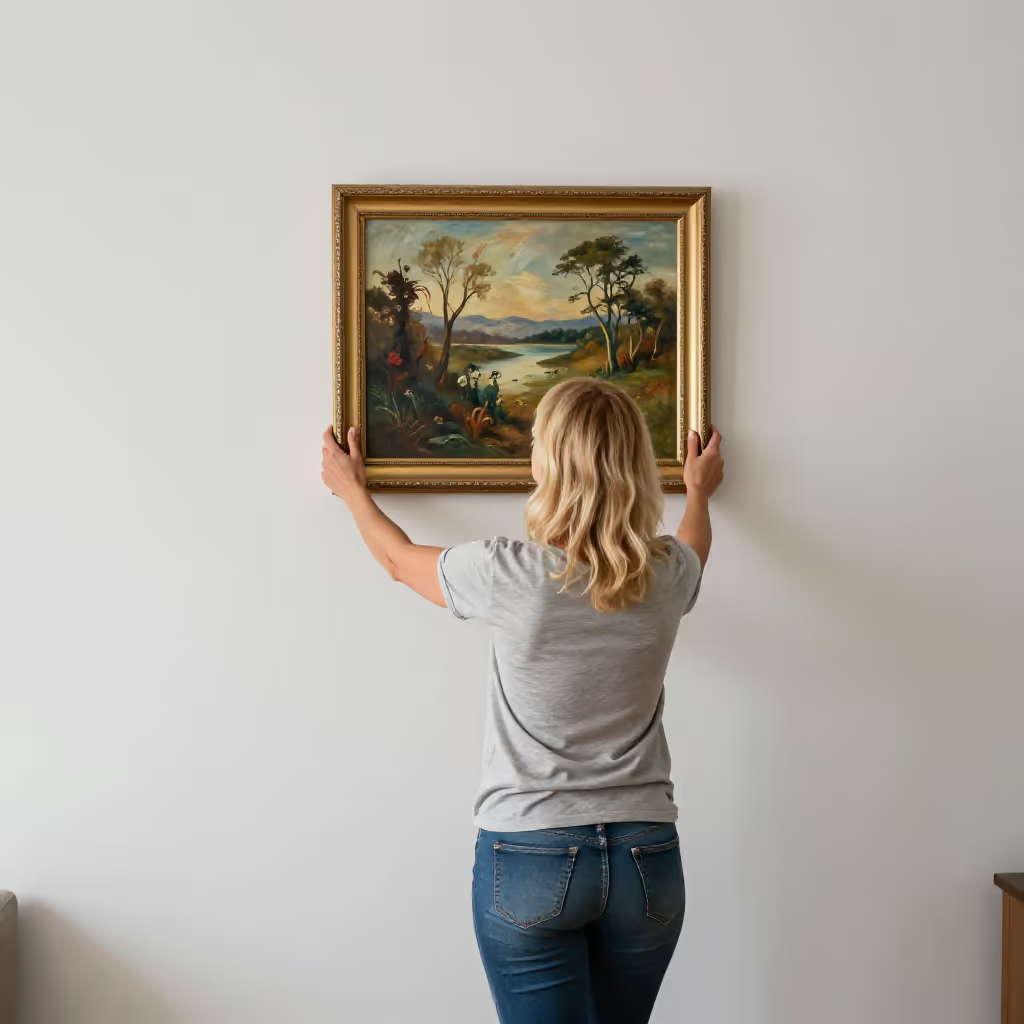
Indicates movement toward a vertical surface or boundary. Answers 'Wohin?' (where to?) and is used with the accusative.
Stell den Stuhl bitte direkt an das Fenster.
Please put the chair directly by the window.
on
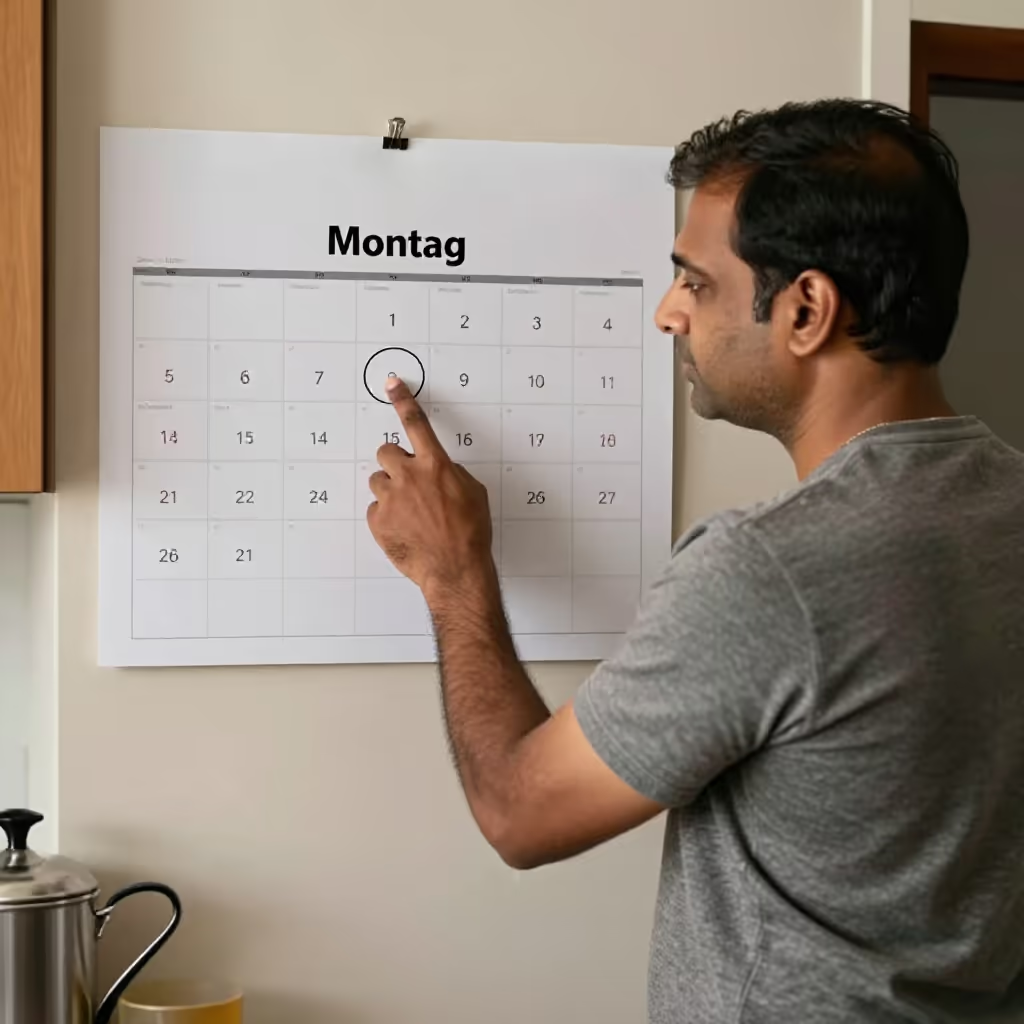
Used for time expressions such as days, times of day, and dates. It is usually contracted to 'am'.
Am Mittwoch habe ich einen Zahnarzttermin.
On Wednesday I have a dentist appointment.
of / about
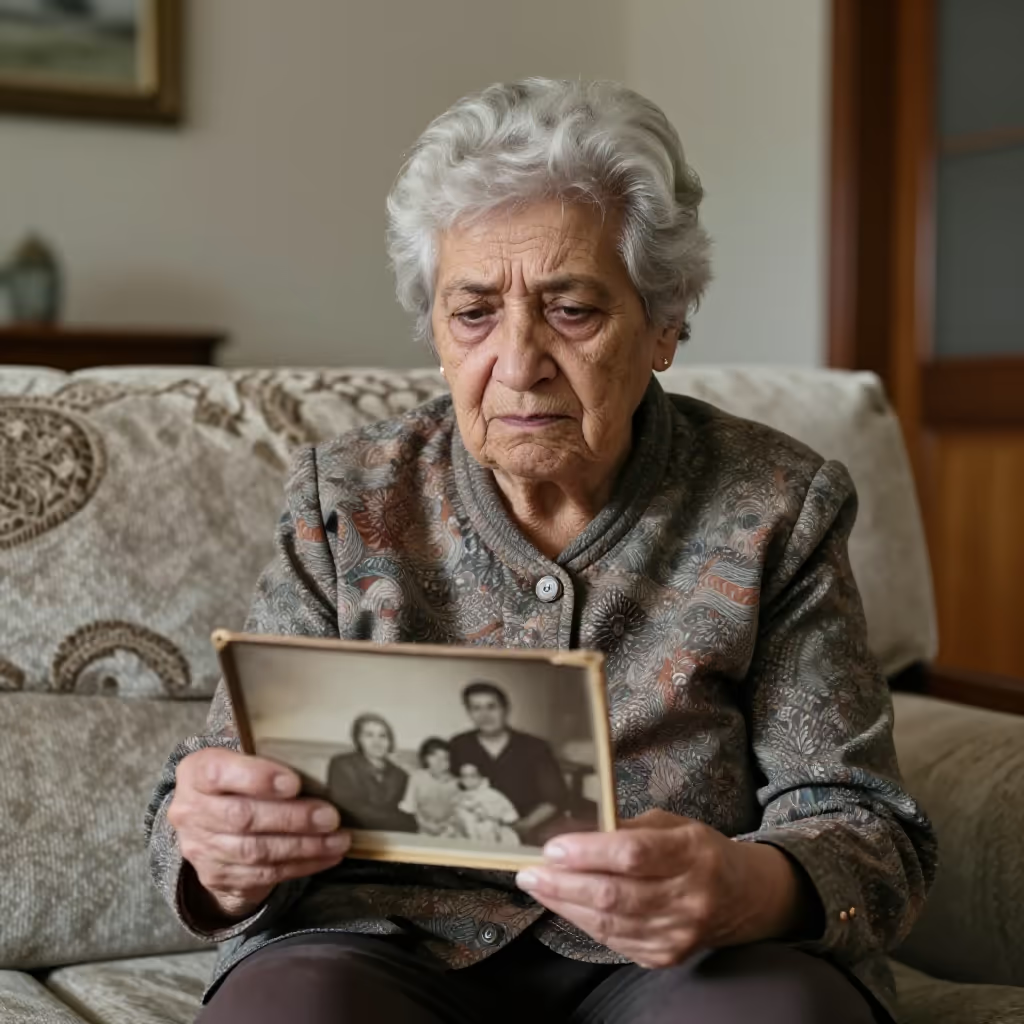
Part of fixed verb combinations that express a mental or emotional connection (e.g., denken an, sich erinnern an, glauben an).
Ich muss ständig an die schöne Reise denken.
I have to keep thinking about the beautiful trip.

on
Used as an adverb and means 'switched on'.
Warum ist das Licht im Badezimmer noch an?
Why is the light in the bathroom still on?

from / in
Part of fixed verb combinations that describe participation or a condition (e.g., teilnehmen an, leiden an, sterben an).
Er leidet an einer schweren Grippe.
He is suffering from a severe flu.
'An' is a two-way preposition. It is used with the dative to describe a location (question: 'Wo?' — where?), and with the accusative to indicate a direction (question: 'Wohin?' — where to?).
Die Jacke hängt an der Garderobe. (Wo? -> Dativ)
The jacket is hanging on the coat rack. (Where? -> dative)
'An' is often contracted with the article into one word. 'An dem' becomes 'am', and 'an das' becomes 'ans'. These short forms are very common in both spoken and written language.
Wir treffen uns am Bahnhof.
We're meeting at the train station.
The preposition 'an' is typically used for places on vertical surfaces (e.g., wall, door, board) or at boundaries (e.g., river, sea, window, edge).
Der Zettel klebt am Kühlschrank.
The note is stuck on the fridge.
For time expressions, 'an' (usually as 'am') is used for days of the week, dates, and times of day (except 'in der Nacht' — at night). Typical examples are 'am Montag' (on Monday), 'am Abend' (in the evening), or 'am 25. Dezember' (on December 25).
Am Wochenende habe ich frei.
I have the weekend off.
Many verbs that express a mental connection have a fixed construction with 'an' + accusative. Important examples are 'denken an' (to think of/about), 'sich erinnern an' (to remember), 'glauben an' (to believe in), and 'sich gewöhnen an' (to get used to).
Sie erinnert sich gern an ihre Kindheit.
She fondly remembers her childhood.
Some verbs are fixed with 'an' + dative. These include 'teilnehmen an' (to participate in), 'leiden an' (to suffer from), 'sterben an' (to die of/from), and 'zweifeln an' (to doubt). This often involves participation or causes.
Möchtest du am Wettbewerb teilnehmen?
Would you like to participate in the competition?
As an adverb or as part of a separable verb, 'an' means something like 'eingeschaltet' (switched on). It is the opposite of 'aus' (off).
Bitte lass das Radio nicht die ganze Zeit an.
Please don't leave the radio on the whole time.
in
With the verb glauben, German uses an when a person or idea is the target of belief. in can appear in a similar meaning area after a noun such as Vertrauen, but not directly after glauben. The fixed combination determines the choice here.

Nora glaubt an ihre Ärztin.
Nora believes in her doctor.
Nora setzt großes Vertrauen in ihre Ärztin.
Nora places great trust in her doctor.