

auf
on
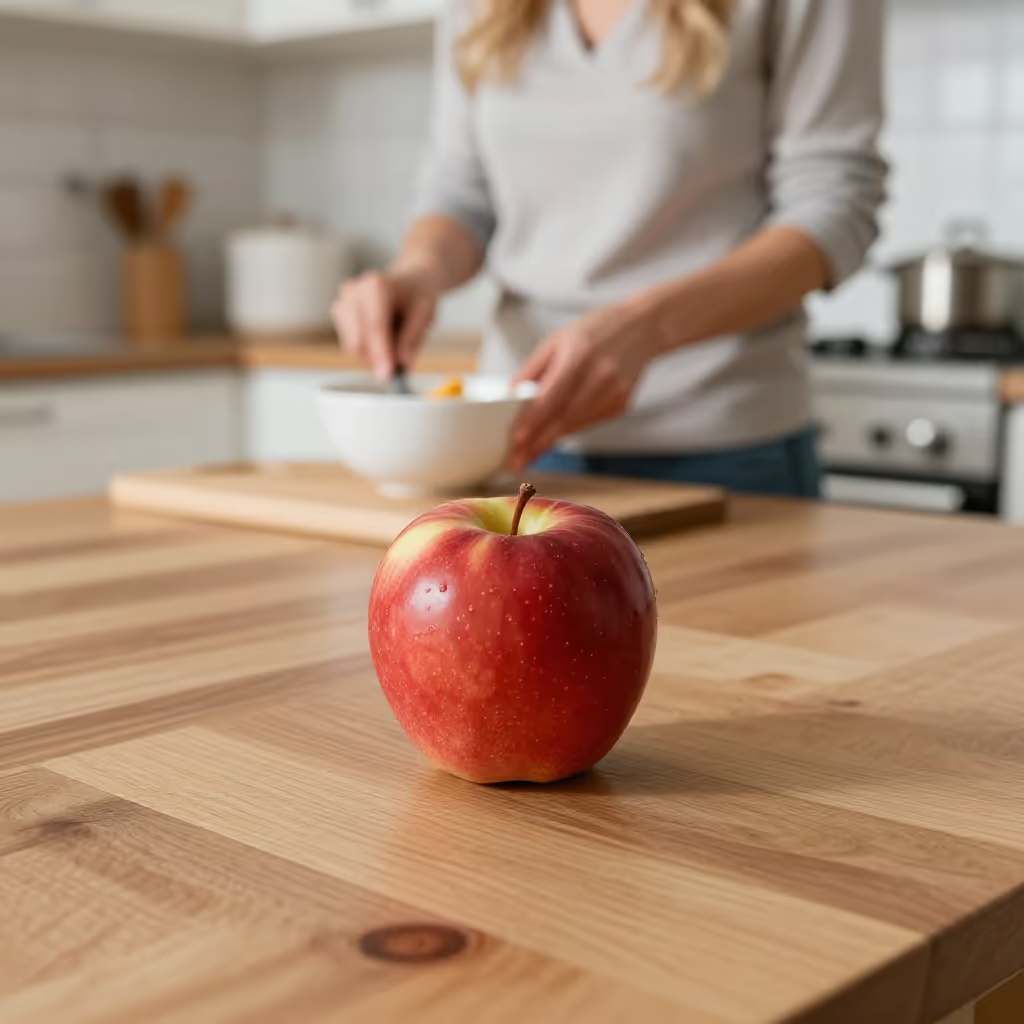
Indicates a position on a horizontal surface. Answers the question 'Wo?' (where?) and is used with the dative.
EXAMPLE
Der Schlüssel liegt auf dem Tisch.
The key is lying on the table.
on / onto / open
Loading your saved state.
on
Indicates a position on a horizontal surface. Answers the question 'Wo?' (where?) and is used with the dative.
Der Schlüssel liegt auf dem Tisch.
The key is lying on the table.
onto
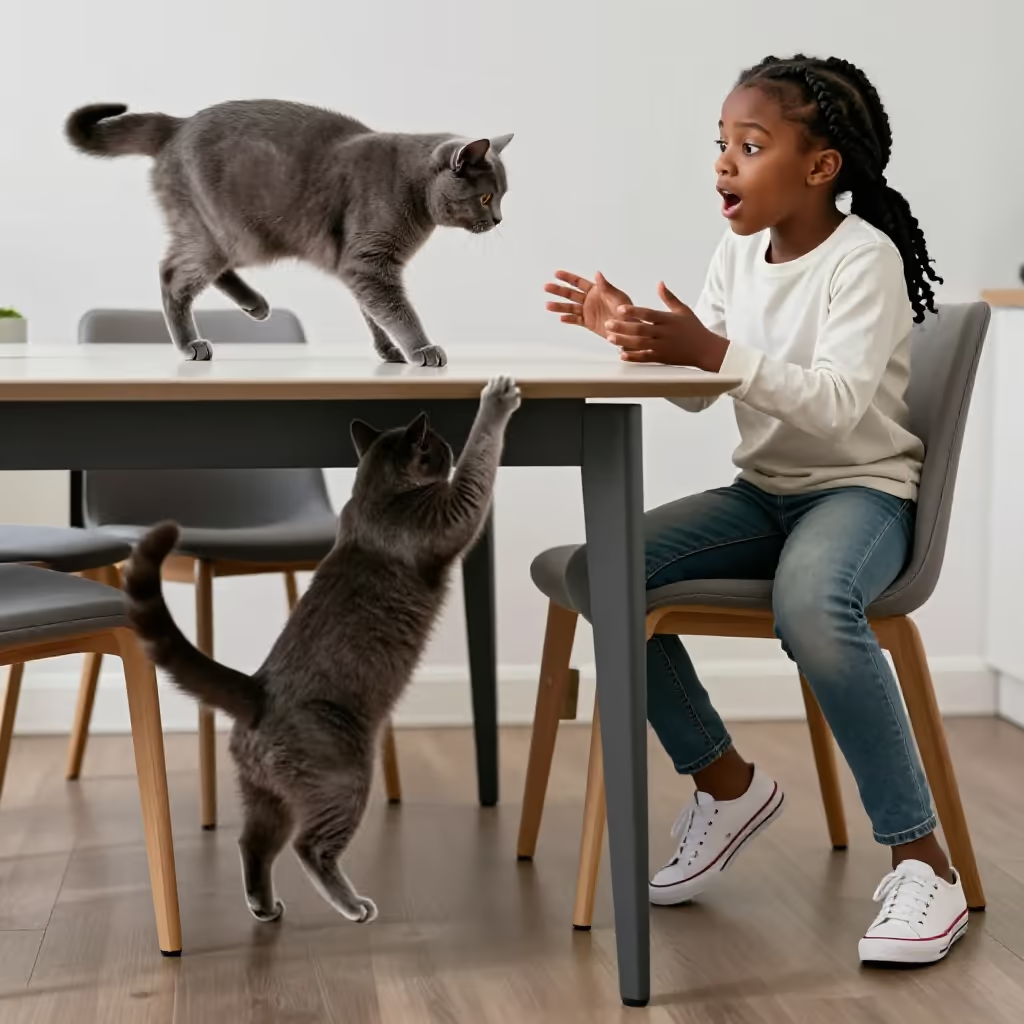
Indicates movement onto a horizontal surface. Answers the question 'Wohin?' (where to?) and is used with the accusative.
Ich lege den Schlüssel auf den Tisch.
I put the key onto the table.

at
Used for being at public places, squares, or events. It is used with the dative.
Wir waren gestern auf einem tollen Konzert.
We were at a great concert yesterday.

to
Indicates the destination of movement to a public place or event. It is used with the accusative.
Am Samstag gehen wir auf den Markt.
On Saturday we're going to the market.

on / for
Is part of many fixed verb-preposition combinations and often expresses a goal or reference, e.g. 'warten auf' (to wait for), 'sich freuen auf' (to look forward to), 'achten auf' (to pay attention to).
Ich warte schon seit zwanzig Minuten auf den Bus.
I've been waiting for the bus for twenty minutes already.

in
Indicates the language or the manner in which something happens or is said.
Können Sie das bitte auf Deutsch wiederholen?
Could you please repeat that in German?
open
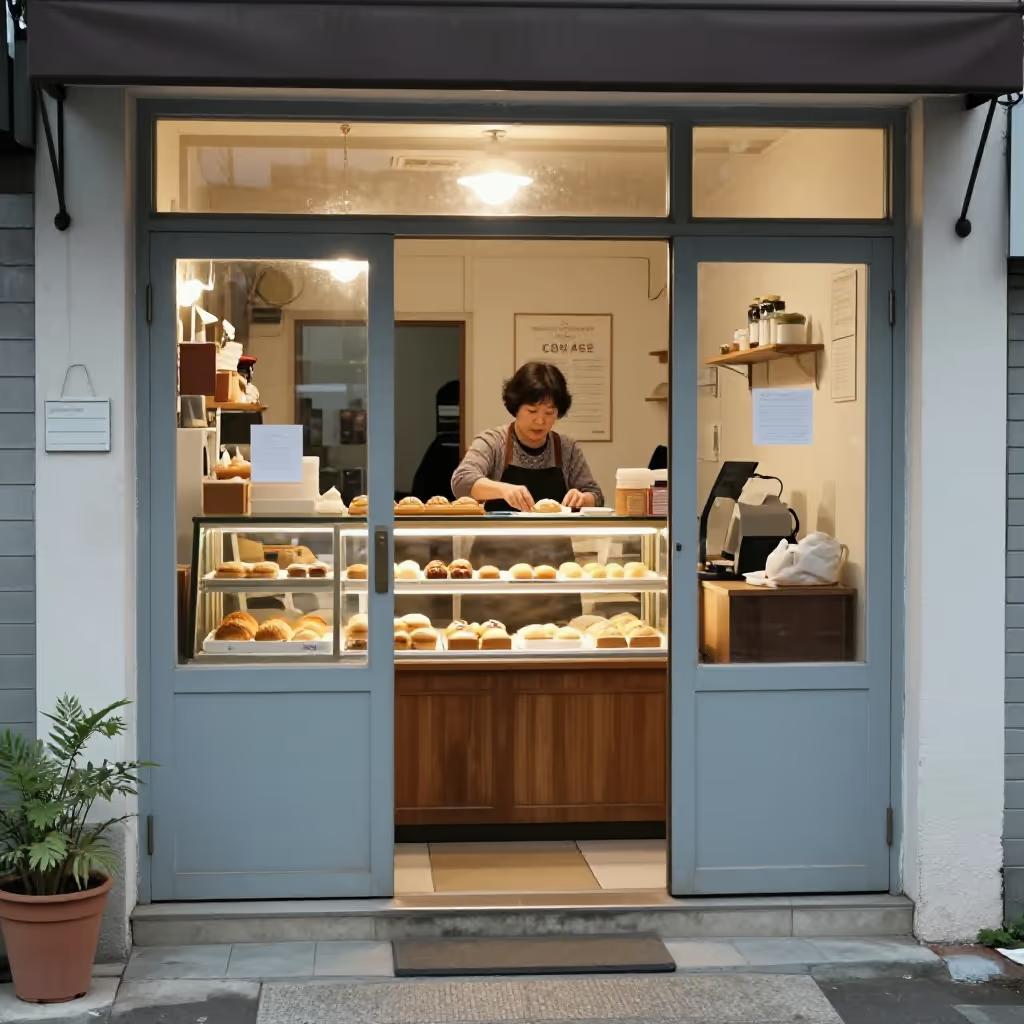
Used as an adverb and means 'open.'
Lass das Fenster bitte auf, es ist so warm hier drin.
Please leave the window open; it's so warm in here.
'Auf' is a two-way preposition. It is used with the dative for a location (question: 'Wo?' / where?) and with the accusative for a direction (question: 'Wohin?' / where to?). This is the most important rule for 'auf.'
Das Buch liegt auf dem Tisch (Dativ).
The book is lying on the table (dative).
'Auf' contracts with the neuter article 'das' to form 'aufs.' This usually happens when a direction is indicated (accusative).
Die Katze springt aufs Dach.
The cat jumps onto the roof.
'Auf' is typically used for positions or movements on a horizontal surface, for example a table, the floor, or a street. It describes contact from above.
Die Tasse steht auf dem Tisch.
The cup is on the table.
'Auf' is used for many public places, offices, and events. Typical examples are: 'auf dem Markt' (at the market), 'auf der Post' (at the post office), 'auf einer Party' (at a party), 'auf einem Konzert' (at a concert).
Wir treffen uns später auf dem Weihnachtsmarkt.
We'll meet later at the Christmas market.
Many verbs are fixed with the preposition 'auf' (+ accusative). Important examples are 'warten auf' (to wait for), 'sich freuen auf' (to look forward to), 'antworten auf' (to answer/respond to), and 'achten auf' (to pay attention to).
Wir freuen uns schon sehr auf den Urlaub.
We're already really looking forward to the vacation.
To indicate the language in which something is said or written, the expression 'auf' + [language] is used. The language usually appears without an article.
Was heißt 'danke' auf Japanisch?
How do you say 'thank you' in Japanese?
In the meaning 'geöffnet' (open), 'auf' behaves like a separable prefix and stands at the end in a main clause. It is often combined with verbs like 'sein' (to be) or 'machen' (to make/do).
Warum ist die Haustür auf?
Why is the front door open?
in
In refers here to being inside a building or enclosed space. Auf, by contrast, focuses on the public place or event as a whole. So someone is in the exhibition hall, but at the trade fair.
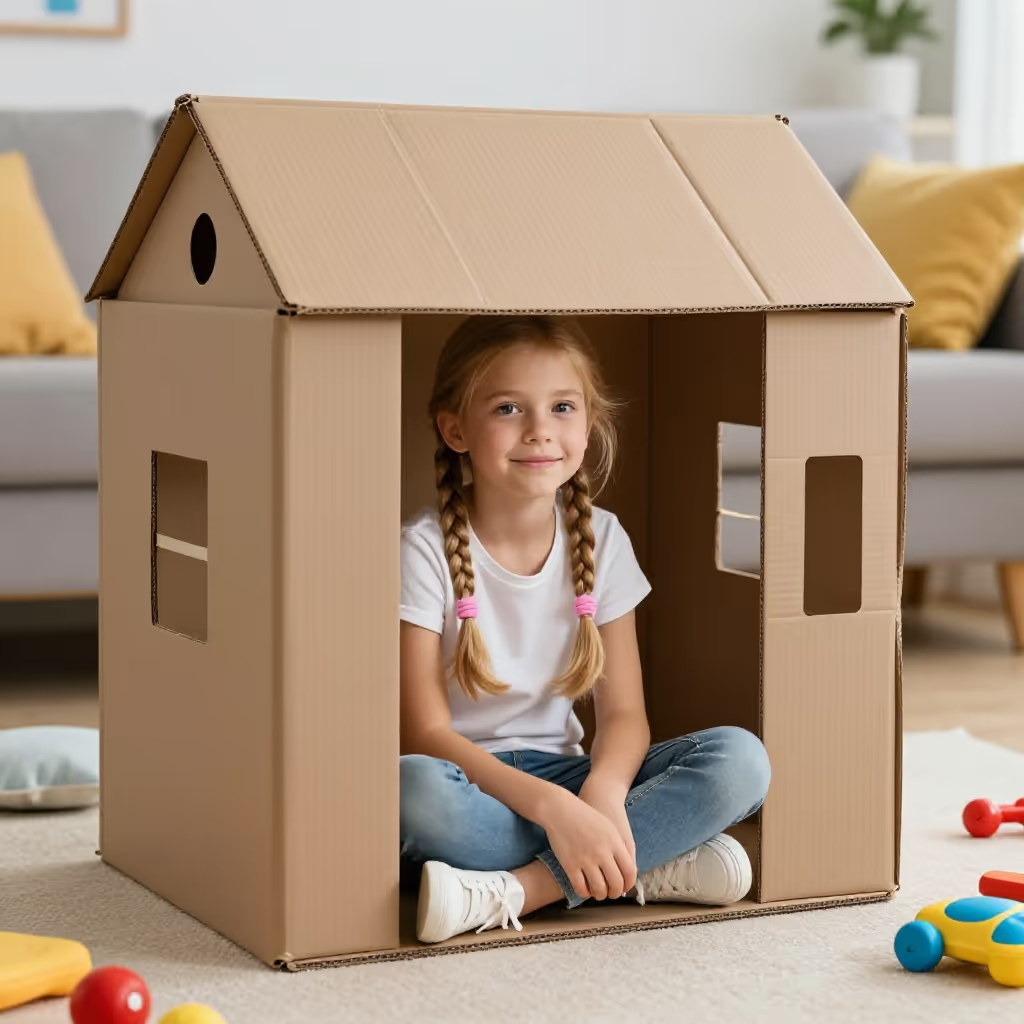
Mara ist auf der Messe und wartet am Informationsstand.
Mara is at the trade fair, waiting at the information desk.
Mara ist in der Messehalle und wartet am Eingang.
Mara is in the exhibition hall, waiting by the entrance.