

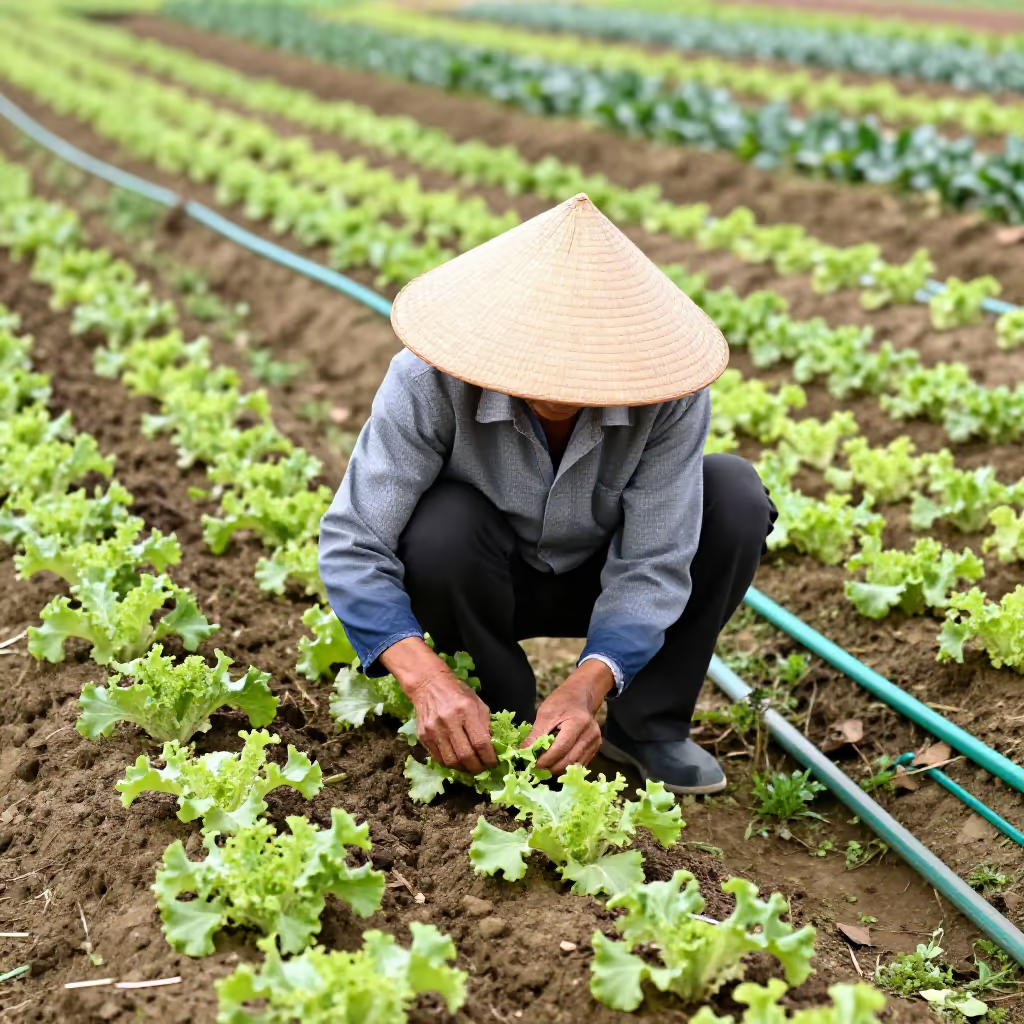
anbauen
to grow
To plant and care for plants, especially crops such as vegetables or grain, in a field or garden.
EXAMPLE
Dieses Jahr wollen wir im Garten Tomaten und Gurken anbauen.
This year we want to grow tomatoes and cucumbers in the garden.
to grow / to add on
Loading your saved state.
to grow
To plant and care for plants, especially crops such as vegetables or grain, in a field or garden.
Dieses Jahr wollen wir im Garten Tomaten und Gurken anbauen.
This year we want to grow tomatoes and cucumbers in the garden.
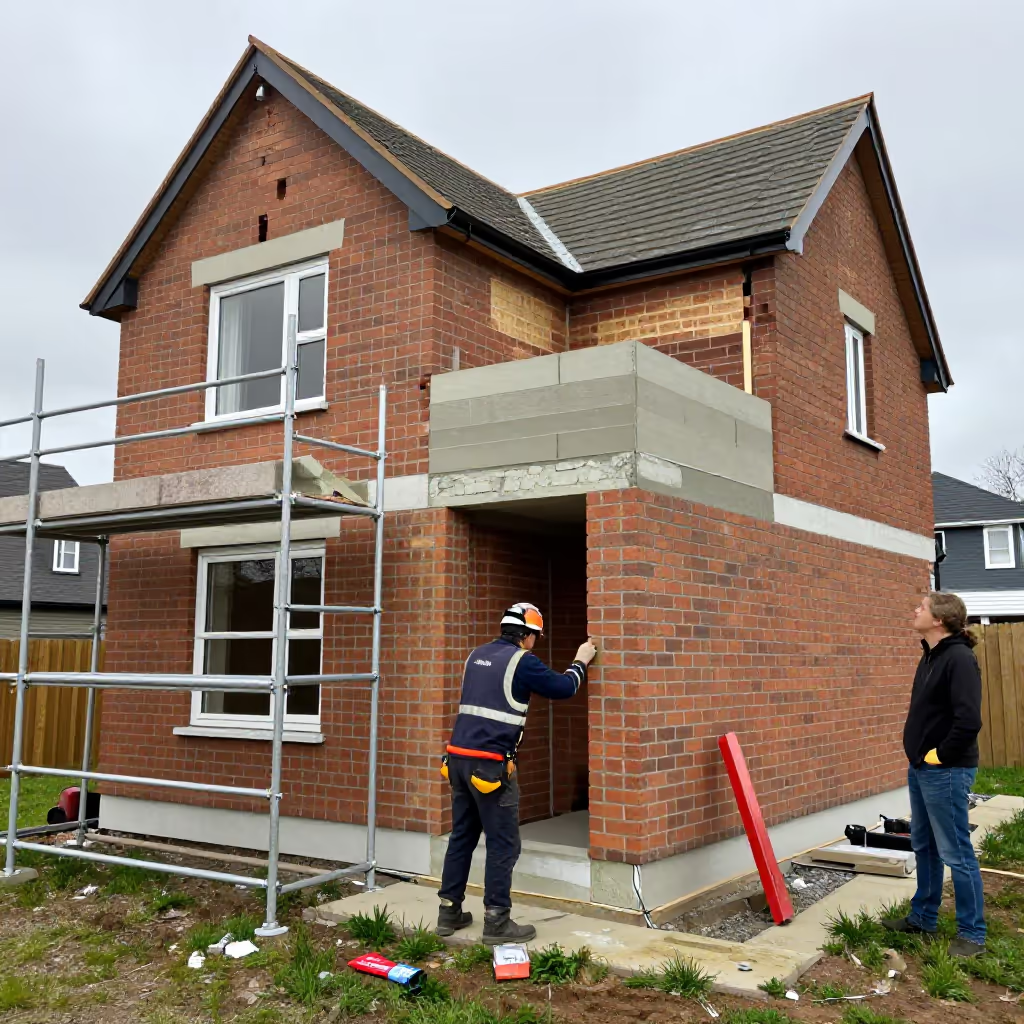
to add on
To add an additional building or part of a building to an already existing house or structure.
Die Familie hat eine Garage an ihr Haus angebaut.
The family added a garage onto their house.
'Anbauen' is a separable verb. The prefix 'an-' goes at the end in a main clause. In subordinate clauses and in the infinitive with 'zu', the verb stays together.
Mein Nachbar baut sein eigenes Gemüse an.
My neighbor grows his own vegetables.
You can recognize the meaning of 'anbauen' by the object. If it refers to plants (vegetables, herbs), it is about agriculture. If it refers to parts of buildings (garage, balcony), it is about construction.
Wir bauen dieses Jahr Kartoffeln an.
We are growing potatoes this year.
In an agricultural context, 'anbauen' is often used with crops. Typical combinations are: 'Gemüse anbauen' (to grow vegetables), 'Getreide anbauen' (to grow grain), 'Kräuter anbauen' (to grow herbs), or 'Wein anbauen' (to grow grapes / cultivate wine).
In dieser Region wird seit Jahrhunderten Wein angebaut.
Wine has been grown in this region for centuries.
In a construction context, 'anbauen' is combined with parts of buildings. Common phrases are: 'eine Garage anbauen' (to add on a garage), 'einen Wintergarten anbauen' (to add on a conservatory), or 'einen Erker anbauen' (to add on a bay window).
Sie haben an ihr Haus einen Wintergarten angebaut.
They added a conservatory onto their house.
to order
Both verbs relate to agricultural work involving a field. „Bestellen“ focuses on working and preparing the land, while „anbauen“ names the plants that are to grow there. Use „bestellen“ for the land and „anbauen“ for vegetables, grain, or other crops.
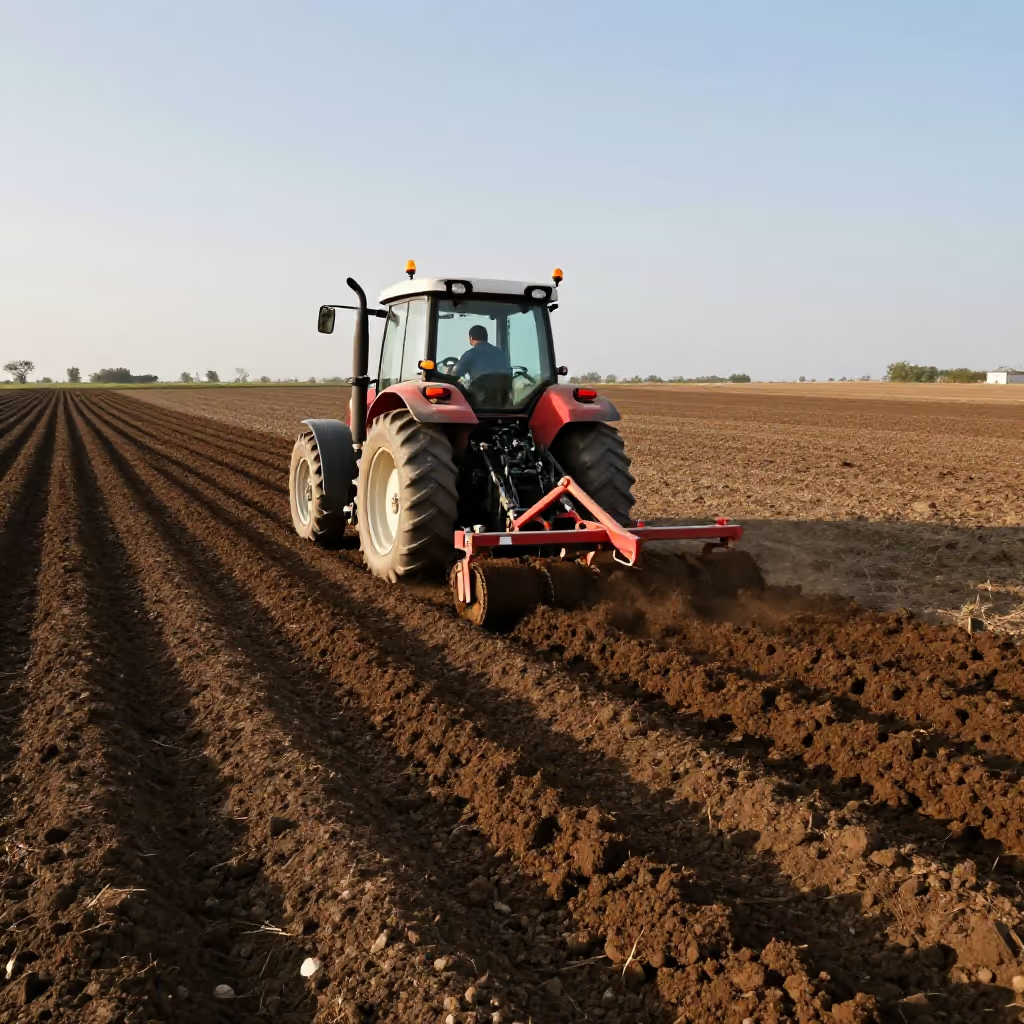
Die Bauern bauten auf dem großen Feld hinter dem Hof Weizen an.
The farmers grew wheat in the large field behind the farm.
Die Bauern bestellten im Frühjahr das große Feld hinter dem Hof.
In the spring, the farmers cultivated the large field behind the farm.