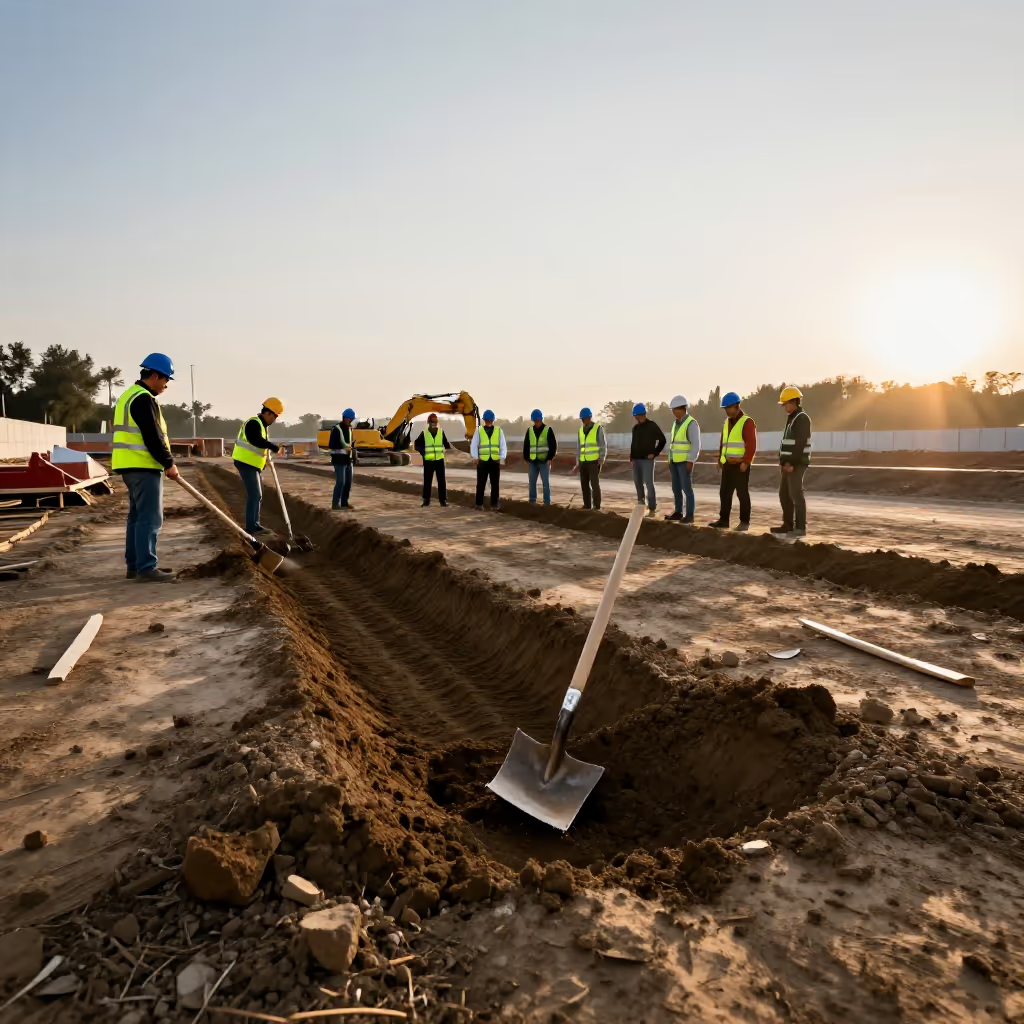
The very first start or beginning of a period of time or process. Often used in an elevated or poetic style.
example
Die Ausstellung dokumentiert die Geschichte der Menschheit von ihrem Anbeginn bis heute.
The exhibition documents the history of humanity from its very beginning to the present day.
Usage tips
Word composition
The word is made up of the prefix 'An-' and the noun 'Beginn' (beginning). The prefix 'An-' intensifies the meaning here and emphasizes that it refers to the very first moment.
EXAMPLE
Seit Anbeginn der Zeit fragen sich die Menschen, was der Sinn des Lebens ist.
Since the beginning of time, people have wondered what the meaning of life is.
Register and style
'Anbeginn' (beginning) is a word used in an elevated style. You find it above all in literary, poetic, or ceremonial texts.
EXAMPLE
Das Buch beschreibt die Geschichte des Universums von seinem Anbeginn.
The book describes the history of the universe from its very beginning.
Fixed expression
The expression 'von Anbeginn an' (from the beginning) is a fixed unit and means 'von Anfang an' (from the start). It is often used to emphasize that something has always been that way.
EXAMPLE
Er war von Anbeginn an in das Projekt involviert.
He was involved in the project from the beginning.
Compare with
antonym
Anbeginn vs Ende
end
'das Ende' and 'der Anbeginn' are temporal opposites. 'das Ende' means the last part or final point of something. 'der Anbeginn' means the very first beginning. 'Anbeginn' sounds elevated or poetic and is much rarer in everyday language than 'Anfang'. In particular, the expression 'von Anbeginn an' means 'from the beginning'. For normal conversations, 'Ende' or 'Anfang' often fits; 'Anbeginn' sounds more solemn.
Anbeginn
Von Anbeginn an glaubte sie an den Erfolg des kleinen Cafés.
From the beginning, she believed in the success of the small café.
Ende
Gegen Ende des Konzerts sang das Publikum laut mit.
Toward the end of the concert, the audience sang along loudly.