


anfeuern
to cheer on
To encourage and support someone through shouts and applause, especially in sports.
EXAMPLE
Die Fans feuerten ihre Mannschaft bis zur letzten Minute lautstark an.
The fans loudly cheered on their team until the final minute.
to cheer on / to stoke / to incite
Loading your saved state.
to cheer on
To encourage and support someone through shouts and applause, especially in sports.
Die Fans feuerten ihre Mannschaft bis zur letzten Minute lautstark an.
The fans loudly cheered on their team until the final minute.
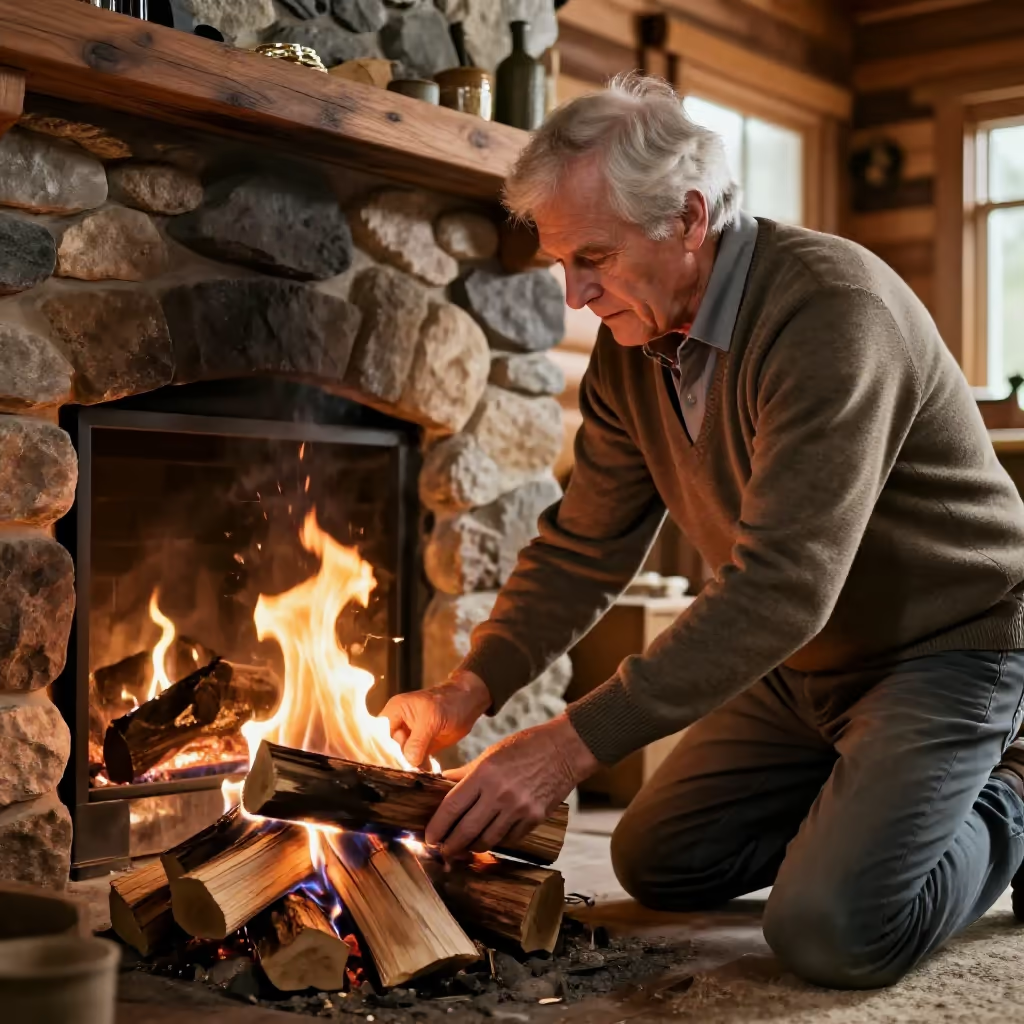
to stoke
To light a fire or make sure it burns more strongly.
Er legte noch ein paar Scheite Holz nach, um den Ofen richtig anzufeuern.
He added a few more logs to properly stoke the stove.

to incite
To goad or spur someone into doing something, often in a negative sense.
Seine Freunde feuerten ihn an, die unsinnige Mutprobe zu wagen.
His friends incited him to attempt the ridiculous dare.
'Anfeuern' (to cheer on / to stoke / to incite) is a separable verb. The prefix 'an-' stands at the end of the sentence in main clauses. The basic idea of 'Feuer' (fire, energy, passion) appears in all meanings.
Ich feuere dich bei deinem Marathon an!
I'll cheer you on during your marathon!
As a separable verb, 'anfeuern' (to cheer on / to stoke / to incite) changes its form depending on the sentence type. In a main clause it separates, in a subordinate clause it stays together, and in the infinitive with 'zu', 'zu' goes in the middle.
Der Trainer feuerte seine Spieler an.
The coach cheered his players on.
You can recognize the meaning from the object: If you 'anfeuern' (cheer on) a person or team, it means 'ermutigen' (to encourage). If you 'anfeuern' (stoke) a fire or stove, it means 'entzünden' (to light). If you 'anfeuern' (incite) someone to do something, it means 'anspornen' (to spur on).
Die Zuschauer feuerten den Läufer auf der letzten Runde an.
The spectators cheered on the runner during the final lap.
In the meaning 'anspornen/anstacheln' (to spur on/to incite), the preposition 'zu' is often used to name the action someone is encouraged to do. The structure is: 'jemanden zu etwas anfeuern' (to incite someone to do something).
Die Menge feuerte den Redner zu noch radikaleren Aussagen an.
The crowd incited the speaker to make even more radical statements.
to drive / motivate
antreiben can move someone to perform better through pressure or clear demands. Here, anfeuern means supporting someone with shouts, applause, or enthusiastic encouragement. Use antreiben for demanding pressure and anfeuern for audible, positive support.

Der Trainer feuert die Läufer mit lauten Zurufen zu höherem Tempo an.
The coach cheers the runners on to pick up the pace with loud shouts.
Der Trainer treibt die Läufer mit strengen Anweisungen zu höherem Tempo an.
The coach drives the runners to pick up the pace with strict instructions.