

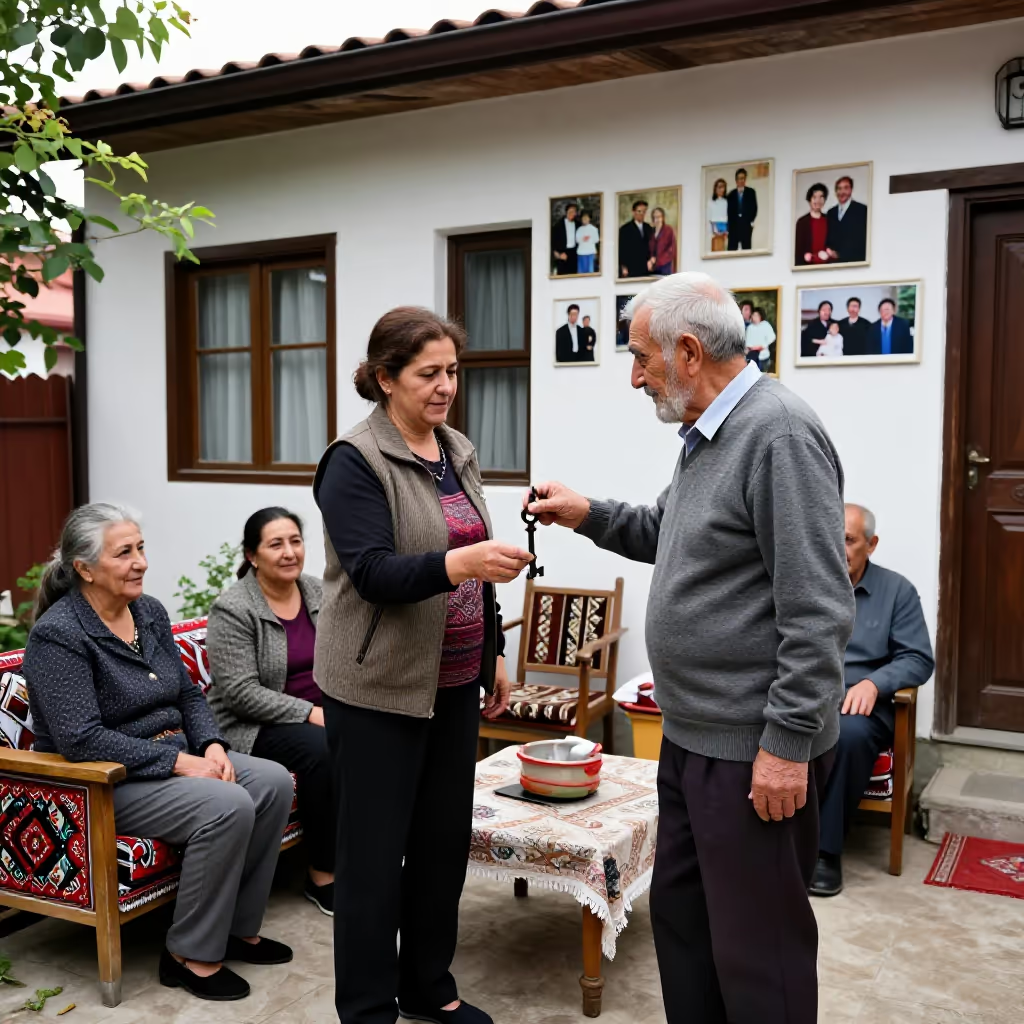
Describes something that has belonged to a person, family, or group for a long time or through tradition. It often refers to a place, a right, or a custom.
example
Die Familie kehrte nach Jahren in ihr angestammtes Heimatdorf zurück.
After years away, the family returned to its ancestral home village.
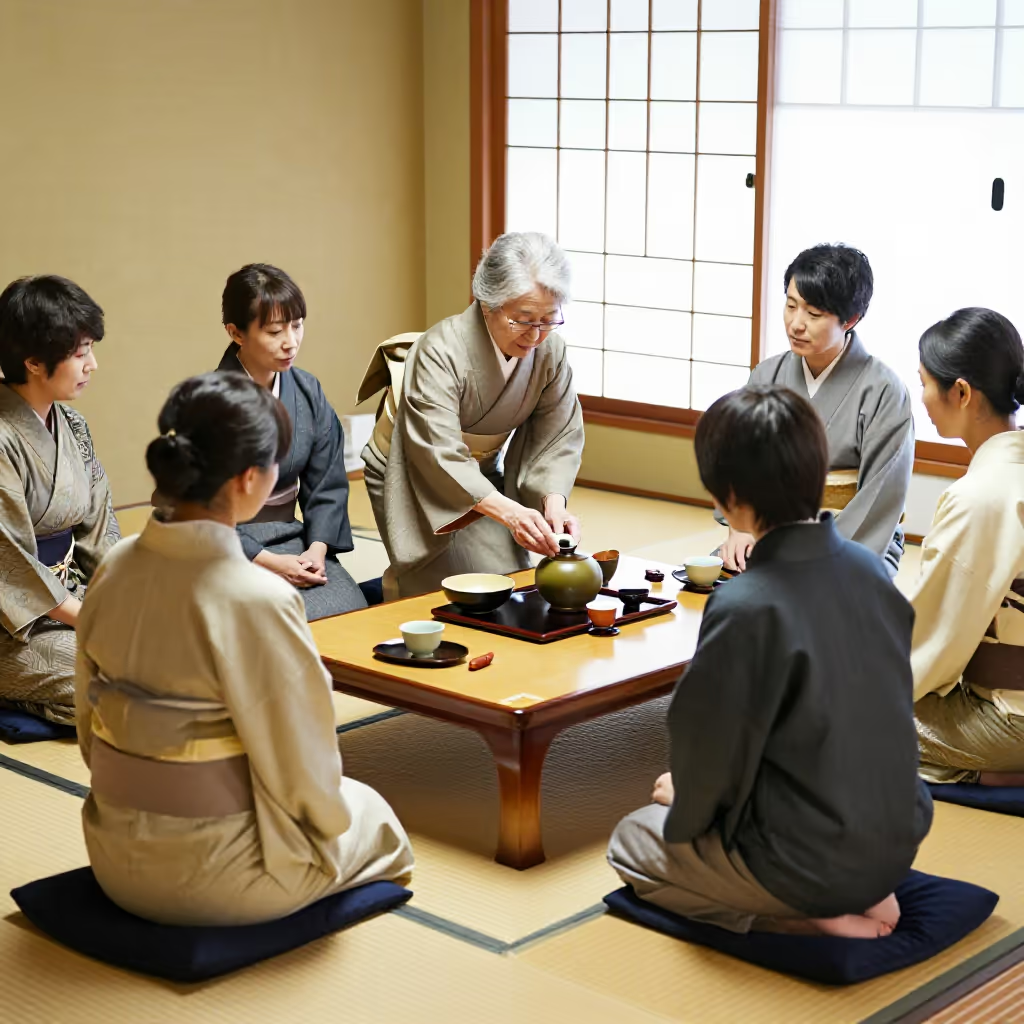
Usage tips
Word structure
The word is the adjective form of the past participle of 'anstammen' (to descend from / originate from). It contains the root 'Stamm' (tribe / lineage), which means origin or belonging. So 'angestammt' (ancestral) describes something that belongs to someone through origin or tradition.
EXAMPLE
Er kämpft für sein angestammtes Recht, das Land zu bewirtschaften.
He is fighting for his ancestral right to cultivate the land.
Sentence structure
'Angestammt' (ancestral) is used almost exclusively before a noun (attributive use). Using it as a stand-alone adjective after the noun is very unusual.
EXAMPLE
Die Vögel kehren jedes Jahr an ihren angestammten Nistplatz zurück.
The birds return to their ancestral nesting site every year.
Typical collocations
This adjective is often combined with nouns that refer to a place, a right, or a position. Common combinations are 'der angestammte Platz' (the traditional place), 'das angestammte Recht' (the ancestral right), or 'das angestammte Gebiet' (the ancestral territory).
EXAMPLE
Nach der Beförderung saß der neue Chef auf dem angestammten Platz seines Vorgängers.
After the promotion, the new boss sat in his predecessor's traditional place.
Register
The word 'angestammt' (ancestral) belongs to an elevated or formal style. It is found more often in written language, for example in historical or legal texts.
EXAMPLE
Die Ureinwohner verteidigen ihr angestammtes Territorium.
The Indigenous people are defending their ancestral territory.
Compare with
near_synonym · confusable
angestammt vs ursprünglich
original / originally
'ursprünglich' and 'angestammt' can both express that something is connected with an earlier or old state. 'ursprünglich' is more general and says what something was like at the beginning or what it is like in its original form. 'angestammt' is more suitable for things that have belonged to a person, family, or group for a long time, for example a place, a right, or a custom. They can be confused when talking about origin or old belonging. 'ursprünglich' emphasizes the beginning, while 'angestammt' emphasizes long tradition or fixed belonging.
angestammt
Nach vielen Jahren kehrte er in seine angestammte Heimat zurück.
After many years, he returned to his ancestral homeland.
ursprünglich
Die Familie kam ursprünglich aus einem kleinen Dorf am Meer.
The family originally came from a small village by the sea.