Slightly ill, unwell, or not in full health. This often describes a temporary, not serious condition.
example
Ich gehe heute früher nach Hause, ich fühle mich etwas angeschlagen.
I'm going home earlier today; I'm feeling a bit under the weather.

Usage tips
Word structure
'Angeschlagen' is the past participle of 'anschlagen' (to strike/hit something lightly). This image of a light blow explains all the meanings: someone's health, reputation, or an object has taken a small 'hit' and is therefore slightly weakened or damaged.
EXAMPLE
Sein Selbstvertrauen war nach der Kritik sichtlich angeschlagen.
His self-confidence was visibly weakened after the criticism.
Context clue
The noun that 'angeschlagen' describes reveals the meaning. A person is 'angeschlagen' (under the weather), a reputation is 'angeschlagen' (damaged), a cup is 'angeschlagen' (chipped).
EXAMPLE
Der Boxer ging angeschlagen in die nächste Runde.
The boxer went into the next round weakened.
Mild illness
In a health context, 'angeschlagen' always describes a mild, often temporary condition. It means that you do not feel completely fit, but are not seriously ill. It is often combined with 'etwas' (a bit) or 'leicht' (slightly).
EXAMPLE
Ich glaube, ich bekomme eine Erkältung, ich bin schon den ganzen Tag etwas angeschlagen.
I think I'm coming down with a cold; I've been feeling a bit under the weather all day.
Typical collocations
In the figurative meaning, 'angeschlagen' is often used for abstract nouns like 'Ruf' (reputation), 'Image' (image), 'Wirtschaft' (economy), or 'Selbstvertrauen' (self-confidence) to express weakening or damage.
EXAMPLE
Nach der Niederlage war die Moral der Mannschaft angeschlagen.
After the defeat, the team's morale was weakened.
Minor damage
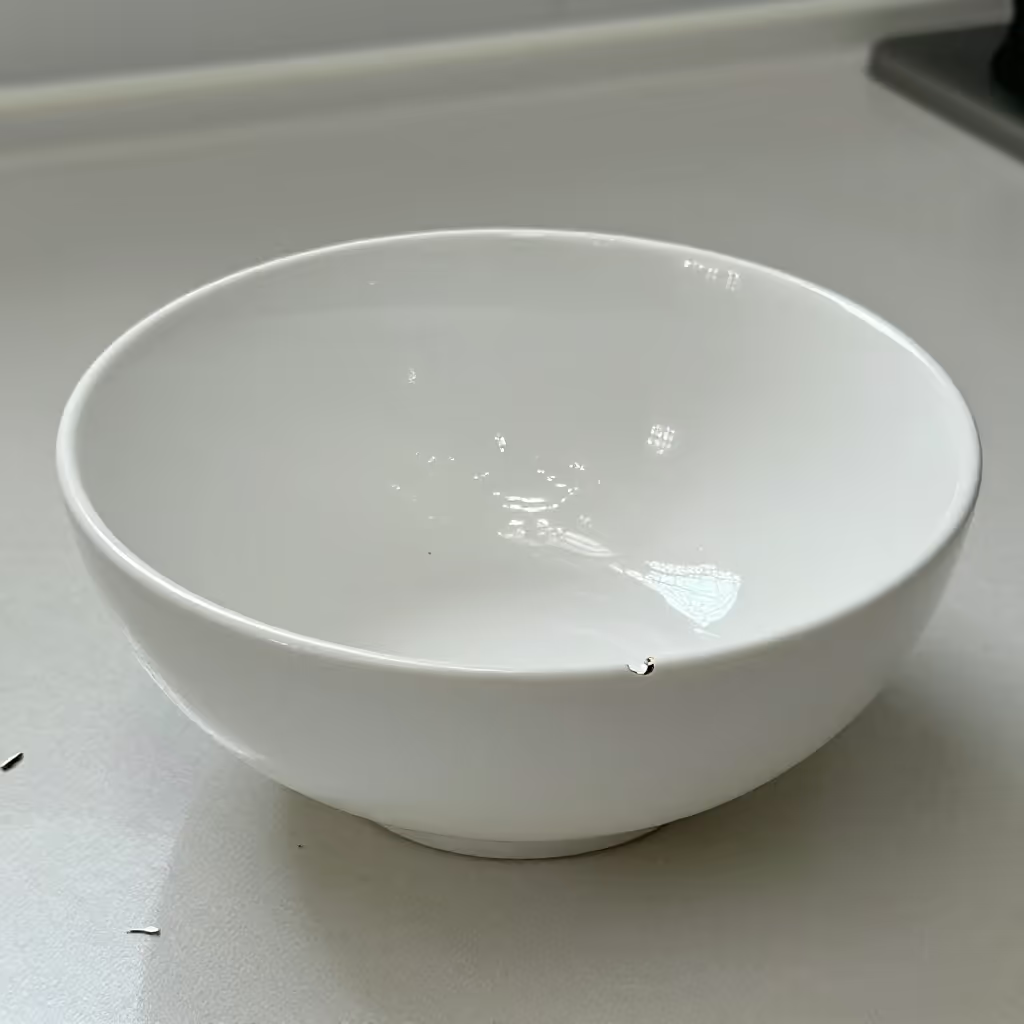
When an object is 'angeschlagen' (chipped), it usually has a small chip or crack but is still usable. It is used especially often for dishes such as cups and plates.
EXAMPLE
Wirf den Teller nicht weg, er ist nur ein bisschen angeschlagen.
Don't throw the plate away; it's only a little chipped.
Compare with
near_synonym
angeschlagen vs krank
sick
'krank' and 'angeschlagen' both describe that someone is not completely healthy. 'krank' is the normal, general word and can be mild or serious. 'angeschlagen' usually sounds weaker: you do not feel fit, maybe have a sore throat or are tired, but it is often not very serious and is more temporary. If someone really has a fever or has to stay home, 'krank' fits better. If someone can still work but is not at full strength, 'angeschlagen' sounds more natural.
angeschlagen
Du wirkst heute etwas angeschlagen, aber du kannst noch zum Meeting kommen.
You seem a bit under the weather today, but you can still come to the meeting.
krank
Omar bleibt zu Hause, weil er krank ist und Fieber hat.
Omar is staying home because he is sick and has a fever.