

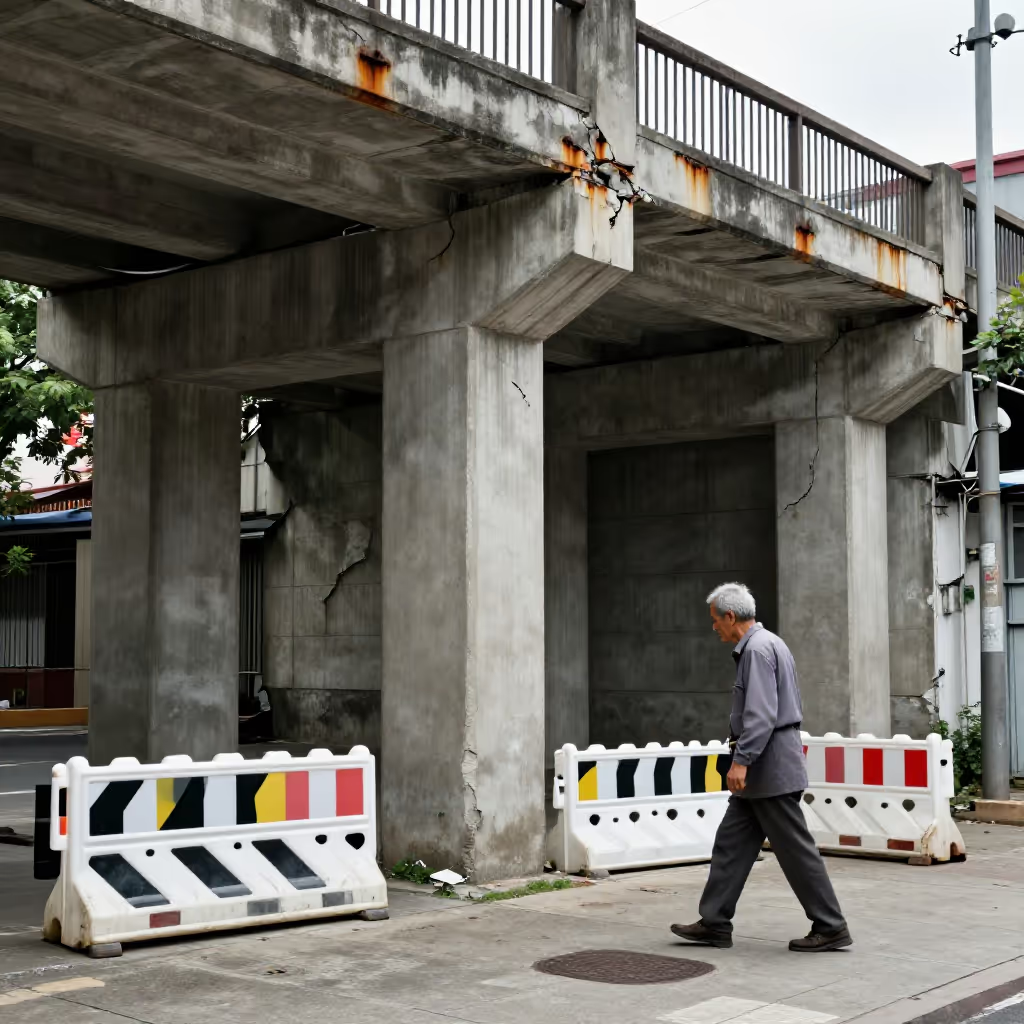
marode
dilapidated
In a very poor, structurally unsound, or decayed condition. Often used for buildings, bridges, or roads.
Die Brücke ist marode und muss für den Verkehr gesperrt werden.
The bridge is dilapidated and must be closed to traffic.


dilapidated / ailing
Loading your saved state.
dilapidated
In a very poor, structurally unsound, or decayed condition. Often used for buildings, bridges, or roads.
Die Brücke ist marode und muss für den Verkehr gesperrt werden.
The bridge is dilapidated and must be closed to traffic.

The basic idea of 'marode' (dilapidated/ailing) is always a state of decay or a very poor condition. This idea is transferred from run-down buildings to the economy or even to a person's physical well-being.
Nach dem langen Winter waren viele Straßen in einem maroden Zustand.
After the long winter, many roads were in a dilapidated condition.
In its literal meaning, 'marode' (dilapidated) is used for infrastructure and buildings. Typical combinations are 'eine marode Brücke' (a dilapidated bridge), 'ein marodes Gebäude' (a dilapidated building), or 'marode Straßen' (dilapidated roads).
Die Schule muss saniert werden, da das Gebäude völlig marode ist.
The school has to be renovated because the building is completely dilapidated.
In an economic context, 'marode' (ailing) describes companies or finances that are on the verge of collapse. For example, people speak of 'einem maroden Unternehmen' (an ailing company), 'einer maroden Branche' (an ailing industry), or 'maroden Staatsfinanzen' (ailing public finances).
Die Fluggesellschaft war schon vor der Krise finanziell marode.
The airline was already financially ailing before the crisis.
When 'marode' (run-down) is used for people, it is colloquial. It then means that someone feels sick, weak, or exhausted. It is often combined with the verb 'fühlen' (to feel).
Ich konnte gestern nicht zur Party kommen, ich habe mich total marode gefühlt.
I couldn't come to the party yesterday; I felt totally run-down.
sick
'krank' and 'marode' can both describe a poor condition. 'krank' is used mainly for people or animals that are not healthy. In fixed or more elevated phrasing, something can also 'an einem Problem kranken' (suffer from a problem). 'marode' is especially suitable for things like buildings, bridges, or roads that are badly damaged or dilapidated. It can also describe a company or a state in a very bad situation. Colloquially, you can also say that you feel 'marode', in which case you usually mean exhausted or physically run-down. For a normal illness, 'krank' is clearer.

Die marode Brücke wird gesperrt, weil sie nicht mehr sicher ist.
The dilapidated bridge is being closed because it is no longer safe.
Ihr seid krank geworden und müsst die Reise leider verschieben.
You have gotten sick and unfortunately have to postpone the trip.