

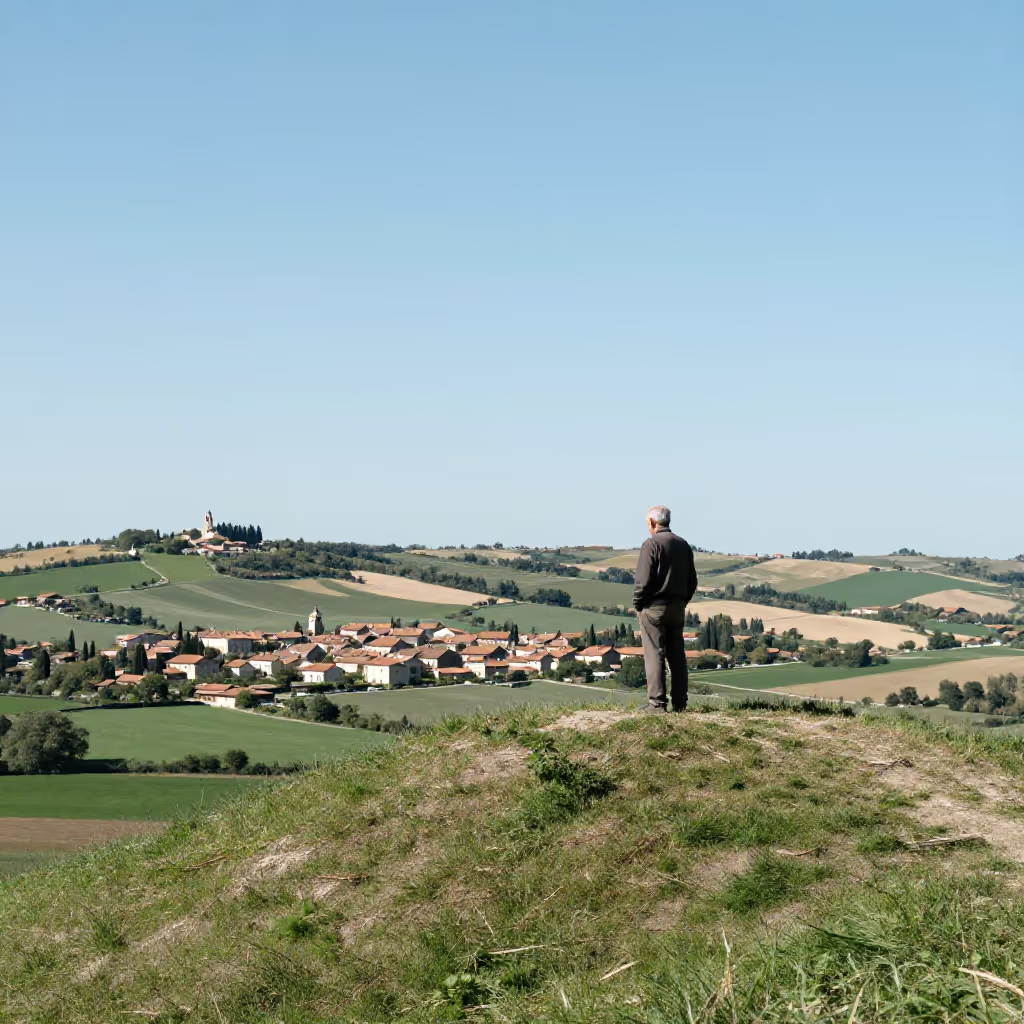
A natural, not very high elevation in the terrain, like a small hill. From a rise, you often have a good view.
example
Von der Anhöhe aus hatten wir einen wunderschönen Blick über das ganze Tal.
From the rise, we had a beautiful view over the whole valley.
Usage tips
Word structure
The word consists of the prefix 'an-' and the noun 'Höhe' (height/elevation). It describes an elevation that rises up from the landscape.
EXAMPLE
Auf der kleinen Anhöhe stand eine alte Eiche.
An old oak tree stood on the small rise.
Preposition 'auf'
With 'Anhöhe' (rise/hill), the preposition 'auf' is used. To express movement, you use the accusative ('auf die Anhöhe' — onto the rise); for a position, the dative ('auf der Anhöhe' — on the rise).
EXAMPLE
Wir stiegen auf die Anhöhe, um den Sonnenuntergang zu sehen.
We climbed onto the rise to see the sunset.
Typical collocations
Common verbs used with 'Anhöhe' (rise/hill) are 'steigen' (to climb), 'stehen' (to stand), or 'blicken' (to look/gaze). It is often described as a 'kleine' (small) or 'sanfte' (gentle) rise.
EXAMPLE
Von der sanften Anhöhe konnte man das Dorf überblicken.
From the gentle rise, you could look out over the village.
Compare with
near_synonym · confusable
Anhöhe vs Höhe
height / amount
'die Höhe' and 'die Anhöhe' can both refer to an elevated place in the landscape. 'die Anhöhe' is more precise: it usually means a small hill or a slight rise. 'die Höhe' is more general and can also simply mean a higher point or place. Learners may confuse the words because both describe something above the normal terrain. If you mean a small hill in nature, 'Anhöhe' is more precise. If you are speaking more generally about an elevated place, 'Höhe' fits better.
Anhöhe
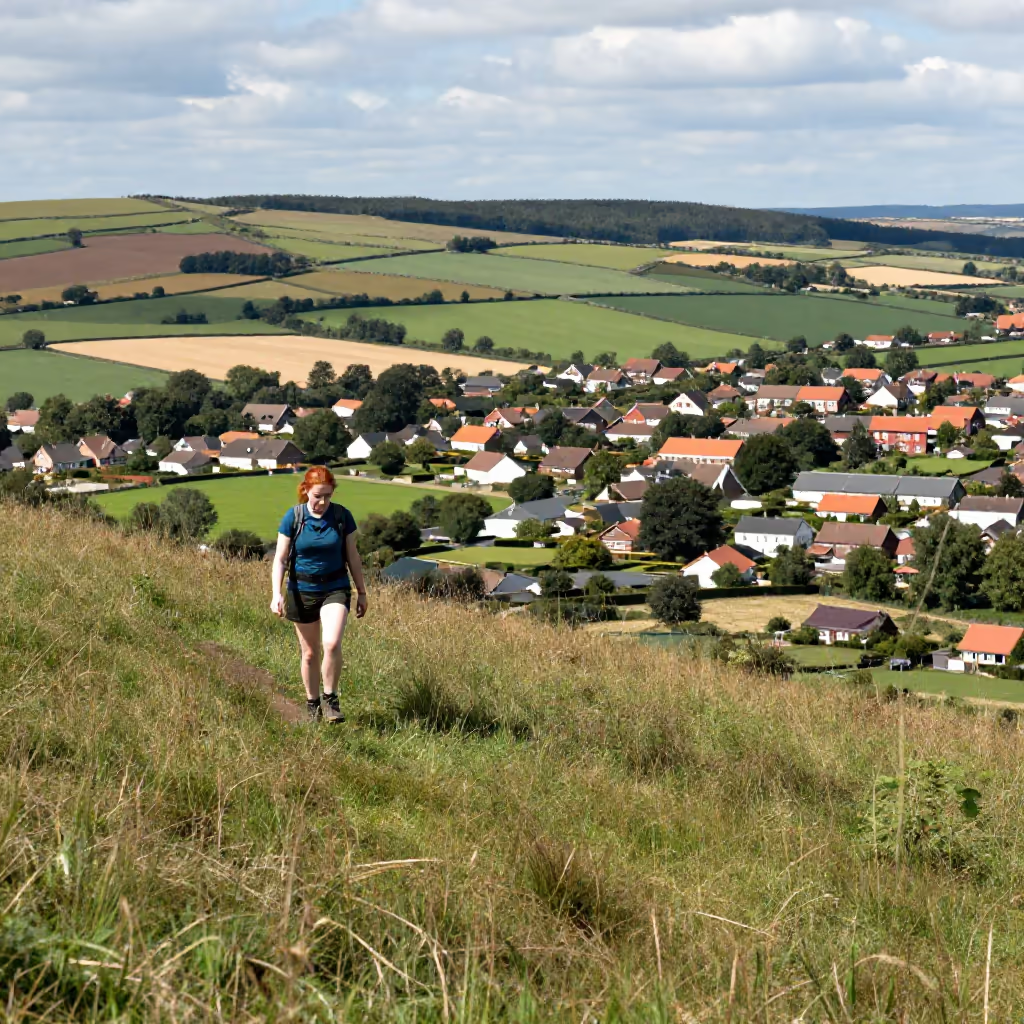
Auf der Anhöhe machten die Wanderer eine kurze Pause.