

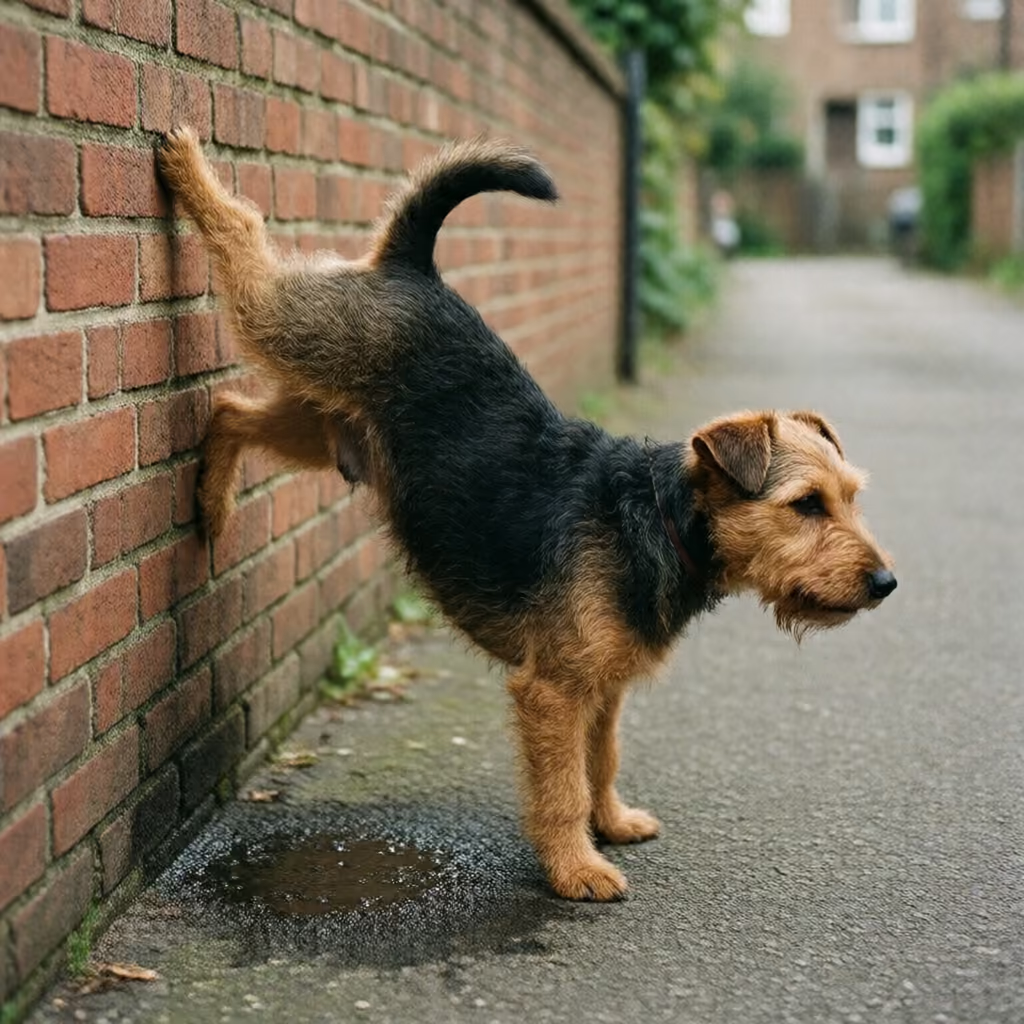
anpissen
to piss on
To splash someone or something with urine or urinate on them. The word is vulgar and colloquial.
EXAMPLE
Der betrunkene Mann hat die Hauswand angepisst.
The drunk man pissed on the wall of the house.
to piss on / piss off / chew out
anpissen – pisste an – hat angepisst
Loading your saved state.
to piss on
To splash someone or something with urine or urinate on them. The word is vulgar and colloquial.
Der betrunkene Mann hat die Hauswand angepisst.
The drunk man pissed on the wall of the house.

to piss off
To really annoy, bother, or anger someone. The word is vulgar and colloquial.
Diese ständigen Anrufe pissen mich echt an.
These constant calls really piss me off.

to chew out
To reprimand someone harshly, insult them, or attack them verbally. The German word is vulgar and colloquial.
Der Trainer hat den Spieler wegen seines Fehlers angepisst.
The coach chewed out the player for his mistake.
| ich | pisse an |
|---|---|
| du | pisst an |
| er/sie/es | pisst an |
| wir | pissen an |
| ihr | pisst an |
| sie | pissen an |
| ich | pisste an |
|---|---|
| du | pisstest an |
| er/sie/es | pisste an |
| wir | pissten an |
| ihr | pisstet an |
| sie | pissten an |
| ich | habe angepisst |
|---|---|
| du | hast angepisst |
| er/sie/es | hat angepisst |
| wir | haben angepisst |
| ihr | habt angepisst |
| sie | haben angepisst |
| du | piss an! pisse an! |
|---|---|
| ihr | pisst an! |
| Sie | pissen Sie an! |
| ich | hatte angepisst |
|---|---|
| du | hattest angepisst |
| er/sie/es | hatte angepisst |
| wir | hatten angepisst |
| ihr | hattet angepisst |
| sie | hatten angepisst |
| ich | werde anpissen |
|---|---|
| du | wirst anpissen |
| er/sie/es | wird anpissen |
| wir | werden anpissen |
| ihr | werdet anpissen |
| sie | werden anpissen |
| ich | pisse an |
|---|---|
| du | pissest an |
| er/sie/es | pisse an |
| wir | pissen an |
| ihr | pisset an |
| sie | pissen an |
Used for reported speech.
| ich | pisste an |
|---|---|
| du | pisstest an |
| er/sie/es | pisste an |
| wir | pissten an |
| ihr | pisstet an |
| sie | pissten an |
Used for wishes and “would”.
| infinitive | anpissen |
|---|---|
| with zu | anzupissen |
| present participle | anpissend |
| past participle | angepisst |
'Anpissen' (to piss on / piss off / chew out) is a separable verb. In a main clause, 'an' goes at the end of the clause; in a subordinate clause, the verb stays together. In the infinitive with 'zu', 'zu' goes between 'an' and 'pissen'.
Der Hund pisst den Briefkasten an.
The dog is pissing on the mailbox.
Sie ärgerte sich, weil der Hund den Briefkasten angepisst hatte.
She was annoyed because the dog had pissed on the mailbox.
Er versuchte, die Hauswand nicht anzupissen.
He tried not to piss on the wall of the house.
'Anpissen' (to piss on / piss off / chew out) normally takes an accusative object: the person or thing being targeted. When the object is a person, you can also specify why they are being targeted.
Der Mann hat den Zaun angepisst.
The man pissed on the fence.
Sie pisst mich wegen jeder Kleinigkeit an.
She chews me out over every little thing.
'Anpissen' (to piss on / piss off / chew out) is a vulgar, colloquial word best suited to very informal or aggressive situations. In polite, professional, or official conversations, it can easily come across as offensive.
Piss mich nicht an, ich habe gerade wirklich genug Probleme.
Don't piss me off; I've really got enough problems right now.
In the literal sense, the object is often an item or place that someone urinates on, such as a house wall, a fence, or a garbage can.
Irgendjemand hat letzte Nacht schon wieder unsere Mülltonne angepisst.
Someone pissed on our garbage can again last night.
In the sense of 'stark ärgern' (to really annoy), a situation or behavior can also be the subject: 'Etwas pisst jemanden an' (something pisses someone off). Expressions specifying the reason for the annoyance often follow.
Das ständige Warten pisst mich langsam an.
The constant waiting is starting to piss me off.
When referring to a harsh verbal attack, the person being attacked is usually the accusative object. The reason can be added using 'wegen' (because of) or a more detailed phrase.
Mein Chef hat mich wegen der verspäteten Lieferung vor allen Kollegen angepisst.
My boss chewed me out in front of all my colleagues because of the late delivery.