

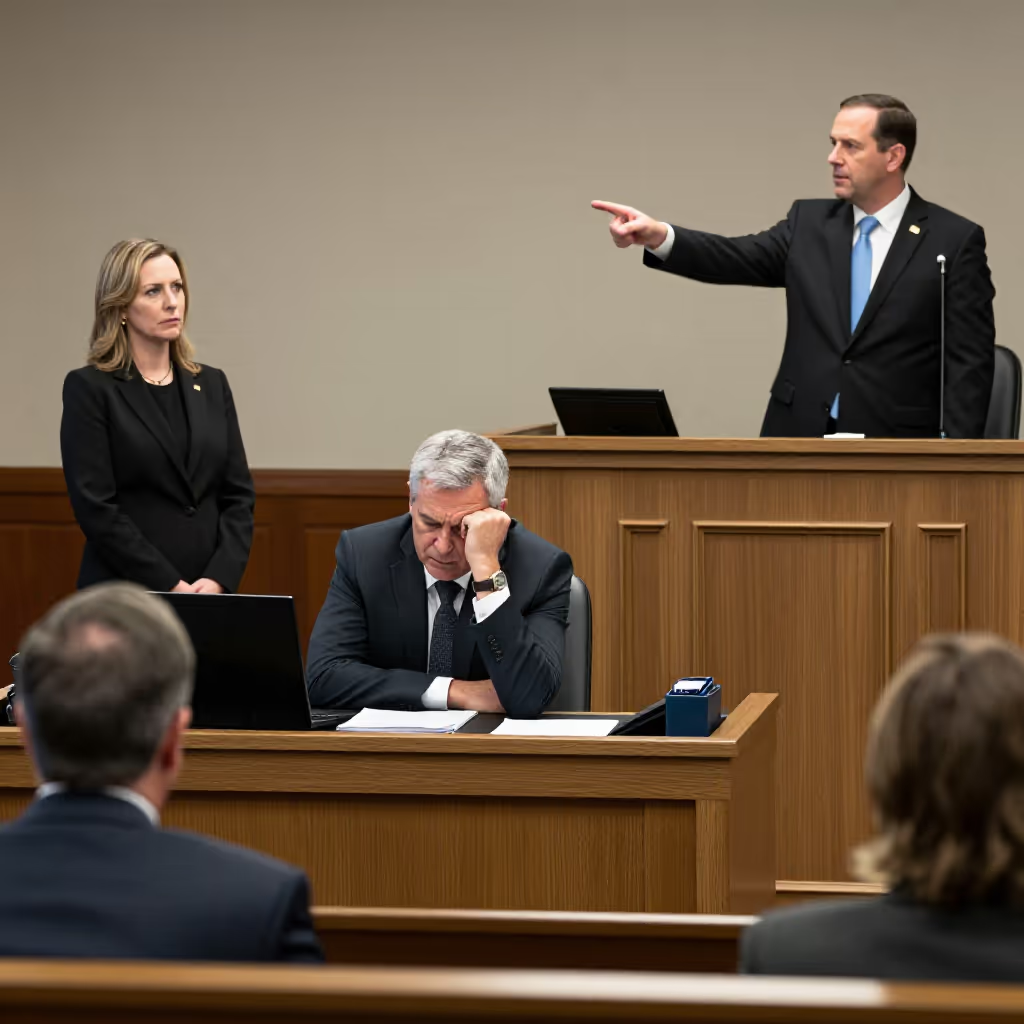
A claim or allegation that someone has done something wrong, criminal, or immoral.
example
Er wies die Anschuldigung, Firmengelder veruntreut zu haben, entschieden zurück.
He firmly rejected the accusation that he had embezzled company funds.

Usage tips
Word structure
The word is derived from the verb 'anschuldigen' (to accuse), which consists of 'an-' and 'Schuld' (guilt/blame). It literally means to assign blame to someone for something. The ending '-ung' turns the verb into a noun.
EXAMPLE
Er wurde des Diebstahls angeschuldigt.
He was accused of theft.
Typical verbs
Certain verbs are often used with 'Anschuldigung' (accusation): you can 'erheben' (make/raise), 'vorbringen' (put forward), 'zurückweisen' (reject), 'bestreiten' (deny) an accusation, or 'sich dagegen verteidigen' (defend oneself against it).
EXAMPLE
Die Politikerin musste sich gegen schwere Anschuldigungen verteidigen.
The politician had to defend herself against serious accusations.
Sentence structure
The person being accused is named with the preposition 'gegen' (against). The content of the accusation often follows in a subordinate clause with 'dass' (that) or in an infinitive construction with 'zu' (to).
EXAMPLE
Die Anschuldigung, er habe gelogen, traf ihn sehr.
The accusation that he had lied hit him hard.
Compare with
confusable
Anschuldigung vs Verdacht
suspicion
'der Verdacht' and 'die Anschuldigung' can both have to do with something wrongful. The difference lies in how strong and direct the statement is. A suspicion is an assumption without certain proof: you think it is possible that someone did something. An accusation is a direct allegation against a person. Learners may confuse the words because both often come up in contexts involving the police, arguments, or problems. If you are only unsure, 'Verdacht' fits. If you openly accuse someone of something, 'Anschuldigung' fits.
Anschuldigung
Nach der Anschuldigung wollte Paul sofort erklären, was wirklich passiert war.
After the accusation, Paul immediately wanted to explain what had really happened.
Verdacht
Im Büro hat das Team einen Verdacht, wer die Akten gelöscht hat.
At the office, the team has a suspicion about who deleted the files.