


anspielen
to pass to
In sports, especially ball games, to pass the ball to a teammate.
EXAMPLE
Der Verteidiger hat den Stürmer mit einem langen Pass angespielt.
The defender passed to the striker with a long pass.
to pass to / allude to / play briefly
Loading your saved state.
to pass to
In sports, especially ball games, to pass the ball to a teammate.
Der Verteidiger hat den Stürmer mit einem langen Pass angespielt.
The defender passed to the striker with a long pass.

to allude to
To make an indirect remark about something or someone; to hint at something without naming it directly.
Mit seiner Frage nach meinem Urlaub spielte er auf meine lange Abwesenheit an.
With his question about my vacation, he was alluding to my long absence.
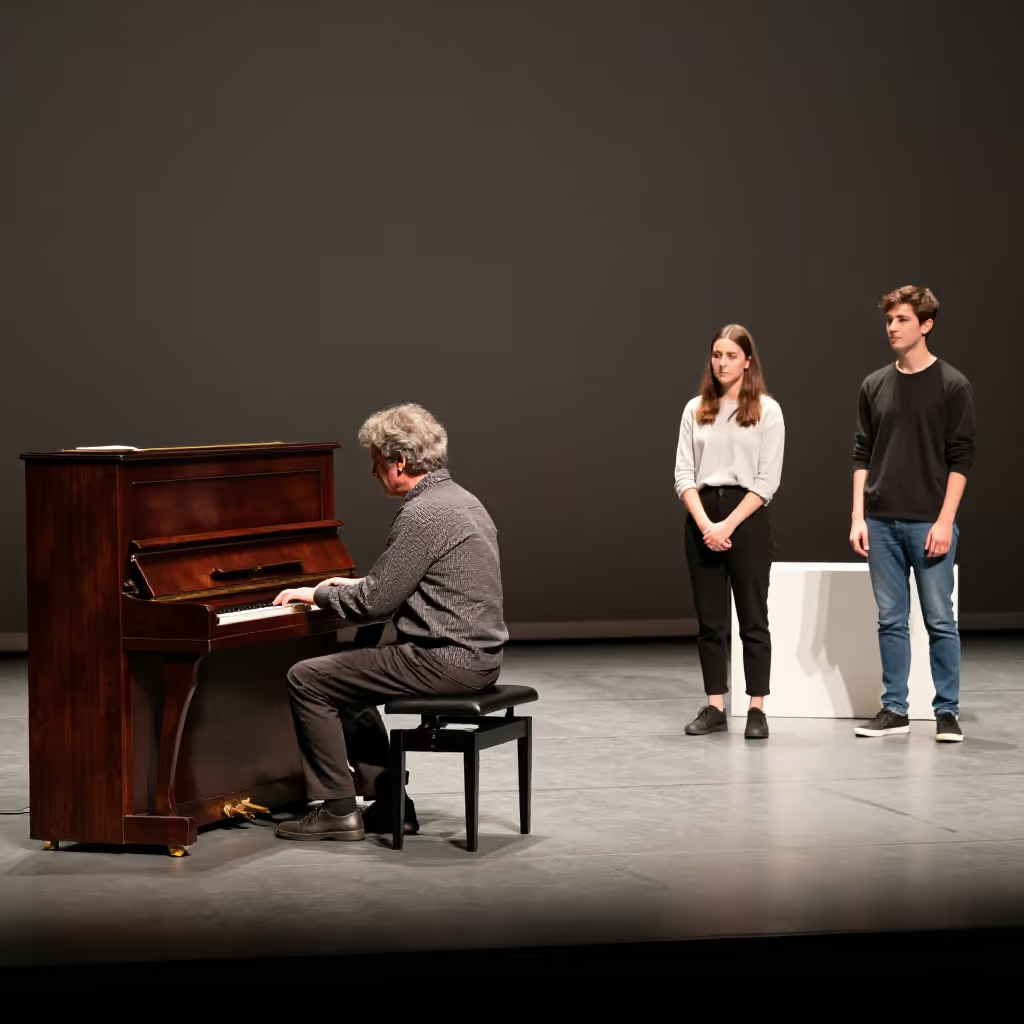
to play briefly
In music or theater, to play the beginning of a piece or scene, often only briefly as a rehearsal or as a signal.
Die Band spielte nur kurz den Refrain an, bevor das eigentliche Konzert begann.
The band only played the chorus briefly before the actual concert began.
'Anspielen' is a separable verb. The prefix 'an-' comes at the end in a main clause. In subordinate clauses or in the infinitive with 'zu', the verb stays together.
Er spielt seinen Teamkollegen an.
He passes to his teammate.
In the meaning 'auf etwas hindeuten' (to hint at something), 'anspielen' (to allude) is always used with the preposition 'auf' and the accusative. Without 'auf', the verb does not have this meaning.
Mit ihrer Bemerkung spielte sie auf ein altes Problem an.
With her remark, she was alluding to an old problem.
You can recognize the meaning from the context: In sports, a person (accusative) is passed to. With an indirect remark, the preposition 'auf' appears. In a musical context, the object is often a song or an instrument.
Der Pianist spielte nur die ersten Takte an.
The pianist only played the first bars briefly.
In the sports meaning, the person who is supposed to receive the ball is always in the accusative. You 'play someone on' in German: 'jemanden anspielen' (to pass to someone).
Der Mittelfeldspieler spielte die Stürmerin präzise an.
The midfielder passed precisely to the female striker.
to hint at / to indicate
Both verbs describe an indirect message. „Andeuten“ is more general and can also refer to information that is only partly stated or to a gesture. „Anspielen auf“ directs the indirect hint specifically at a particular topic or person. Use „andeuten“ in general, and „anspielen auf“ when there is a clear reference.

Mit seiner Bemerkung spielte er auf den Streit vom Vortag an.
With his remark, he alluded to the argument from the day before.
Sie deutete an, dass sie mit dem Ergebnis nicht zufrieden war.
She hinted that she was not satisfied with the result.