

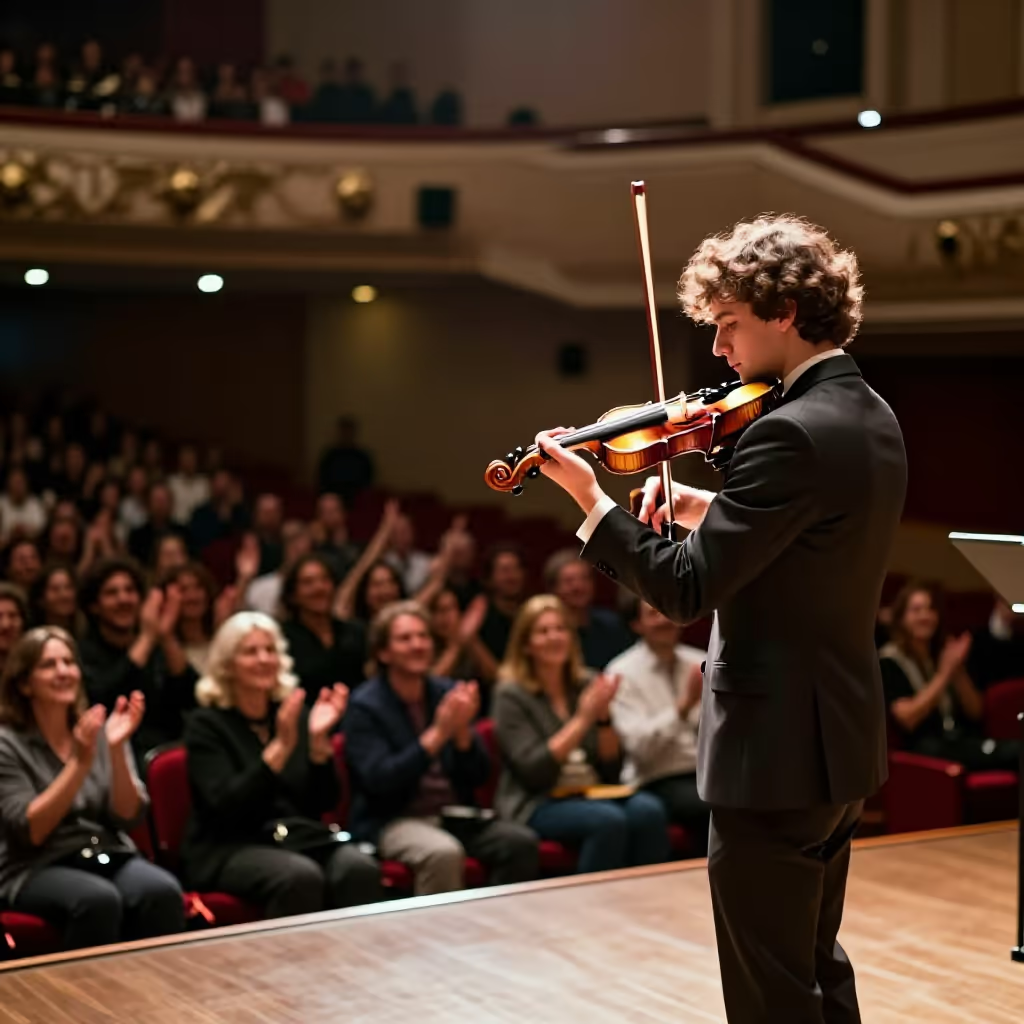
The sound made by clapping hands to express approval, enthusiasm, or recognition, usually after a performance, speech, or achievement.
example
Nach dem Theaterstück gab es langanhaltenden Applaus für die Schauspieler.
After the play, there was long-lasting applause for the actors.

Usage tips
Usually singular
The word 'Applaus' (applause) is used almost exclusively in the singular, even when many people are clapping. The plural form 'die Applause' is very rare and sounds unnatural.
EXAMPLE
Am Ende der Vorstellung gab es viel Applaus.
At the end of the performance, there was a lot of applause.
Typical verbs
You can not only 'bekommen' (receive) applause, but also actively 'spenden' (give) or 'geben' (give) it. A person or group that applauds 'spendet Applaus' (gives applause).
EXAMPLE
Das Publikum spendete nach dem Konzert begeistert Applaus.
After the concert, the audience gave enthusiastic applause.
Typical adjectives
To describe the strength of the applause, adjectives such as 'groß' (big), 'laut' (loud), 'stürmisch' (thunderous), 'tosend' (roaring), or 'langanhaltend' (long-lasting) are often used.
EXAMPLE
Die Band wurde mit tosendem Applaus auf der Bühne empfangen.
The band was welcomed onto the stage with roaring applause.
Compare with
synonym
Applaus vs Beifall
applause
'der Applaus' and 'der Beifall' mean almost the same thing in normal usage: people clap to show approval or recognition. Both words fit well after a concert, a speech, or a performance. 'Applaus' is very common in everyday language; 'Beifall' sounds a bit more formal, but not unnatural. If you really mean clapping, the two words can usually be used interchangeably.
Applaus
Nach dem letzten Lied bekam die Sängerin langen Applaus.
After the last song, the singer received long applause.
Beifall
Für seine kurze Rede erhielt der Bürgermeister viel Beifall.
The mayor received a lot of applause for his short speech.