


A loud, joyful expression of enthusiasm, triumph, or approval by a person or a crowd, often involving shouting or clapping.
example
Nach dem Siegtor brach im Stadion lauter Jubel aus.
After the winning goal, loud cheering broke out in the stadium.
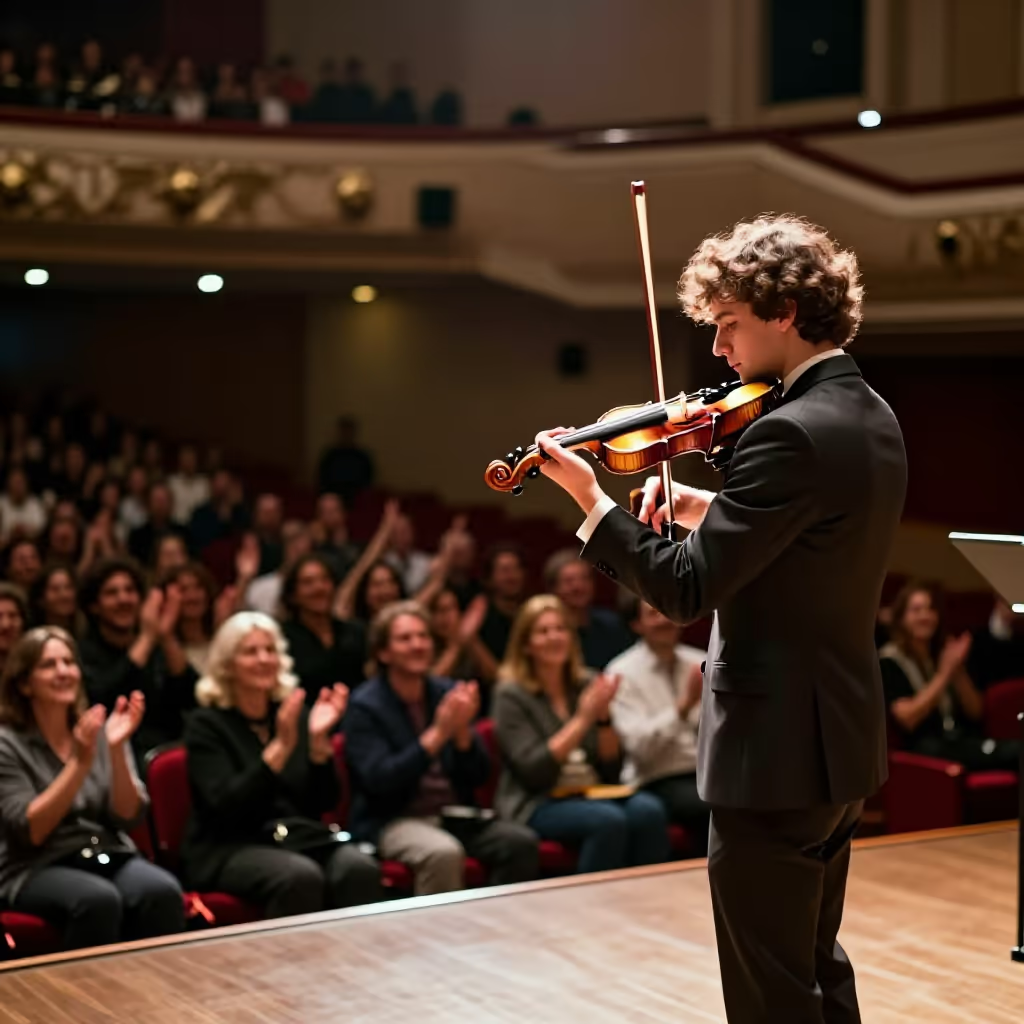
Usage tips
Word family
The noun 'der Jubel' (cheering/jubilation) belongs to the word family of the verb 'jubeln' (to cheer). When people cheer, you hear 'Jubel' (cheering). This helps you understand the meaning as an expression of great joy.
EXAMPLE
Die Fans jubelten, als ihre Mannschaft das Spiel gewann.
The fans cheered when their team won the game.
Typical verbs
'Jubel' (cheering) is often used with the verb 'ausbrechen' (to break out) to describe the sudden and loud beginning of joy. Another typical phrase is 'in Jubel ausbrechen' (to break out in cheering).
EXAMPLE
Als die Ergebnisse verkündet wurden, brach im Saal Jubel aus.
When the results were announced, cheering broke out in the hall.
Typical adjectives
To describe the intensity of the cheering, the noun is often combined with adjectives such as 'lauter' (loud), 'großer' (great), or 'grenzenloser' (boundless).
EXAMPLE
Die Band wurde auf der Bühne mit grenzenlosem Jubel empfangen.
The band was welcomed on stage with boundless cheering.
Compare with
near_synonym · confusable
Jubel vs Freude
joy
'die Freude' and 'der Jubel' both have to do with a positive feeling. 'Freude' is the feeling itself and can be quiet or strong. 'Jubel' is the loud expression of joy, enthusiasm, or victory, often with shouting, clapping, or a group of people. The words can be confused because 'Jubel' can come from 'Freude'. But not every instance of 'Freude' is 'Jubel'. If you mean the feeling inside, 'Freude' fits. If people react loudly, 'Jubel' fits.
Jubel
Nach dem letzten Tor brach im Stadion lauter Jubel aus.
After the final goal, loud cheering broke out in the stadium.
Freude
Beim Öffnen des Briefes konnte man ihre Freude sofort sehen.
When she opened the letter, you could see her joy right away.