

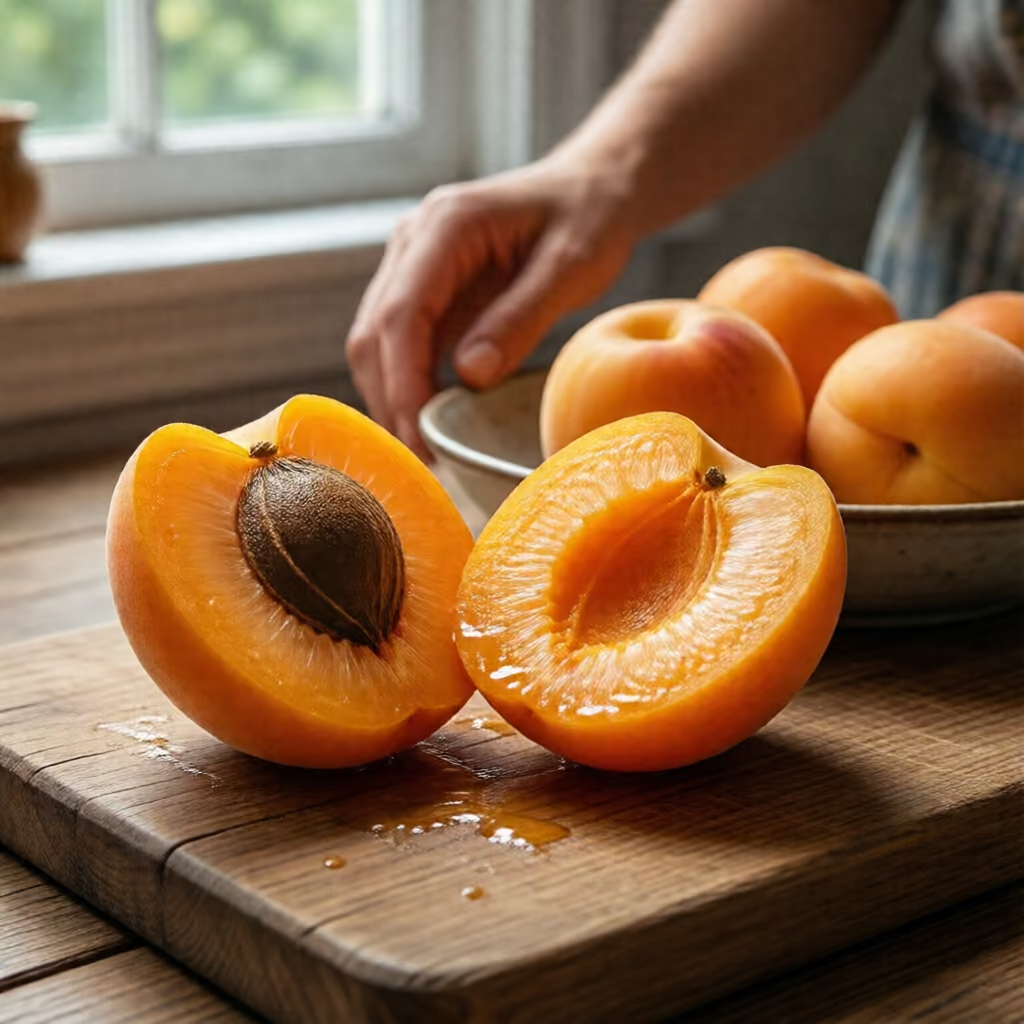
die Aprikose
apricot
A small, usually orange-yellow stone fruit with soft, sweet flesh and a large pit; the fruit of the apricot tree.
EXAMPLE
Im Sommer esse ich gern eine reife Aprikose.
In summer, I like eating a ripe apricot.
apricot
die Aprikose, die Aprikosen
Loading your saved state.
apricot
A small, usually orange-yellow stone fruit with soft, sweet flesh and a large pit; the fruit of the apricot tree.
Im Sommer esse ich gern eine reife Aprikose.
In summer, I like eating a ripe apricot.
| gender | feminine die |
|---|---|
| plural | die Aprikosen |
| genitive | der Aprikose |
| singular | plural | |
|---|---|---|
| nominative | die Aprikose | die Aprikosen |
| accusative | die Aprikose | die Aprikosen |
| dative | der Aprikose | den Aprikosen |
| genitive | der Aprikose | der Aprikosen |
The article changes with the case; it is shown in colour.
In compound words, „Aprikosen-“ (apricot-) often appears as the first component, for example in „Aprikosenmarmelade“ (apricot jam) or „Aprikosenkuchen“ (apricot cake). This helps you recognize foods prepared with apricots.
Für den Aprikosenkuchen brauchen wir etwa zehn Aprikosen.
We need about ten apricots for the apricot cake.
In recipes, you will often find the phrases „Aprikosen halbieren“ (to halve apricots) and „Aprikosen entsteinen“ (to remove the pits from apricots). The fruit is divided into two halves and the pits are removed.
Zuerst musst du die Aprikosen halbieren und entsteinen.
First, you have to halve the apricots and remove the pits.
When shopping and cooking, the phrase „getrocknete Aprikosen“ (dried apricots) is important. You often find them as an ingredient in muesli, baked goods, and other dishes.
Ich schneide getrocknete Aprikosen in kleine Stücke und mische sie ins Müsli.
I cut dried apricots into small pieces and mix them into the muesli.