

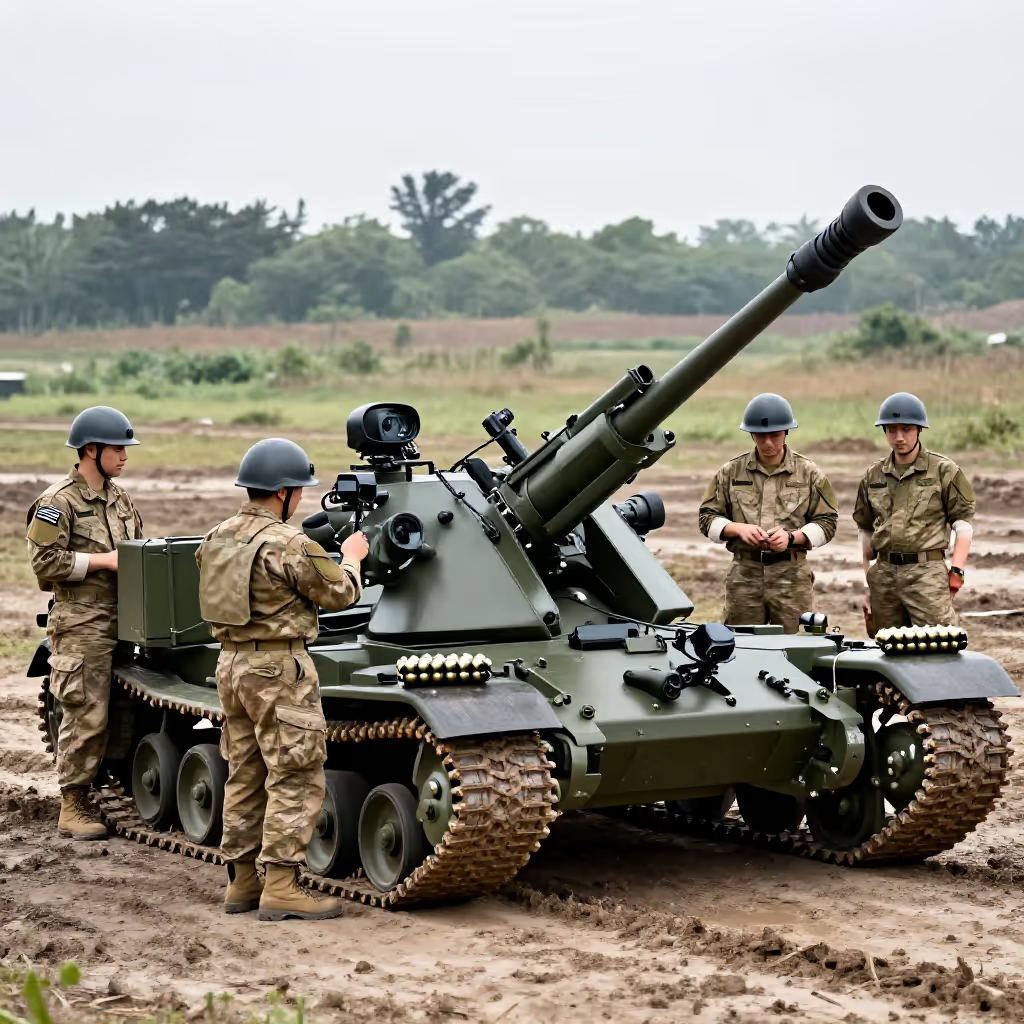
die Artillerie
artillery branch
A part of the army responsible for the use of large guns such as cannons and howitzers.
EXAMPLE
Mein Großvater diente während des Krieges bei der Artillerie.
My grandfather served in the artillery during the war.
artillery
Loading your saved state.
artillery branch
A part of the army responsible for the use of large guns such as cannons and howitzers.
Mein Großvater diente während des Krieges bei der Artillerie.
My grandfather served in the artillery during the war.
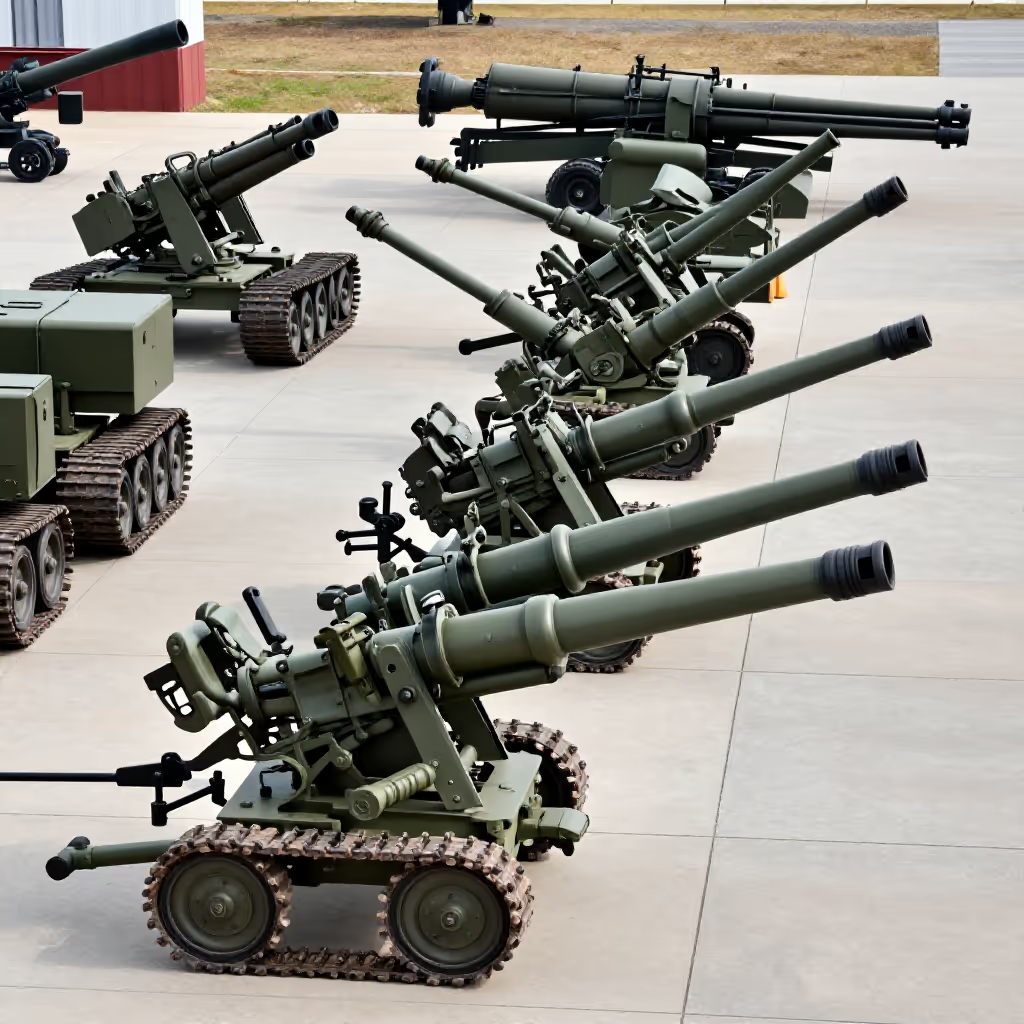
artillery
All of the heavy guns themselves that are used by this branch of the military.
Die schwere Artillerie eröffnete das Feuer auf die feindlichen Stellungen.
The heavy artillery opened fire on the enemy positions.
'Artillerie' (artillery) is a specific military term. It is mainly used when talking about the military, wars, or history.
Im Museum gab es eine Ausstellung über die Entwicklung der Artillerie.
At the museum, there was an exhibition about the development of artillery.
The word 'Artillerie' (artillery) is a collective noun and is almost always used in the singular, even when referring to many guns or a large group of soldiers.
Die Artillerie wurde an die Front verlegt.
The artillery was moved to the front.
Whether the branch of troops or the weapons are meant can be recognized from the verb. Verbs like 'dienen bei' (to serve in) or 'gehören zu' (to belong to) refer to the unit. Verbs like 'feuern' (to fire), 'einschlagen' (to strike/impact), or 'in Stellung bringen' (to bring into position) refer to the guns themselves.
Er diente drei Jahre bei der Artillerie.
He served in the artillery for three years.