

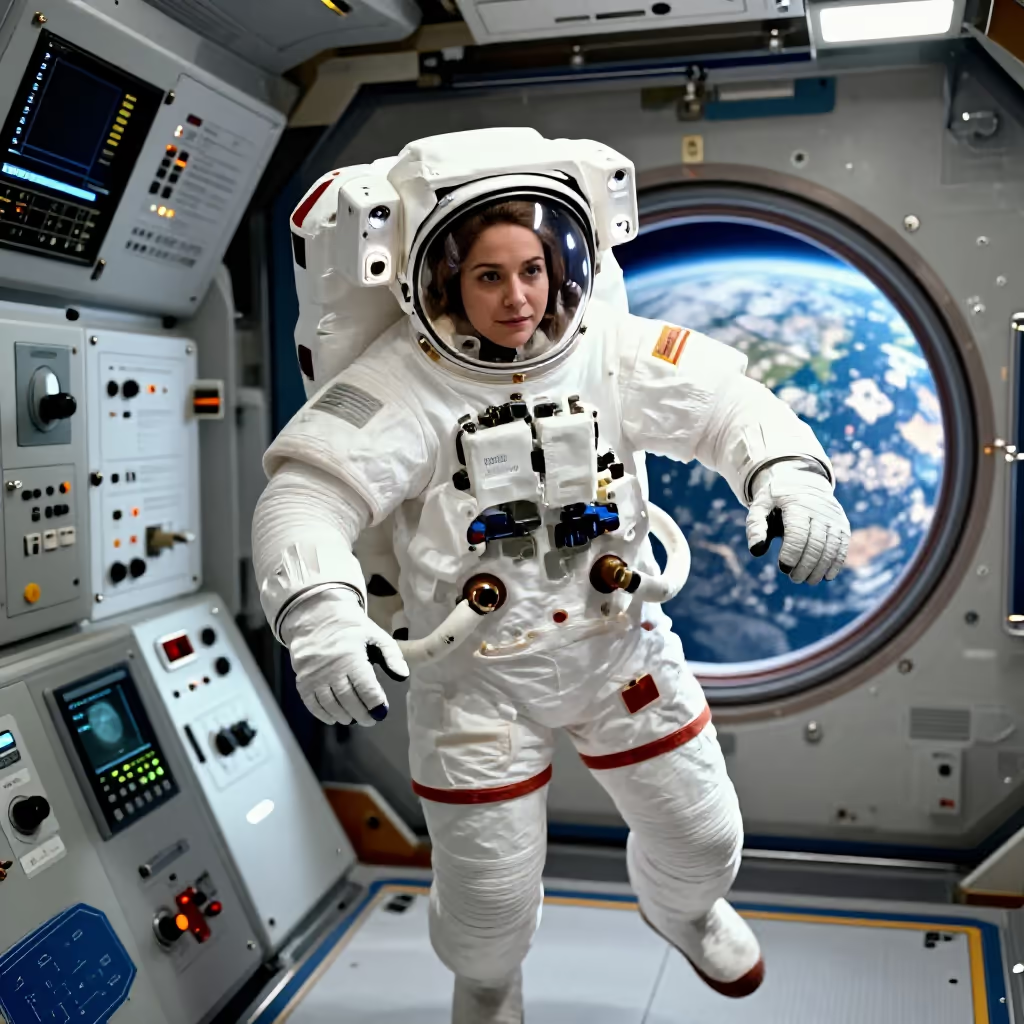
A person who has completed training for space travel and flies into space. The term is used mainly in Western usage.
example
Neil Armstrong war der erste Astronaut, der den Mond betrat.
Neil Armstrong was the first astronaut to set foot on the moon.
Usage tips
Word structure
The word comes from Ancient Greek and is made up of 'ástron' (star) and 'naútēs' (sailor). So an Astronaut (astronaut) is literally a 'star sailor'.
EXAMPLE
Als Kind träumte er davon, ein Astronaut zu werden und zu den Sternen zu reisen.
As a child, he dreamed of becoming an astronaut and traveling to the stars.
Cultural context
The term 'Astronaut' (astronaut) is used specifically for space travelers who work within Western space programs such as the American NASA or the European ESA.
EXAMPLE
Der deutsche Astronaut Alexander Gerst war Kommandant auf der ISS.
The German astronaut Alexander Gerst was commander on the ISS.
Typical collocations
Common verbs used with 'Astronaut' (astronaut) are 'werden' (to become), 'sein' (to be), and 'ins All fliegen' (to fly into space).
EXAMPLE
Die Ausbildung, um Astronaut zu werden, ist extrem anspruchsvoll.
The training to become an astronaut is extremely demanding.
Compare with
confusable
Astronaut vs Astronom
astronomer
'Astronaut' and 'Astronom' both have to do with outer space, but they refer to very different people. An 'Astronaut' is trained for space travel and can fly into space. An 'Astronom' researches outer space scientifically, for example stars and planets, but normally stays on Earth. The words are easy to confuse because they sound similar and are both connected with space. Memory aid: the astronaut flies into space; the astronomer studies space.
Astronaut
Der Astronaut trainierte viele Monate für den Flug zur Raumstation.
The astronaut trained for many months for the flight to the space station.
Astronom
Am Abend erklärt der Astronom den Kindern, wie man den Mars am Himmel findet.
In the evening, the astronomer explains to the children how to find Mars in the sky.