

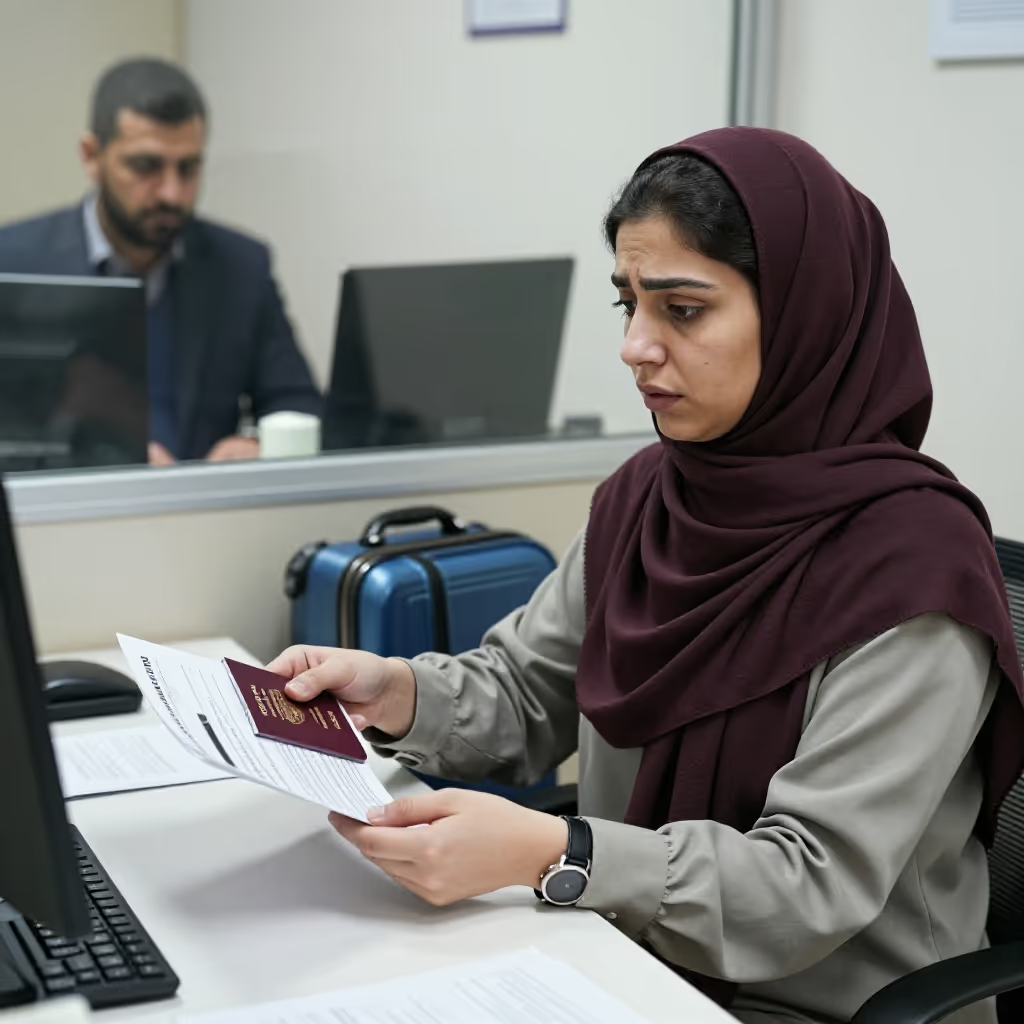
Describes a person who has left their home country and is officially asking for asylum, that is, for protection and admission, in another country.
example
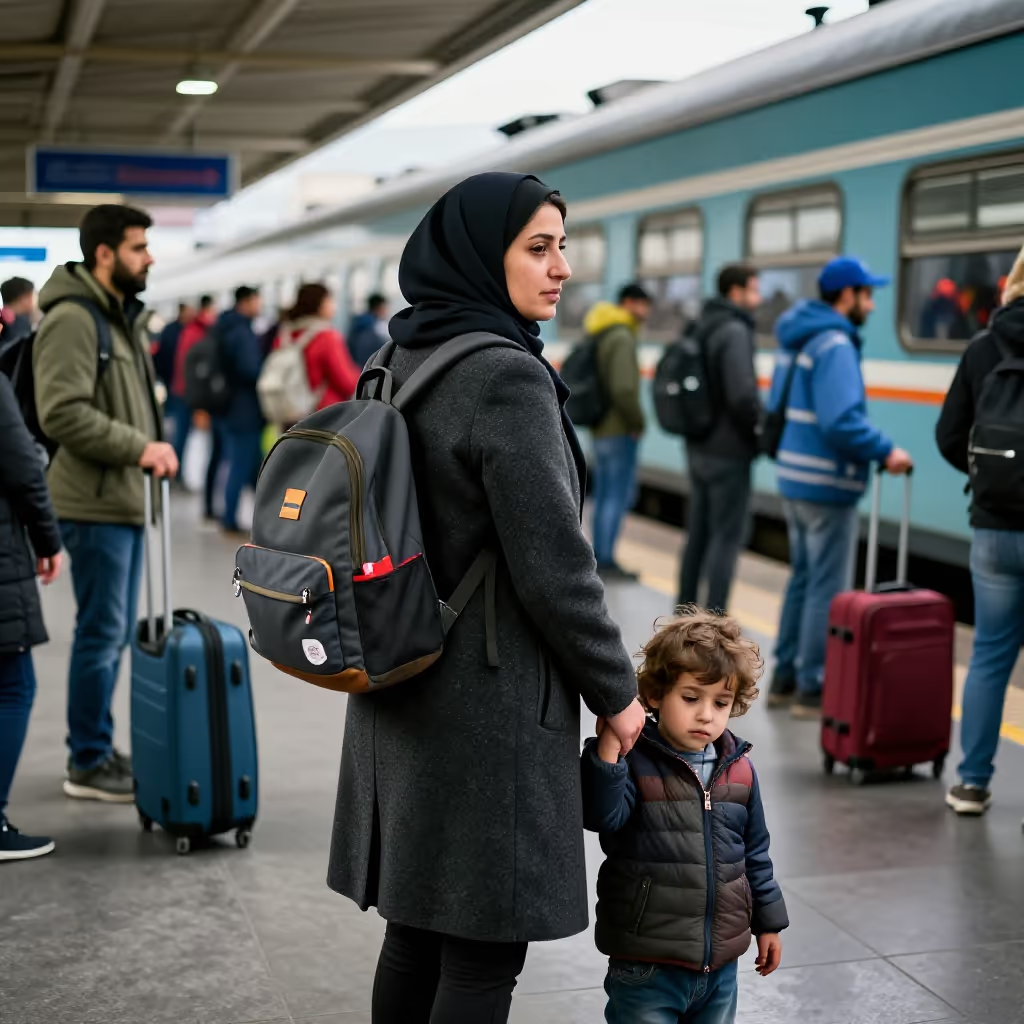
Die asylsuchende Familie wurde vorübergehend in einer Erstaufnahmeeinrichtung untergebracht.
The family seeking asylum was temporarily housed in an initial reception center.
Usage tips
Word structure
The word is a present participle, composed of 'das Asyl' (asylum) and 'suchend' (seeking, from 'suchen' (to search/look for)). It describes a person who is actively going through the process of seeking asylum.
EXAMPLE
In der Stadt gibt es eine Beratungsstelle für asylsuchende Menschen.
There is a counseling center in the city for people seeking asylum.
Use as a noun
This adjective is very often used as a noun to refer to people. You then say 'der Asylsuchende' (male asylum seeker), 'die Asylsuchende' (female asylum seeker), or 'die Asylsuchenden' (asylum seekers, plural).
EXAMPLE
Die Asylsuchenden warten auf die Entscheidung über ihren Antrag.
The asylum seekers are waiting for the decision on their application.
Register and style
'Asylsuchend' (seeking asylum) is a formal and neutral term from administrative language and the media. It is used to describe a person's legal status precisely.
EXAMPLE
Der offizielle Status der Person ist „asylsuchend“.
The person's official status is 'asylsuchend' (seeking asylum).
Compare with
near_synonym · confusable
asylsuchend vs Flüchtling
refugee
'der Flüchtling' and 'asylsuchend' both refer to people who have left their home country and need protection. 'Flüchtling' is a noun and emphasizes the reason for fleeing, for example war or persecution. 'asylsuchend' is an adjective and emphasizes the official application for protection in another country. Learners may confuse the words because many refugees are also seeking asylum. But the words do not describe exactly the same point: 'Flüchtling' describes the person's situation, while 'asylsuchend' describes the legal step.
asylsuchend
Die asylsuchende Frau wartet auf einen Termin bei der Behörde.
The woman seeking asylum is waiting for an appointment at the government office.
Flüchtling
Der Flüchtling kam mit seiner Familie in die Stadt, weil in seiner Heimat Krieg ist.
The refugee came to the city with his family because there is war in his home country.