

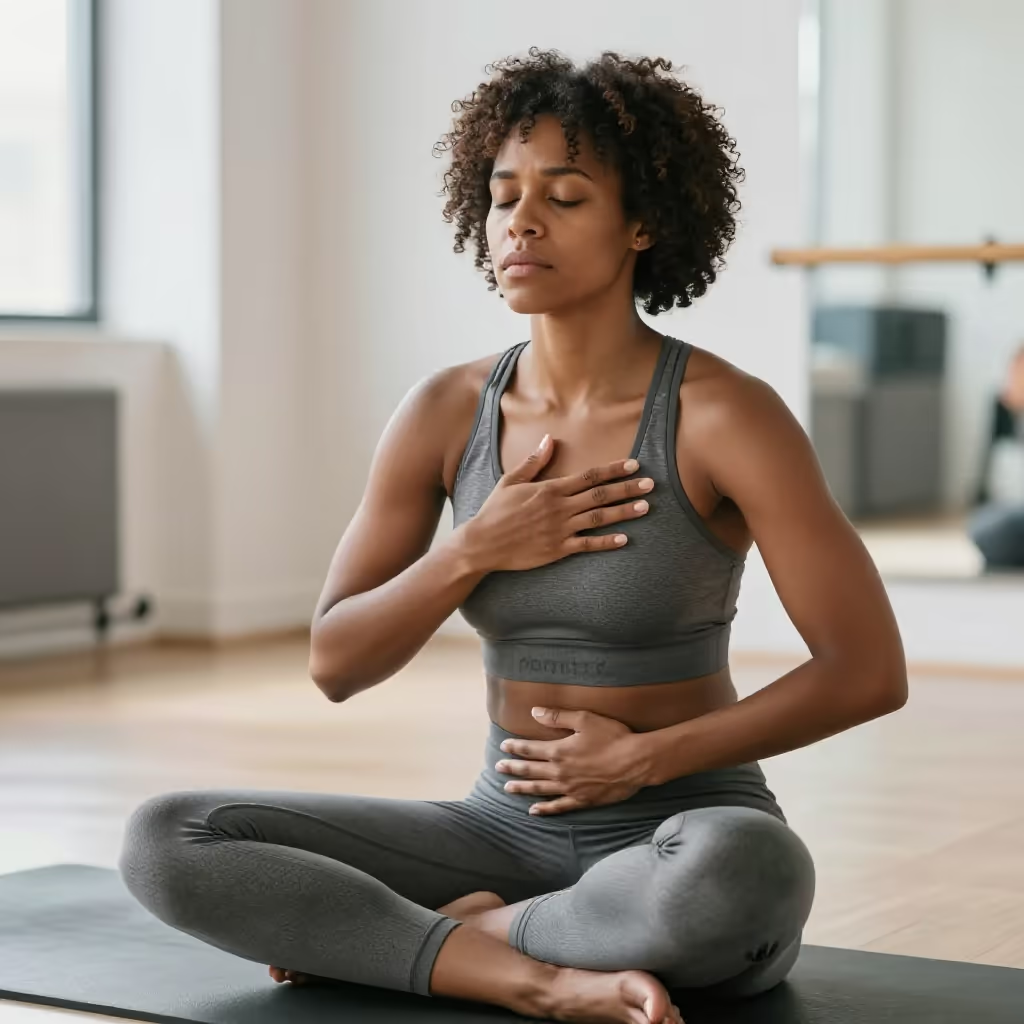
atmen
to breathe
To draw air into the lungs and expel it again in order to supply the body with oxygen.
EXAMPLE
Nach dem schnellen Lauf musste er erst einmal tief atmen.
After the fast run, he first had to breathe deeply.
to breathe
Loading your saved state.
to breathe
To draw air into the lungs and expel it again in order to supply the body with oxygen.
Nach dem schnellen Lauf musste er erst einmal tief atmen.
After the fast run, he first had to breathe deeply.
to breathe
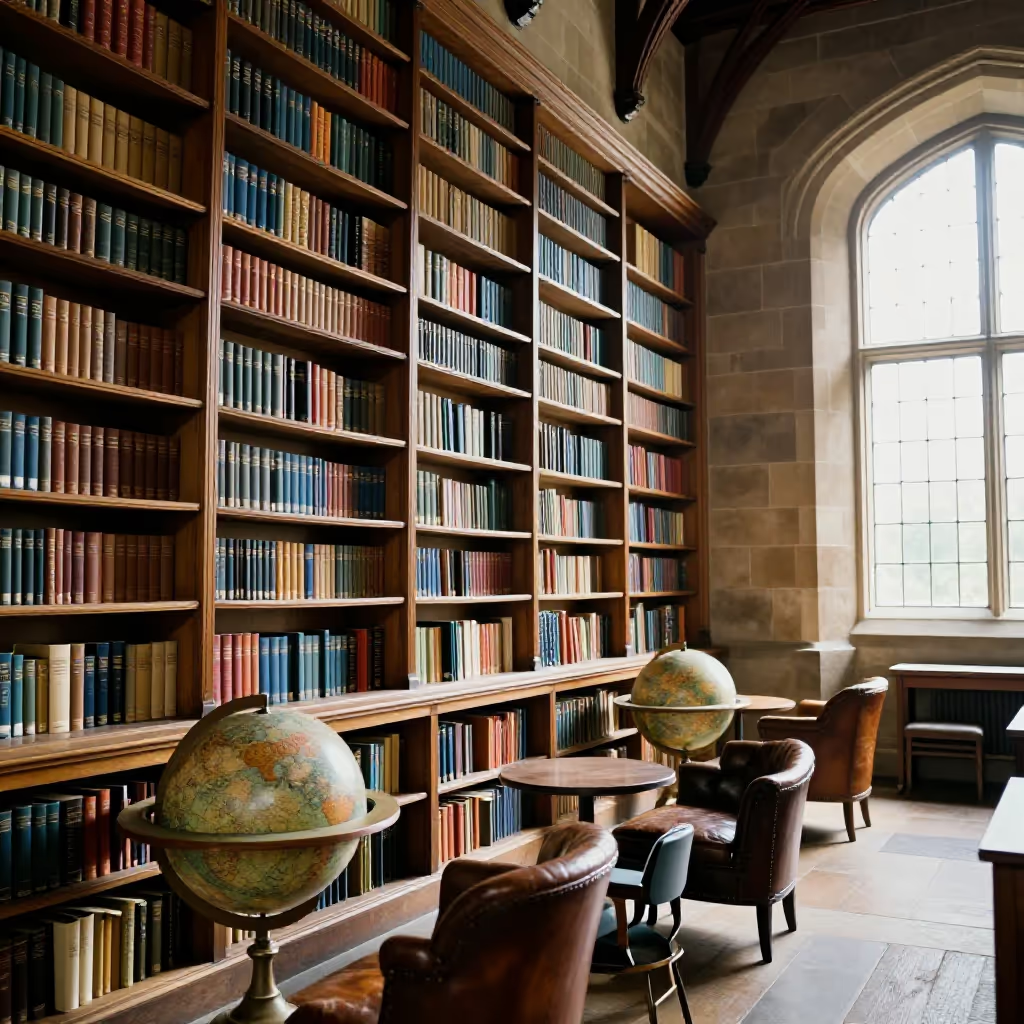
In a figurative sense, to radiate or embody a particular atmosphere or quality.
Dieses alte Haus atmet Geschichte.
This old house breathes history.
'Atmen' (to breathe) is the base verb for many important verbs with prefixes that describe a direction or type of breathing. Examples are 'einatmen' (to breathe in), 'ausatmen' (to breathe out), and 'durchatmen' (often to breathe a sigh of relief).
Bitte atmen Sie tief ein und halten Sie die Luft an.
Please breathe in deeply and hold your breath.
To describe the manner of breathing, 'atmen' (to breathe) is often combined with adverbs. Common combinations are 'tief atmen' (to breathe deeply), 'schwer atmen' (to breathe heavily), 'ruhig atmen' (to breathe calmly), or 'flach atmen' (to breathe shallowly).
Der Patient atmete nach der Anstrengung sehr schwer.
The patient was breathing very heavily after the exertion.
In the figurative meaning, 'atmen' (to breathe) is not used for living beings, but for places or things. The subject is then usually a building, a room, or a landscape that radiates a particular atmosphere.
Die alte Bibliothek atmet den Geist vergangener Jahrhunderte.
The old library breathes the spirit of past centuries.
to embody / portray
Atmen and verkörpern can be used figuratively to express that something shows a quality or idea. „Atmen“ describes more of an atmosphere that can be felt everywhere, while „verkörpern“ presents something as a clear, concrete example. Use „atmen“ for the mood and „verkörpern“ for the visible representation.

In jedem Raum atmet das alte Rathaus die Geschichte der Stadt.
The old town hall breathes the city’s history in every room.
Das alte Rathaus verkörpert die Geschichte der Stadt in seiner Fassade.
The old town hall embodies the city’s history in its facade.