

aufblitzen
to flash
To shine brightly or emit light for a brief moment.
EXAMPLE
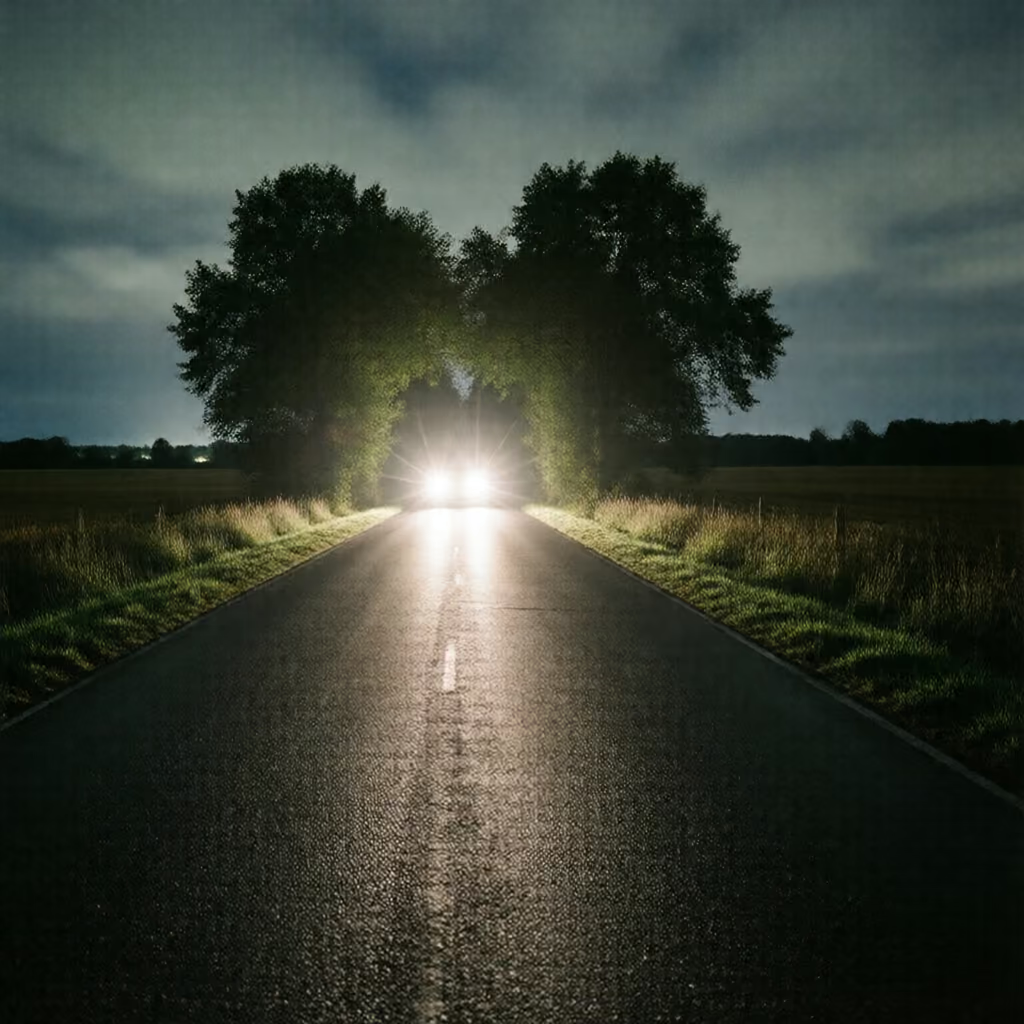
In der Ferne blitzten die Lichter eines Fahrzeugs auf.
In the distance, the lights of a vehicle flashed.
to flash
aufblitzen – blitzte auf – hat aufgeblitzt
Loading your saved state.
to flash
To shine brightly or emit light for a brief moment.
In der Ferne blitzten die Lichter eines Fahrzeugs auf.
In the distance, the lights of a vehicle flashed.

to flash
To suddenly and briefly become visible or enter someone's awareness, for example a thought, memory, or feeling.
Während des Gesprächs blitzte in ihr eine wichtige Erinnerung auf.
During the conversation, an important memory flashed into her mind.
| er/sie/es | blitzt auf |
|---|---|
| sie | blitzen auf |
| er/sie/es | blitzte auf |
|---|---|
| sie | blitzten auf |
| er/sie/es | hat aufgeblitzt ist aufgeblitzt |
|---|---|
| sie | haben aufgeblitzt sind aufgeblitzt |
| er/sie/es | hatte aufgeblitzt war aufgeblitzt |
|---|---|
| sie | hatten aufgeblitzt waren aufgeblitzt |
| er/sie/es | wird aufblitzen |
|---|---|
| sie | werden aufblitzen |
| er/sie/es | blitze auf |
|---|---|
| sie | blitzen auf |
Used for reported speech.
| er/sie/es | blitzte auf |
|---|---|
| sie | blitzten auf |
Used for wishes and “would”.
| infinitive | aufblitzen |
|---|---|
| with zu | aufzublitzen |
| present participle | aufblitzend |
| past participle | aufgeblitzt |
'Aufblitzen' (to flash) consists of 'auf' and 'blitzen' (to flash) and is separable. In a main clause, 'auf' is separated and placed at the end; in a subordinate clause, the verb stays together. With the infinitive using 'zu', 'zu' is placed between 'auf' and 'blitzen'.
Zwischen den Bäumen blitzte ein Licht auf.
A light flashed between the trees.
Sie erschrak, weil zwischen den Bäumen ein Licht aufblitzte.
She was startled because a light flashed between the trees.
Das Licht schien nur für einen Augenblick aufzublitzen.
The light seemed to flash for only a moment.
The subject is often a light source or a shiny object, such as 'ein Licht' (a light), 'eine Klinge' (a blade), or 'Metall' (metal). Phrases such as 'in der Sonne' (in the sun) or 'im Scheinwerferlicht' (in the headlights) can show which light an object is reflecting.
Die Klinge blitzte in der Sonne auf.
The blade flashed in the sun.
With thoughts, memories, or feelings, 'in' is often used with the dative to name the person experiencing something. The thought, memory, or feeling is the subject.
Als sie die vertraute Stimme hörte, blitzte in ihr neue Hoffnung auf.
When she heard the familiar voice, new hope flashed into her mind.