

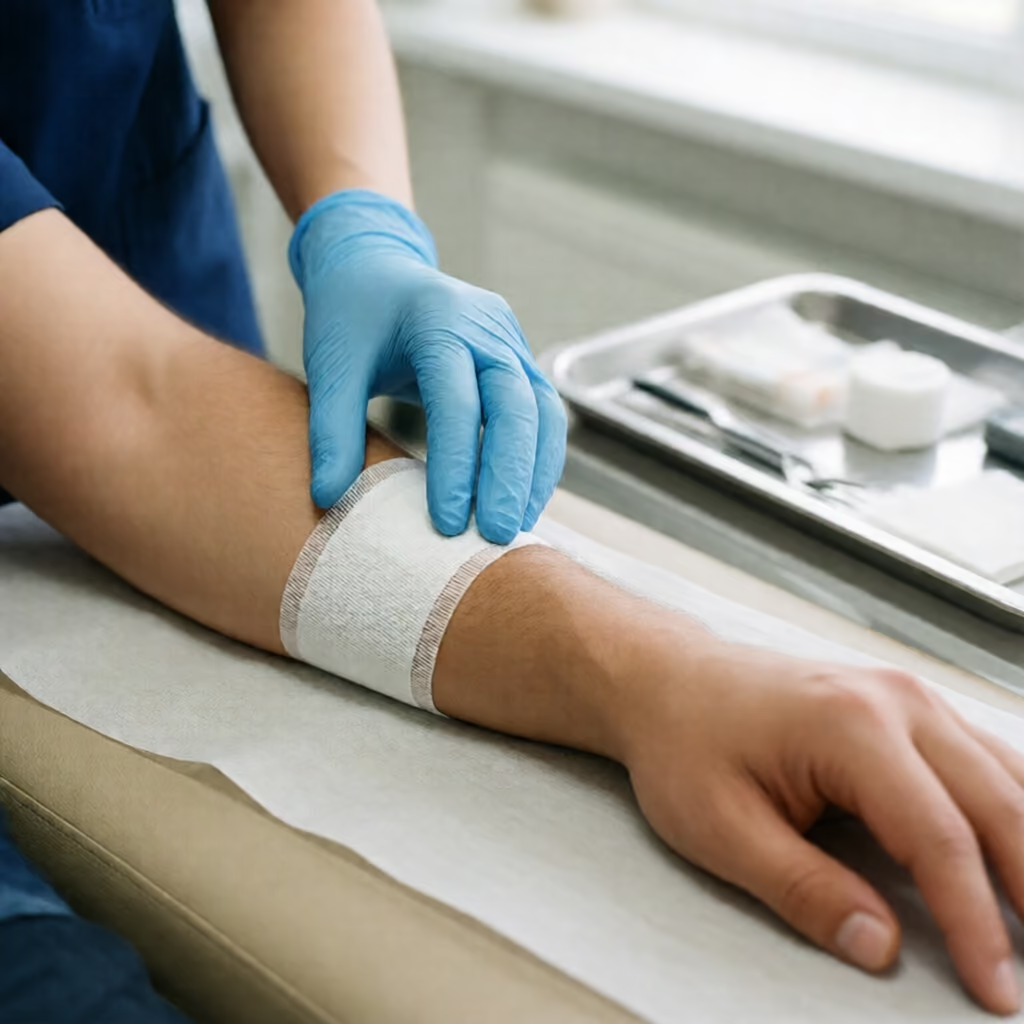
aufdrücken
to press on
To attach something to a surface by applying pressure, or to press it firmly into place.
EXAMPLE
Drück das Pflaster bitte vorsichtig auf die Wunde auf.
Please press the bandage gently onto the wound.
to press on / push open / foist
aufdrücken – drückte auf – hat aufgedrückt
Loading your saved state.
to press on
To attach something to a surface by applying pressure, or to press it firmly into place.
Drück das Pflaster bitte vorsichtig auf die Wunde auf.
Please press the bandage gently onto the wound.

to push open
To open something, especially a door or window, by pushing it.
Die Tür war nur angelehnt, und er drückte sie einfach auf.
The door was ajar, and he simply pushed it open.

to foist something on
To give someone something against their will or make them accept or take responsibility for something.
Der Verkäufer wollte mir unbedingt eine teure Versicherung aufdrücken.
The salesperson was determined to foist an expensive insurance policy on me.

to impose an opinion
To force one's own opinion or attitude on other people, leaving no room for their own views.
Er versucht ständig, allen anderen seine Meinung aufzudrücken.
He constantly tries to impose his opinion on everyone else.
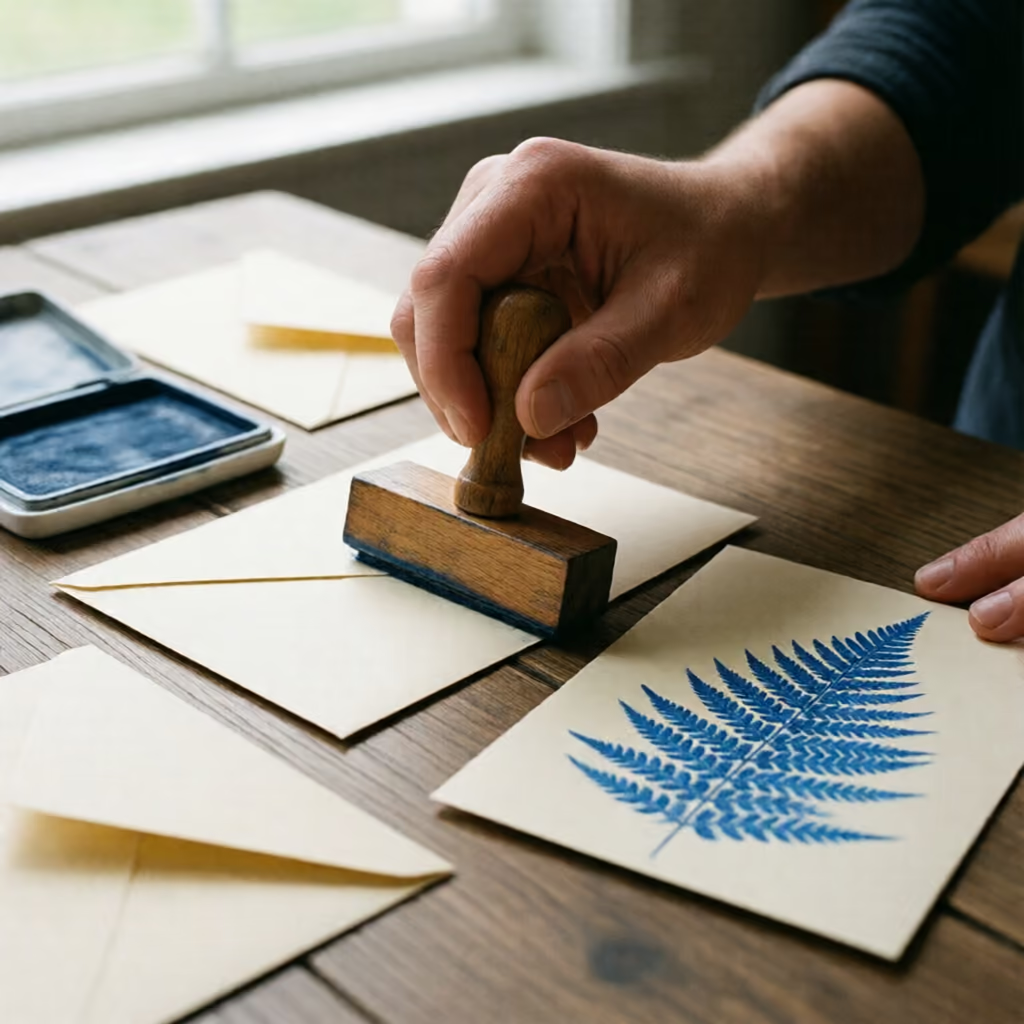
to put one's stamp on something
To mark something with a stamp, or to give something a clearly recognizable character.
Die neue Leitung hat dem Unternehmen ihren persönlichen Stempel aufgedrückt.
The new management has put its personal stamp on the company.

to plant a kiss
To give someone a quick and often unexpected kiss.
Zum Abschied drückte er seiner Oma einen dicken Kuss auf.
He planted a big kiss on his grandma as he said goodbye.
| ich | drücke auf |
|---|---|
| du | drückst auf |
| er/sie/es | drückt auf |
| wir | drücken auf |
| ihr | drückt auf |
| sie | drücken auf |
| ich | drückte auf |
|---|---|
| du | drücktest auf |
| er/sie/es | drückte auf |
| wir | drückten auf |
| ihr | drücktet auf |
| sie | drückten auf |
| ich | habe aufgedrückt |
|---|---|
| du | hast aufgedrückt |
| er/sie/es | hat aufgedrückt |
| wir | haben aufgedrückt |
| ihr | habt aufgedrückt |
| sie | haben aufgedrückt |
| du | drück auf! drücke auf! |
|---|---|
| ihr | drückt auf! |
| Sie | drücken Sie auf! |
| ich | hatte aufgedrückt |
|---|---|
| du | hattest aufgedrückt |
| er/sie/es | hatte aufgedrückt |
| wir | hatten aufgedrückt |
| ihr | hattet aufgedrückt |
| sie | hatten aufgedrückt |
| ich | werde aufdrücken |
|---|---|
| du | wirst aufdrücken |
| er/sie/es | wird aufdrücken |
| wir | werden aufdrücken |
| ihr | werdet aufdrücken |
| sie | werden aufdrücken |
| ich | drücke auf |
|---|---|
| du | drückest auf |
| er/sie/es | drücke auf |
| wir | drücken auf |
| ihr | drücket auf |
| sie | drücken auf |
Used for reported speech.
| ich | drückte auf |
|---|---|
| du | drücktest auf |
| er/sie/es | drückte auf |
| wir | drückten auf |
| ihr | drücktet auf |
| sie | drückten auf |
Used for wishes and “would”.
| infinitive | aufdrücken |
|---|---|
| with zu | aufzudrücken |
| present participle | aufdrückend |
| past participle | aufgedrückt |
'Aufdrücken' (to press on / push open) consists of 'auf' and 'drücken' (to press) and is separable. In a main clause, 'auf' goes at the end; in a subordinate clause, it remains attached to the verb. In an infinitive with 'zu', 'zu' goes between 'auf' and 'drücken'.
Sie drückt die Gartentür mit der Schulter auf.
She pushes the garden gate open with her shoulder.
Ich sehe, dass sie die Gartentür mit der Schulter aufdrückt.
I see that she is pushing the garden gate open with her shoulder.
Sie versucht, die Gartentür mit der Schulter aufzudrücken.
She tries to push the garden gate open with her shoulder.
You can specify the surface something is attached to using 'auf' (onto) with the accusative. This 'auf' belongs to the expression of location; the separated verb prefix 'auf' also appears in the main clause.
Sie drückt das Etikett fest auf die Verpackung auf.
She presses the label firmly onto the packaging.
Typical objects include 'eine Tür' (a door), 'ein Fenster' (a window), or 'einen Deckel' (a lid). You can use 'mit der Hand' (with your hand), 'mit dem Fuß' (with your foot), or 'mit der Schulter' (with your shoulder) to specify what is used to apply pressure.
Weil er beide Hände voll hat, drückt er die Tür mit dem Fuß auf.
Because he has both hands full, he pushes the door open with his foot.
The pattern is 'jemandem etwas aufdrücken' (to foist something on someone): the person is in the dative, and the thing or task is in the accusative. This use is colloquial and usually expresses criticism.
Meine Kollegin hat mir schon wieder die ganze Arbeit aufgedrückt.
My colleague has foisted all the work on me yet again.
The expression 'jemandem seine Meinung aufdrücken' (to impose one's opinion on someone) often occurs with 'nicht wollen' (not want to) or 'niemandem' (on no one). This emphasizes that the speaker wants to respect other people's views.
Ich möchte dir meine Meinung nicht aufdrücken, aber ich sehe die Sache anders.
I don't want to impose my opinion on you, but I see things differently.
With documents and forms, 'einen Stempel aufdrücken' (to put a stamp on something) is often meant literally. When a person 'ihren Stempel aufdrückt' (puts their stamp on) an organization or a work, the meaning is usually figurative; 'persönlich' (personal) or 'eigen' (one's own) are typical clues.
Die Mitarbeiterin drückte dem Formular einen Stempel auf.
The employee put a stamp on the form.
Die Regisseurin hat dem Film ihren ganz eigenen Stempel aufgedrückt.
The director has put her very own stamp on the film.
The person being kissed is in the dative, and 'einen Kuss' (a kiss) is in the accusative. The body part is often added using 'auf' (on) with the accusative, for example 'auf die Wange' (on the cheek) or 'auf die Stirn' (on the forehead).
Die Tante drückte dem Jungen einen Kuss auf die Wange auf.
The aunt planted a kiss on the boy's cheek.