


auffällig
striking
In a way that attracts attention; easy to notice, often because of a special characteristic such as color, shape, or behavior.
Sie trug ein auffälliges Kleid in leuchtendem Gelb.
She wore a striking dress in bright yellow.

noticeable / striking
Loading your saved state.
striking
In a way that attracts attention; easy to notice, often because of a special characteristic such as color, shape, or behavior.
Sie trug ein auffälliges Kleid in leuchtendem Gelb.
She wore a striking dress in bright yellow.
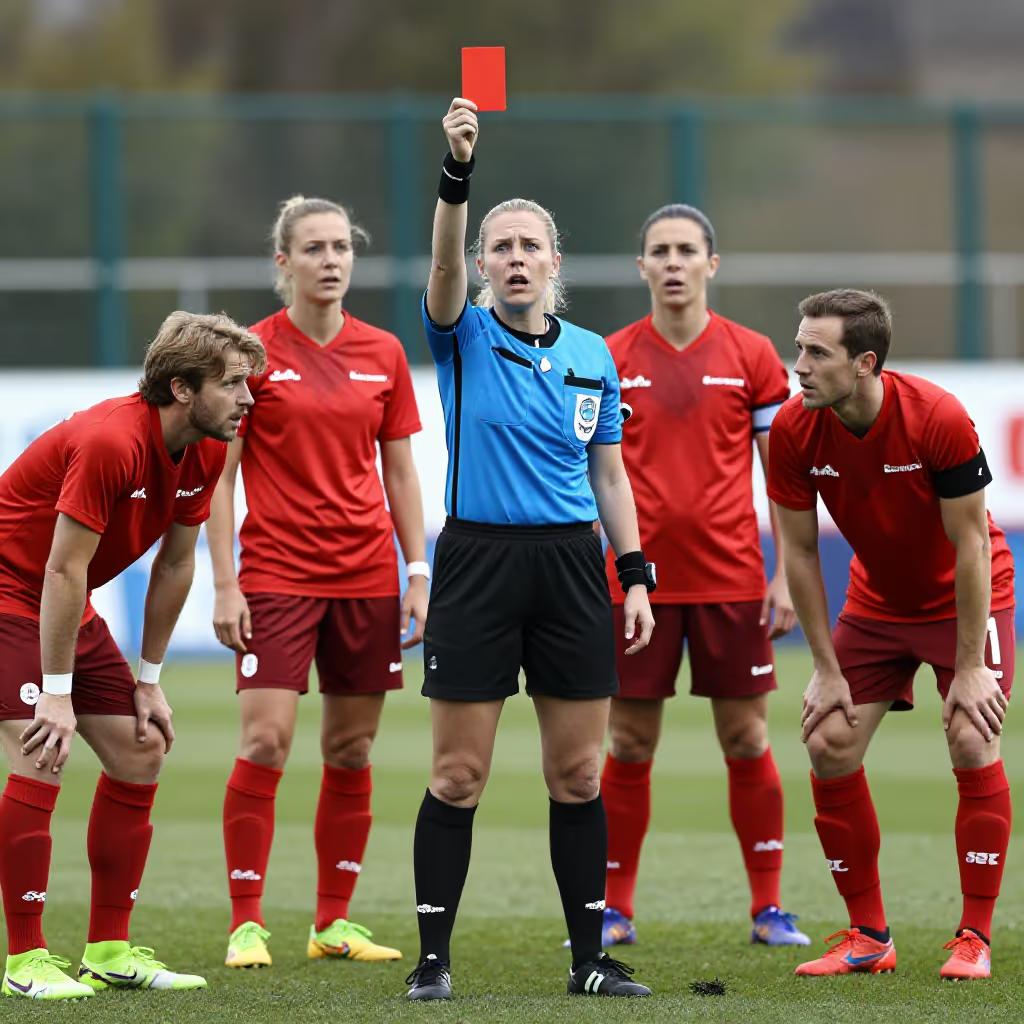
The adjective 'auffällig' (noticeable/striking) comes from the separable verb 'auffallen' (to stand out/to be noticed). Something that stands out is 'auffällig' (noticeable/striking). The meaning of the word is therefore derived directly from the verb.
Mir ist aufgefallen, dass du neue Schuhe hast.
I noticed that you have new shoes.
'Auffällig' (noticeable/striking) can also be used as an adverb to describe how someone does something. It then remains unchanged after the verb.
Seit dem Streit verhält er sich auffällig still.
Since the argument, he has been behaving noticeably quietly.
The meaning of 'auffällig' (noticeable/striking) can be neutral, positive, or negative. In connection with fashion or art, it is often neutral (meaning 1). In connection with behavior or circumstances, it can sound suspicious or questionable (meaning 2).
Das auffällige Fehlen des Ministers bei der Sitzung sorgte für Spekulationen.
The minister's noticeable absence from the meeting caused speculation.
positive
'positiv' and 'auffällig' can both appear in results, checks, or examinations. In a test, 'positiv' means that something being looked for was actually found. 'auffällig' only means that something is noticeable, seems unusual, or should be checked more closely. This can have a negative meaning, but it is not necessarily a clear test result yet. Learners may confuse the words because both can appear in reports. The important point is: 'positiv' confirms something, while 'auffällig' only draws attention to something.

Bei der Kontrolle war ein Wert auffällig, aber die Ärztin will erst weitere Tests machen.
During the check-up, one value was noticeable, but the doctor wants to do more tests first.
Der Schnelltest war positiv, deshalb ruft Paul seine Ärztin an.
The rapid test was positive, so Paul calls his doctor.