


aufgelöst
distraught
Being in a state of strong emotional agitation, often crying or very nervous.
EXAMPLE
Nach dem Streit war sie völlig aufgelöst und konnte kaum sprechen.
After the argument, she was completely distraught and could hardly speak.
distraught / dissolved / resolved
Loading your saved state.
distraught
Being in a state of strong emotional agitation, often crying or very nervous.
Nach dem Streit war sie völlig aufgelöst und konnte kaum sprechen.
After the argument, she was completely distraught and could hardly speak.

dissolved
Describes a solid substance that has completely dispersed in a liquid and is no longer visible.
Der Zucker ist im heißen Tee komplett aufgelöst.
The sugar is completely dissolved in the hot tea.
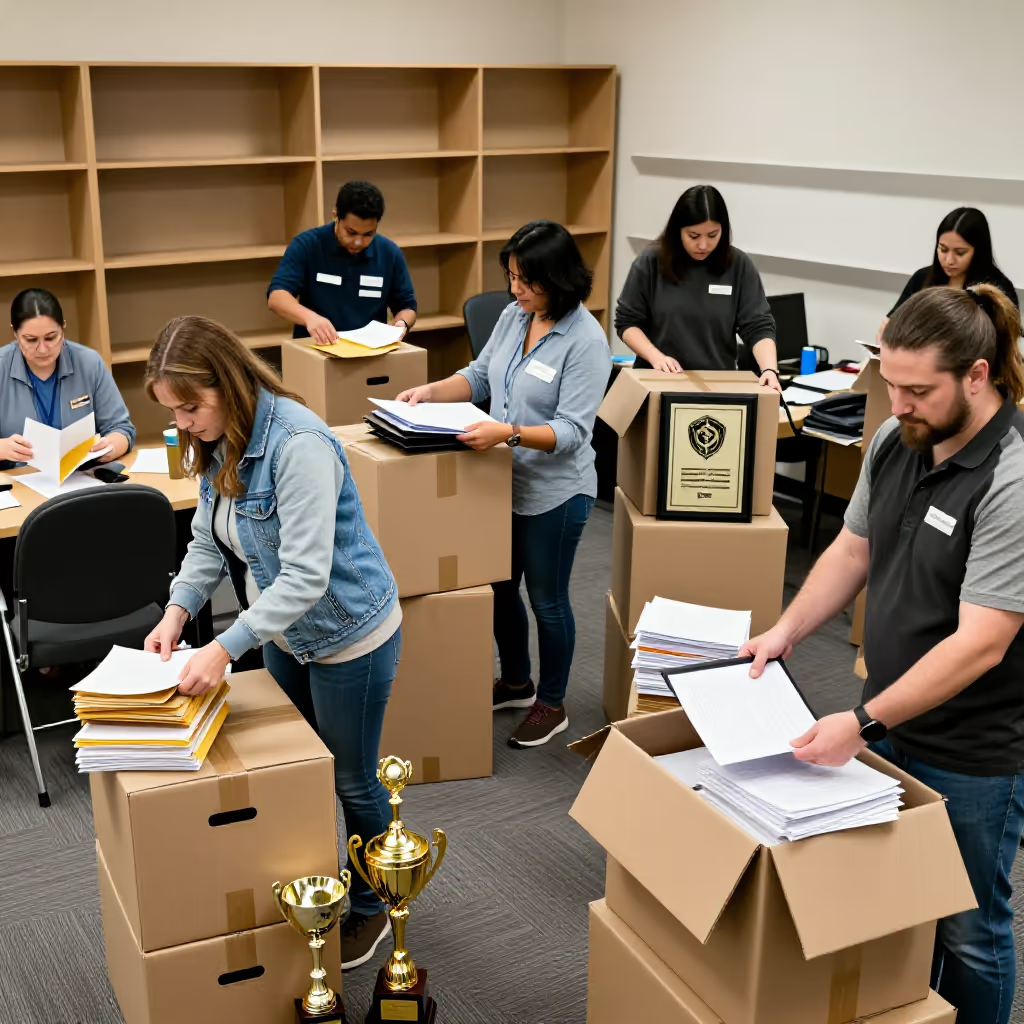
disbanded
Ended or no longer existing, referring to groups, contracts, or organizations.
Die Band wurde letztes Jahr offiziell aufgelöst.
The band was officially disbanded last year.

resolved
Clarified or solved, referring to a riddle, a problem, or an unclear situation.
Nach langer Suche wurde das Geheimnis um das verschwundene Bild endlich aufgelöst.
After a long search, the mystery surrounding the missing painting was finally resolved.
'Aufgelöst' is the past participle of the separable verb 'auflösen' (to dissolve / to disband / to resolve). Here it is used like an adjective. The different meanings of 'aufgelöst' come from the different meanings of the verb.
Das Rätsel wurde vom Detektiv aufgelöst.
The riddle was solved by the detective.
The context reveals the meaning: If you are talking about a person, they are emotionally agitated. If it is about a substance in a liquid, it is dispersed. If it refers to a group or a problem, they are ended or resolved.
Das Kind war nach dem Albtraum völlig aufgelöst.
The child was completely distraught after the nightmare.
In the emotional meaning, 'aufgelöst' (distraught) is often intensified by adverbs like 'völlig' (completely), 'total' (totally), or 'ganz' (quite/completely) to describe a state of extreme tension or grief.
Sie rief mich an und war am Telefon ganz aufgelöst.
She called me and was completely distraught on the phone.
When a substance is dispersed in a liquid, the preposition 'in' with the dative is used to name the liquid.
Das Salz ist bereits im Wasser aufgelöst.
The salt is already dissolved in the water.