

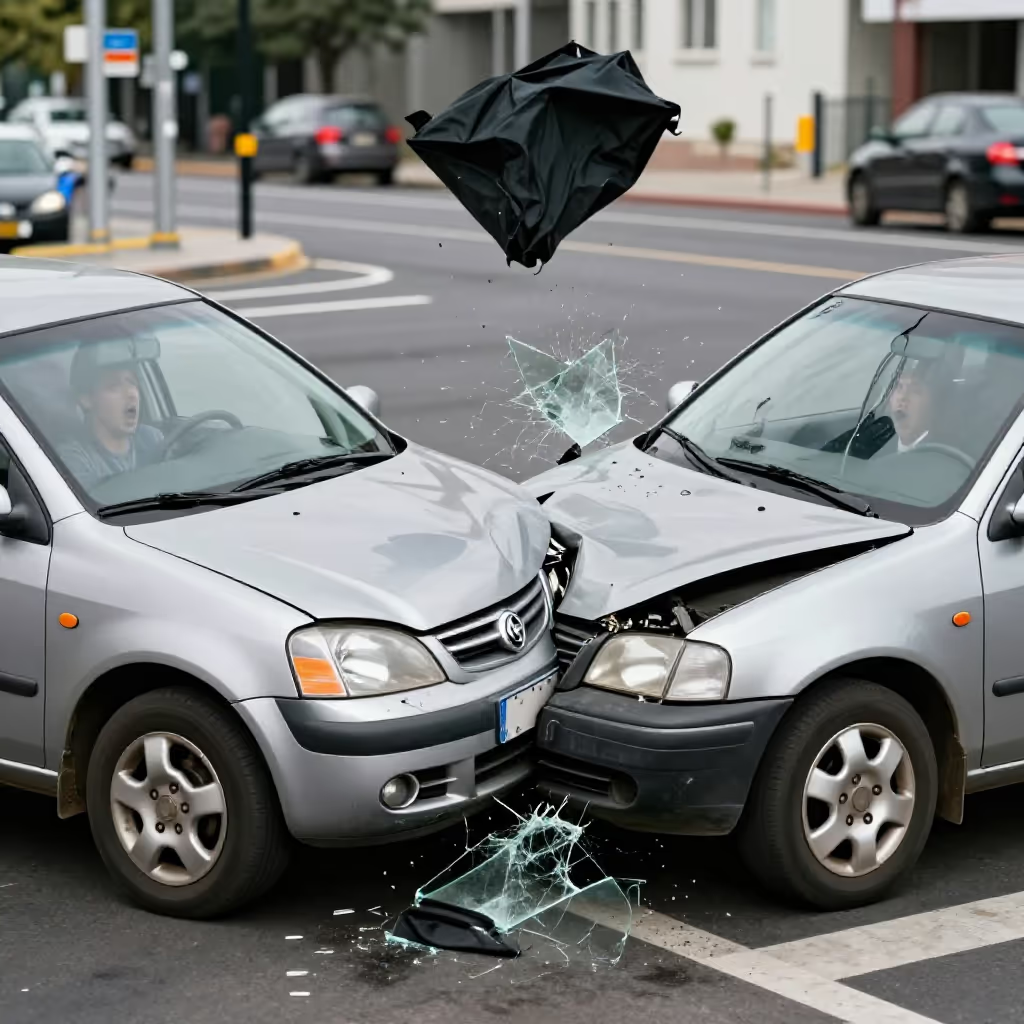
The sudden and forceful collision of a moving body with another body or a solid surface; a collision.
example
Der Fahrer wurde durch den Airbag vor schweren Verletzungen beim Aufprall geschützt.
The driver was protected by the airbag from serious injuries during the impact.

Usage tips
Derived from the verb
The noun 'der Aufprall' (impact) is derived directly from the separable verb 'aufprallen' (to crash into / to hit). The verb describes the action ('Das Auto prallt auf die Mauer auf.' — The car crashes into the wall.), while the noun describes the event ('Der Aufprall war heftig.' — The impact was violent.).
EXAMPLE
Der Ball prallte von der Wand ab.
The ball bounced off the wall.
Typical adjectives
To describe the force of the impact, adjectives such as 'heftig' (violent), 'hart' (hard), 'schwer' (severe), or 'sanft' (gentle) are often used.
EXAMPLE
Es war nur ein sanfter Aufprall, daher gab es keinen Schaden.
It was only a gentle impact, so there was no damage.
Important prepositions
To describe the time, you use 'beim Aufprall' (on impact / during the impact) with the dative. To describe the target that something hits, you use 'auf' (onto/against) with the accusative.
EXAMPLE
Beim Aufprall wurde das vordere Licht des Autos zerstört.
On impact, the car's front light was destroyed.
Compare with
near_synonym · confusable
Aufprall vs Crash
crash
'der Crash' and 'der Aufprall' both have to do with hitting something forcefully. 'der Aufprall' mainly means the moment when a body hits something, for example a car hitting a wall. 'der Crash' is more about the whole accident or event involving damage. The words can be confused because a crash often includes a strong impact. In practical terms: 'Aufprall' is the moment of impact, while 'Crash' is the serious accident as a whole.