

aufschließen
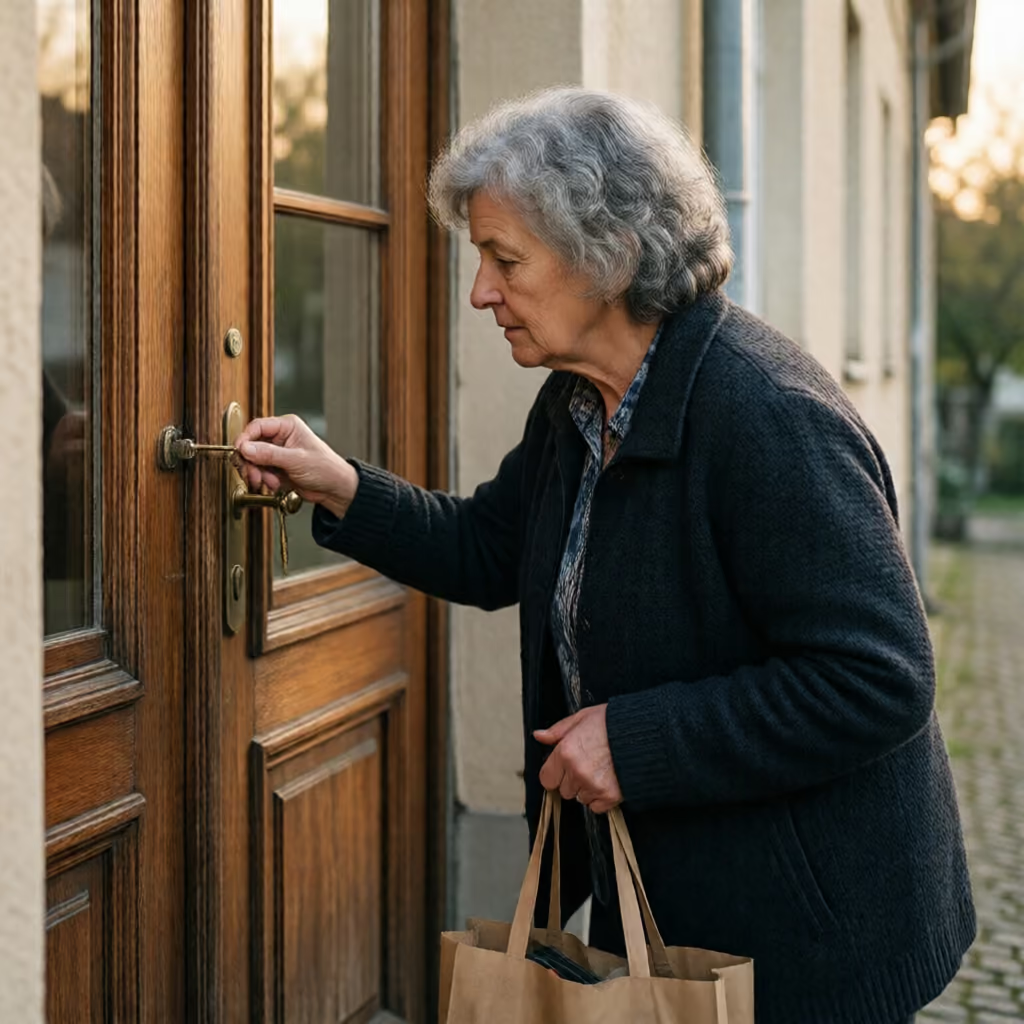
to unlock
To open something with a key, especially a door, lock, or room.
EXAMPLE
Bitte schließ die Haustür auf, wenn du nach Hause kommst.
Please unlock the front door when you get home.
to unlock / open up
aufschließen – schloss auf – hat aufgeschlossen
Loading your saved state.
to unlock
To open something with a key, especially a door, lock, or room.
Bitte schließ die Haustür auf, wenn du nach Hause kommst.
Please unlock the front door when you get home.

to catch up with someone
To reduce the distance to and reach a person or group.
Die Verfolger schlossen schnell zu den Läufern auf.
The pursuers quickly caught up with the runners.
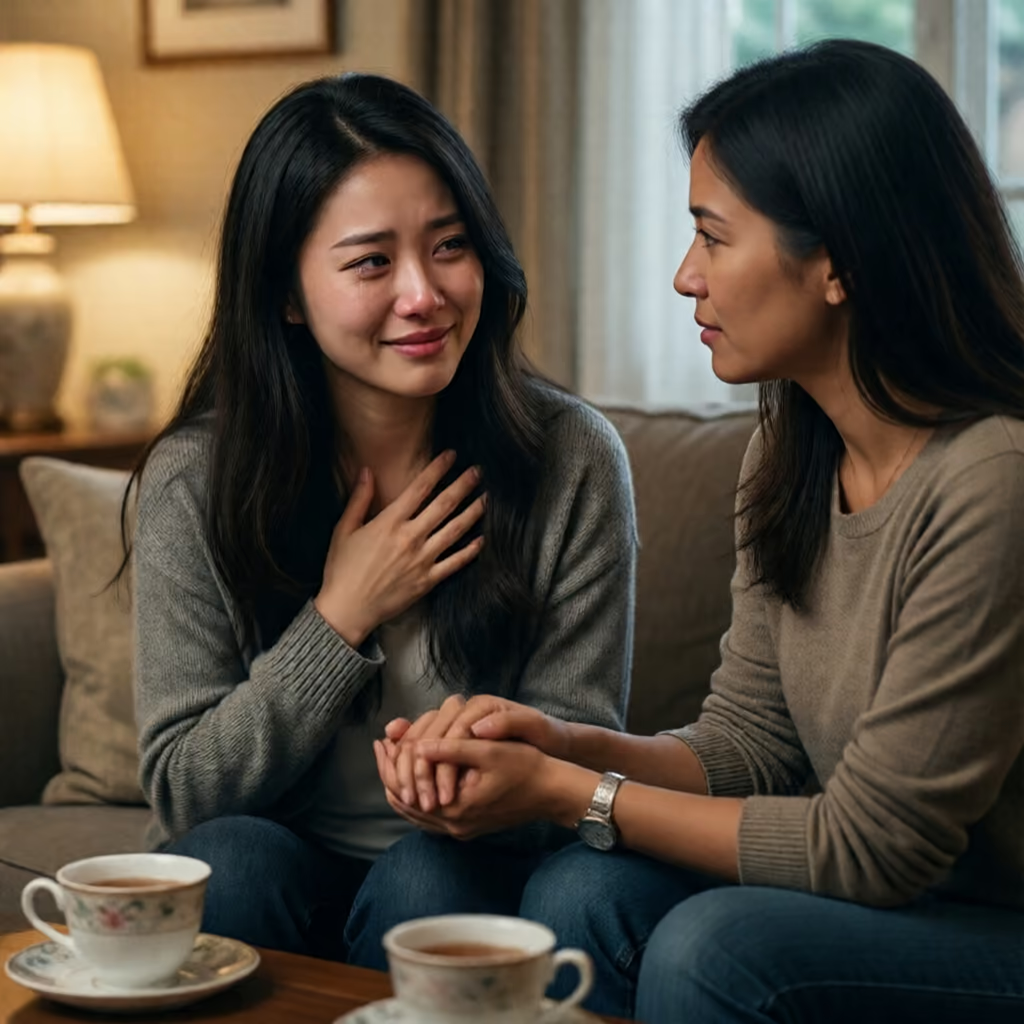
to open up to someone
Formal: to share personal thoughts and feelings with someone and become emotionally closer to them.
Nach einigen Wochen schloss sie sich ihrer neuen Freundin auf.
After a few weeks, she opened up to her new friend.

to develop
To make an area that was previously difficult to access accessible and develop it through roads, paths, or other measures.
Mit der neuen Straße wurde das abgelegene Tal aufgeschlossen.
The new road opened up the remote valley.

to break down
To professionally crush or chemically treat a raw material or substance so that its components can be analyzed or further processed.
Im Labor wurde das Erz mit Säure aufgeschlossen.
In the laboratory, the ore was broken down with acid.
| ich | schließe auf |
|---|---|
| du | schließt auf |
| er/sie/es | schließt auf |
| wir | schließen auf |
| ihr | schließt auf |
| sie | schließen auf |
| ich | schloss auf |
|---|---|
| du | schlossest auf schlosst auf |
| er/sie/es | schloss auf |
| wir | schlossen auf |
| ihr | schlosst auf |
| sie | schlossen auf |
| ich | habe aufgeschlossen |
|---|---|
| du | hast aufgeschlossen |
| er/sie/es | hat aufgeschlossen |
| wir | haben aufgeschlossen |
| ihr | habt aufgeschlossen |
| sie | haben aufgeschlossen |
| du | schließ auf! schließe auf! |
|---|---|
| ihr | schließt auf! |
| Sie | schließen Sie auf! |
| ich | hatte aufgeschlossen |
|---|---|
| du | hattest aufgeschlossen |
| er/sie/es | hatte aufgeschlossen |
| wir | hatten aufgeschlossen |
| ihr | hattet aufgeschlossen |
| sie | hatten aufgeschlossen |
| ich | werde aufschließen |
|---|---|
| du | wirst aufschließen |
| er/sie/es | wird aufschließen |
| wir | werden aufschließen |
| ihr | werdet aufschließen |
| sie | werden aufschließen |
| ich | schließe auf |
|---|---|
| du | schließest auf |
| er/sie/es | schließe auf |
| wir | schließen auf |
| ihr | schließet auf |
| sie | schließen auf |
Used for reported speech.
| ich | schlösse auf |
|---|---|
| du | schlössest auf |
| er/sie/es | schlösse auf |
| wir | schlössen auf |
| ihr | schlösset auf |
| sie | schlössen auf |
Used for wishes and “would”.
| infinitive | aufschließen |
|---|---|
| with zu | aufzuschließen |
| present participle | aufschließend |
| past participle | aufgeschlossen |
'Aufschließen' (to unlock / open up) is a separable verb. In a main clause, 'auf' (up) appears at the end of the sentence; in a subordinate clause, the verb remains together. In the infinitive with 'zu' (to), 'zu' appears between the prefix and the stem.
Der Hausmeister schließt morgens alle Klassenzimmer auf.
The caretaker unlocks all the classrooms in the morning.
Ich weiß nicht, ob der Hausmeister schon aufgeschlossen hat.
I don't know whether the caretaker has unlocked them yet.
Sie kam früher, um den Laden aufzuschließen.
She came early to unlock the shop.
In the meaning 'mit einem Schlüssel öffnen' (to open with a key), 'aufschließen' (to unlock) frequently combines with 'Tür' (door), 'Tor' (gate), 'Raum' (room), or 'Schloss' (lock). The person for whom something is opened can also appear in the dative.
Kannst du mir bitte die Hintertür aufschließen?
Could you please unlock the back door for me?
When catching up with a person or group, 'aufschließen' (to catch up) is used with 'zu' (to) and the dative. The construction is: 'zu jemandem oder zu etwas aufschließen' (to catch up with someone or something).
Auf der letzten Runde schloss die Läuferin zu den Führenden auf.
On the last lap, the runner caught up with the leaders.
In the reflexive meaning, the person one confides personal thoughts in is in the dative. The pattern is: 'sich jemandem aufschließen' (to open up to someone).
Erst nach langer Zeit schloss sich der neue Mitarbeiter seiner Kollegin auf.
Only after a long time did the new employee open up to his colleague.
This meaning is found mainly in technical texts about transportation, regional planning, or economic development; in general language, 'erschließen' (to develop / open up) is usually used instead. Typical collocations refer to regions, valleys, areas, and transport routes.
Die neue Bahnlinie schließt das Berggebiet für den Tourismus auf.
The new railway line is opening up the mountain region to tourism.
In chemistry and analytical science, 'aufschließen' (to break down / digest) refers to a treatment that makes a solid material accessible for analysis or further processing. Typical collocations are 'eine Probe aufschließen' (to digest a sample) and 'ein Mineral aufschließen' (to break down a mineral).
Vor der Messung schloss das Labor die Gesteinsprobe chemisch auf.
Before the measurement, the laboratory chemically digested the rock sample.