

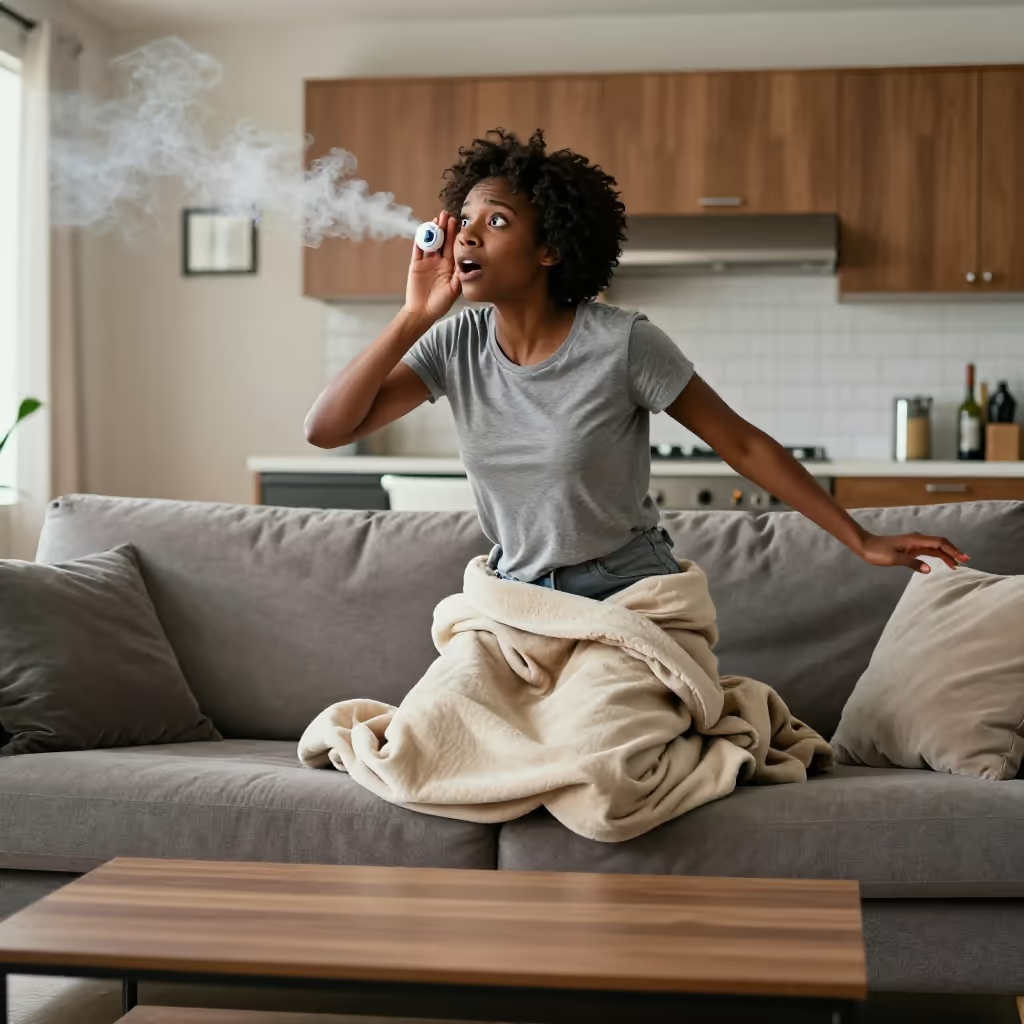
aufspringen
to jump up
To rise quickly and energetically from a sitting or lying position.
EXAMPLE
Als sie ihren Namen hörte, sprang sie erschrocken auf.
When she heard her name, she jumped up in fright.
to jump up / spring open
Loading your saved state.
to jump up
To rise quickly and energetically from a sitting or lying position.
Als sie ihren Namen hörte, sprang sie erschrocken auf.
When she heard her name, she jumped up in fright.
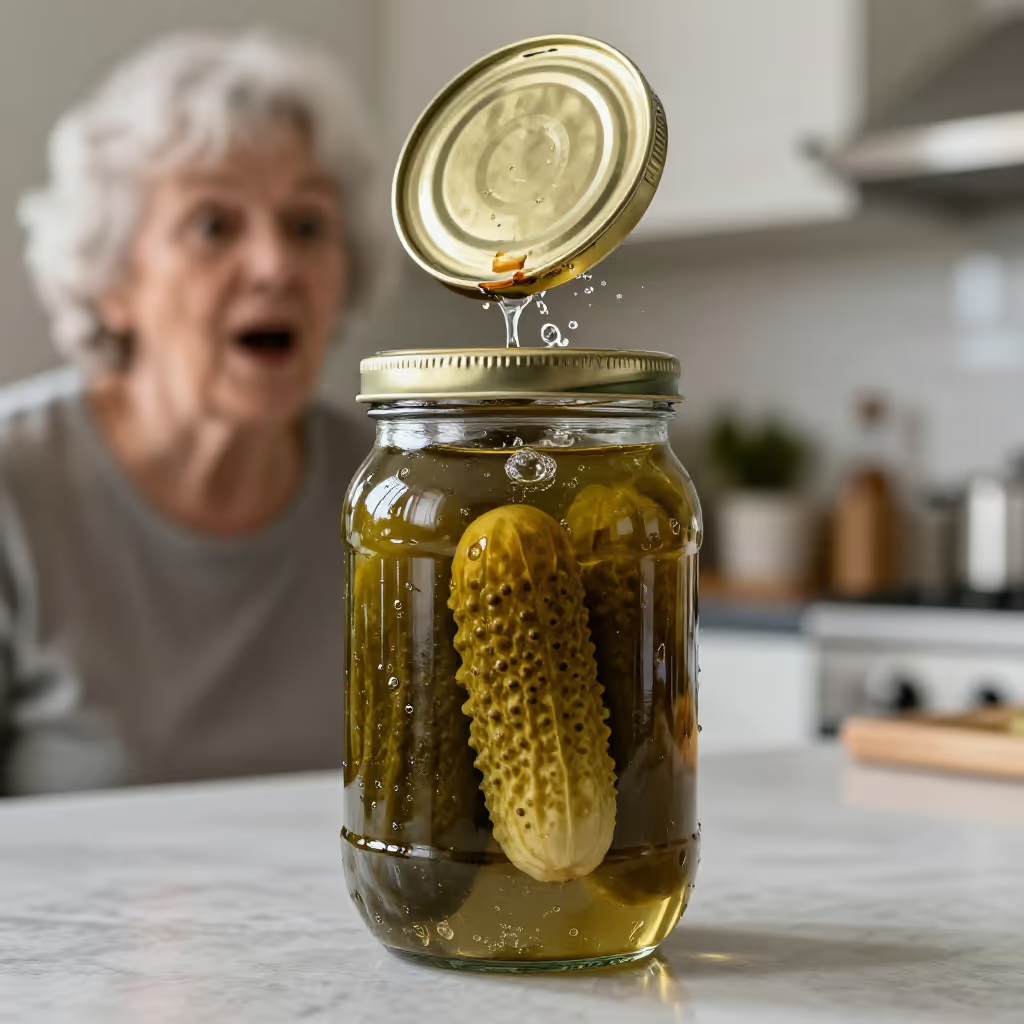
to spring open
To open suddenly and often with a sound, usually due to internal pressure or mechanical tension.
Der Deckel der alten Truhe sprang mit einem Quietschen auf.
The lid of the old chest sprang open with a squeak.
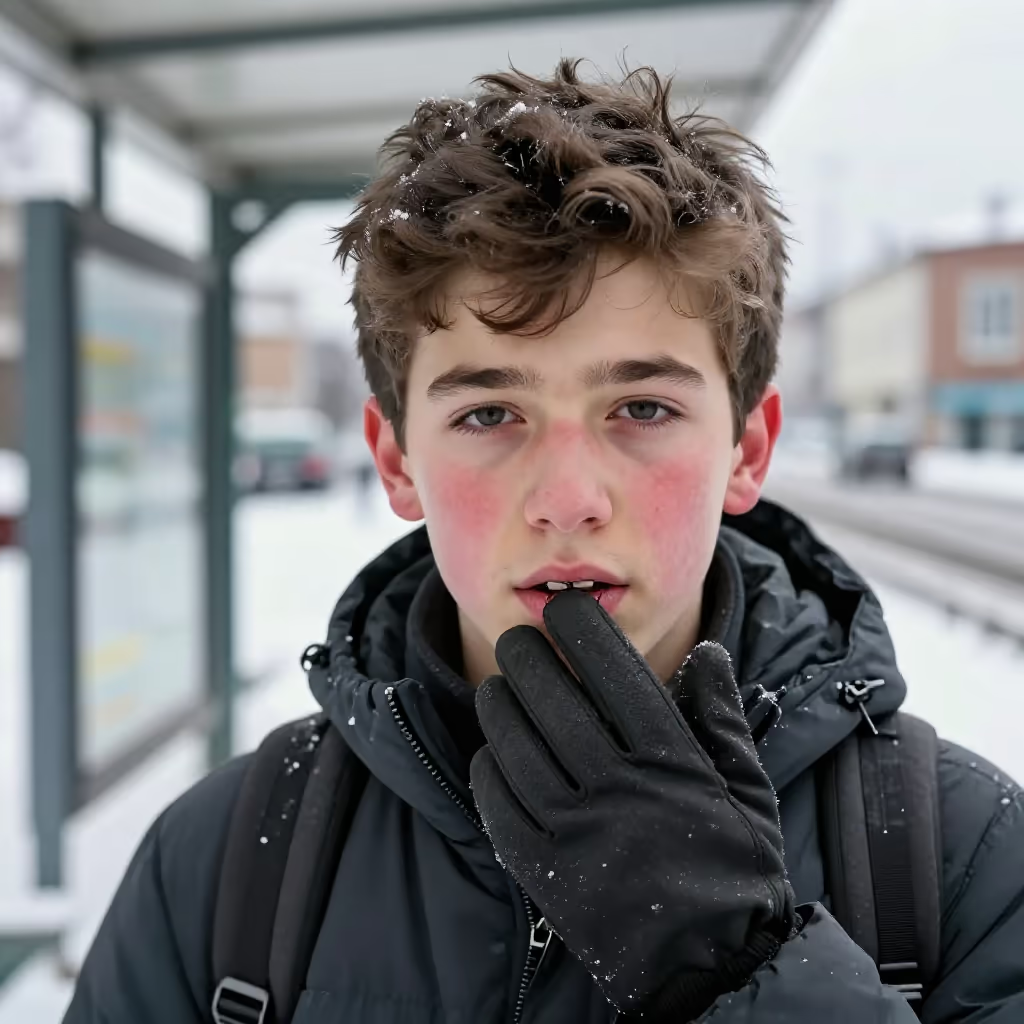
to crack
To become cracked or chapped, especially skin or lips due to cold or dryness.
Im Winter springen meine Lippen immer auf, wenn ich sie nicht eincreme.
In winter, my lips always crack if I don't put cream on them.
'Aufspringen' (to jump up/to spring open) is a separable verb with the prefix 'auf-'. In a main clause, the prefix goes at the end, while in subordinate clauses it remains attached to the verb.
Als das Telefon klingelte, sprang er sofort auf.
When the phone rang, he jumped up immediately.
Since 'aufspringen' (to jump up/to spring open/to crack) describes movement or a change of state, the perfect tense is always formed with the auxiliary verb 'sein' (to be), not with 'haben' (to have).
Der Hund ist aufgesprungen, als er die Leine sah.
The dog jumped up when it saw the leash.
The subject of the sentence reveals the meaning. If the subject is a person, it means 'to get up/jump up.' If it is an object (door, lid), it means 'to open/spring open.' If it is skin or lips, it means 'to become cracked.'
Der Schüler sprang auf und beantwortete die Frage.
The student jumped up and answered the question.
In the meaning 'rissig werden' (to become cracked/chapped), 'aufspringen' is used almost exclusively for skin and lips. The cause is often mentioned too, for example 'wegen der Kälte' (because of the cold) or 'durch die Trockenheit' (due to the dryness).
Wenn man im Winter nicht genug trinkt, können die Lippen aufspringen.
If you don't drink enough in winter, your lips can crack.
to get up / be open
Both verbs describe someone moving from a sitting or lying position into a standing position. Aufstehen describes this change of position neutrally, while aufspringen emphasizes a sudden, energetic movement. Aufstehen is appropriate for a calm movement, while aufspringen is more suitable for a quick reaction.
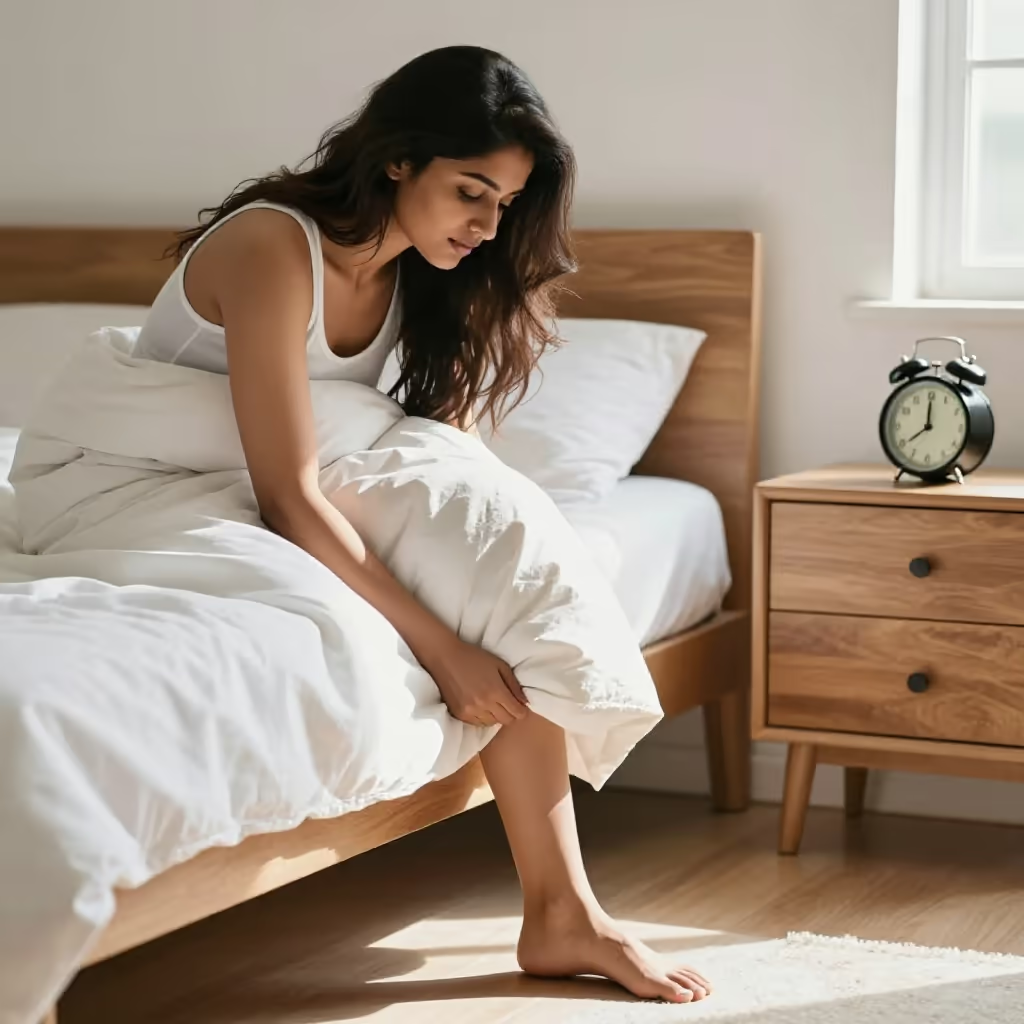
Als der Bus ankam, sprang sie sofort von ihrem Sitz auf.
When the bus arrived, she immediately jumped up from her seat.
Als der Bus ankam, stand sie ruhig von ihrem Sitz auf.
When the bus arrived, she calmly stood up from her seat.