


aufbrechen
to set off
To start on one's way; to begin a trip, hike, or march.
EXAMPLE
Wir müssen früh aufbrechen, wenn wir vor Einbruch der Dunkelheit ankommen wollen.
We have to set off early if we want to arrive before nightfall.
to set off / to break open
Loading your saved state.
to set off
To start on one's way; to begin a trip, hike, or march.
Wir müssen früh aufbrechen, wenn wir vor Einbruch der Dunkelheit ankommen wollen.
We have to set off early if we want to arrive before nightfall.
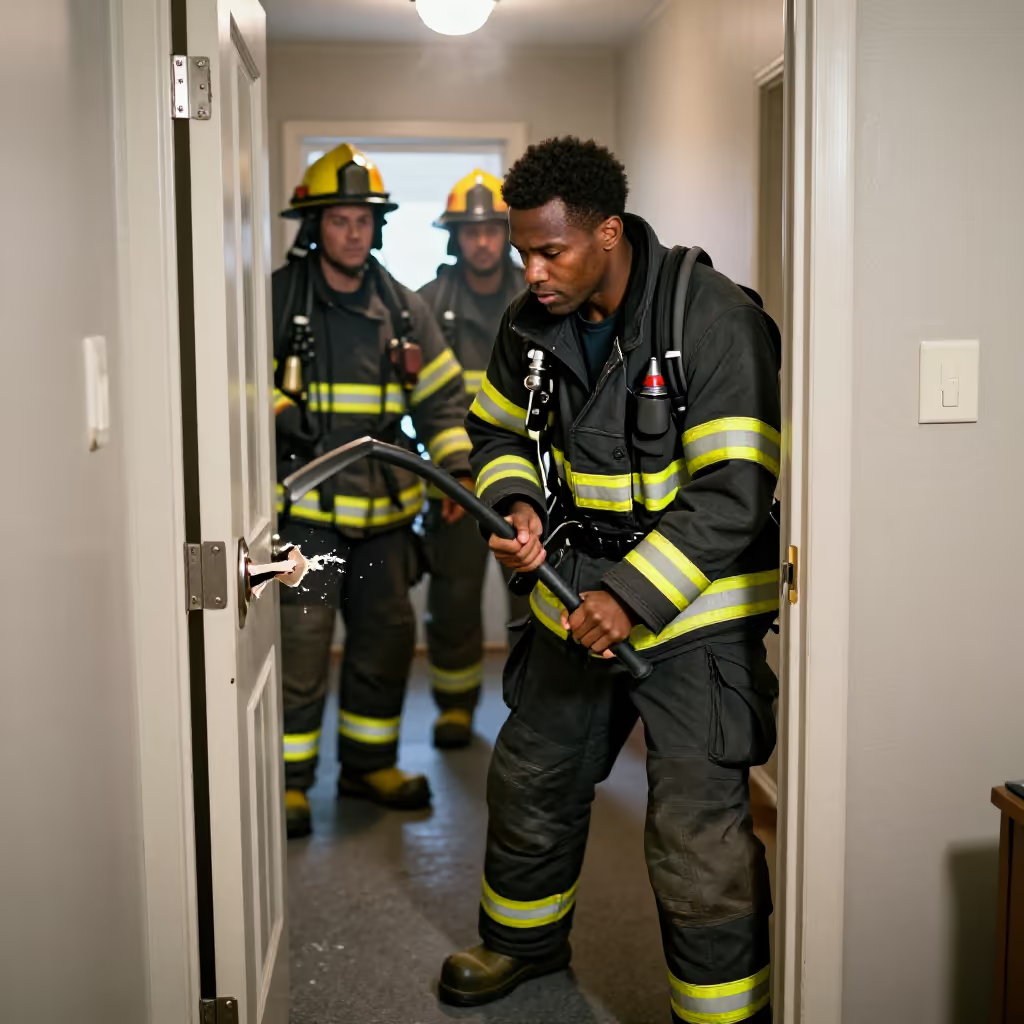
to break open
To open something by force, for example a door, a lock, or a box.
Die Diebe haben in der Nacht die Haustür aufgebrochen.
The thieves broke open the front door during the night.

to burst open
To open or split open by itself, for example in the case of a wound, a bud, or cracked earth.
Nach dem langen Winter brechen die ersten Knospen an den Bäumen auf.
After the long winter, the first buds on the trees burst open.

to break up
To change, dissolve, or modernize fixed structures, rules, or patterns of thought.
Die neue Bewegung will die verkrusteten gesellschaftlichen Strukturen aufbrechen.
The new movement wants to break up the rigid social structures.
'Aufbrechen' is a separable verb. The prefix 'auf-' stands at the end in a main clause. In subordinate clauses and in the infinitive with 'zu', the verb stays together.
Wir brechen morgen bei Sonnenaufgang auf.
We are setting off tomorrow at sunrise.
The perfect tense is formed with 'sein' (to be) when it is about movement (starting a journey) or a change of state (a bud opens). For an active action with an object (opening a door), 'haben' (to have) is used.
Die Wandergruppe ist schon aufgebrochen.
The hiking group has already set off.
When 'aufbrechen' is used without an object, it usually means 'sich auf den Weg machen' (to set off). If it has an object, it often means 'gewaltsam öffnen' (to break open by force) with concrete objects, or 'verändern' (to change) with abstract terms.
Die Bergsteiger brechen in einer Stunde auf.
The mountaineers are setting off in an hour.
In a figurative, abstract meaning, 'aufbrechen' is often used with nouns such as 'Strukturen' (structures), 'Regeln' (rules), 'Denkmuster' (patterns of thought), or 'Traditionen' (traditions) to describe modernization or dissolution.
Die neue Chefin will die starren Hierarchien im Unternehmen aufbrechen.
The new boss wants to break up the rigid hierarchies in the company.
to dissolve / resolve
Auflösen ends a group or organization so that it no longer continues to exist. Aufbrechen, by contrast, changes fixed structures, rules, or ways of thinking without necessarily ending the organization. If the group is meant to disappear, auflösen is the right choice; if it is meant to change, aufbrechen is appropriate.
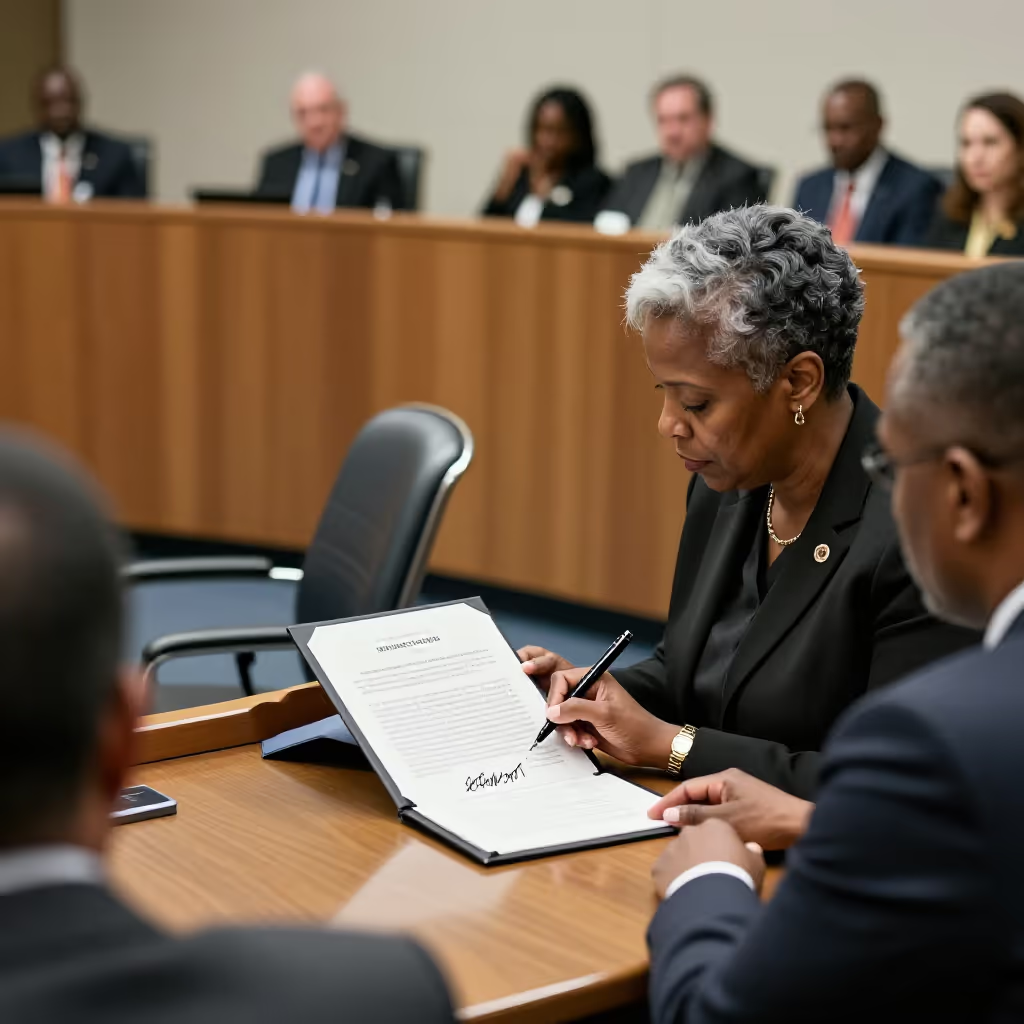
Die Leitung bricht die starren Strukturen der Arbeitsgruppe auf, damit sie moderner arbeiten kann.
The management is breaking up the workgroup’s rigid structures so that it can work in a more modern way.
Die Leitung löst die alte Arbeitsgruppe auf, weil sie nicht weiterbestehen soll.
The management is dissolving the old workgroup because it is not meant to continue.