

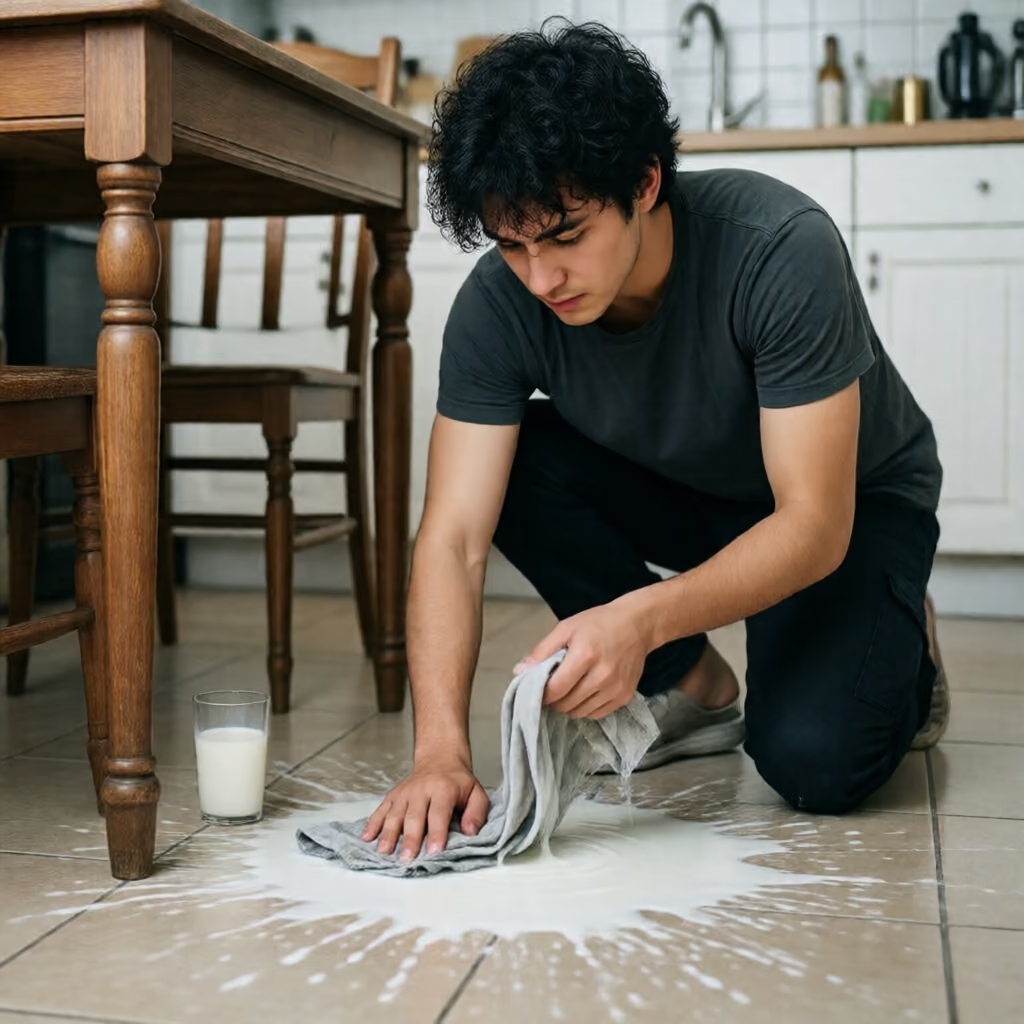
aufwischen
to wipe up
To absorb and remove spilled liquid or damp dirt with a cloth or a similar tool.
EXAMPLE
Sie wischte die verschüttete Milch mit einem Lappen auf.
She wiped up the spilled milk with a cloth.
to wipe up
aufwischen – wischte auf – hat aufgewischt
Loading your saved state.
to wipe up
To absorb and remove spilled liquid or damp dirt with a cloth or a similar tool.
Sie wischte die verschüttete Milch mit einem Lappen auf.
She wiped up the spilled milk with a cloth.
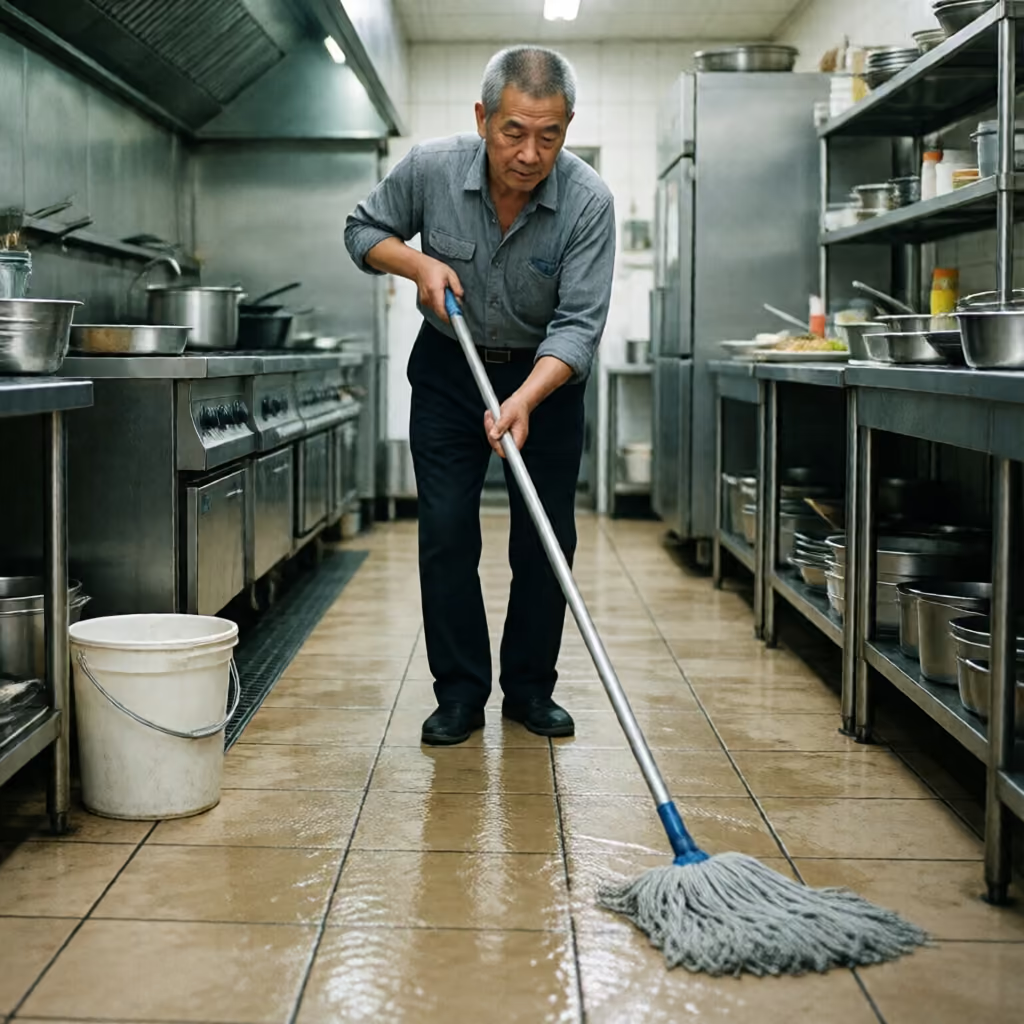
to mop
To clean a floor with a damp cloth or a mop.
Nach dem Fegen wischte er den Küchenboden feucht auf.
After sweeping, he mopped the kitchen floor.
| ich | wische auf |
|---|---|
| du | wischst auf wischt auf |
| er/sie/es | wischt auf |
| wir | wischen auf |
| ihr | wischt auf |
| sie | wischen auf |
| ich | wischte auf |
|---|---|
| du | wischtest auf |
| er/sie/es | wischte auf |
| wir | wischten auf |
| ihr | wischtet auf |
| sie | wischten auf |
| ich | habe aufgewischt |
|---|---|
| du | hast aufgewischt |
| er/sie/es | hat aufgewischt |
| wir | haben aufgewischt |
| ihr | habt aufgewischt |
| sie | haben aufgewischt |
| du | wisch auf! wische auf! |
|---|---|
| ihr | wischt auf! |
| Sie | wischen Sie auf! |
| ich | hatte aufgewischt |
|---|---|
| du | hattest aufgewischt |
| er/sie/es | hatte aufgewischt |
| wir | hatten aufgewischt |
| ihr | hattet aufgewischt |
| sie | hatten aufgewischt |
| ich | werde aufwischen |
|---|---|
| du | wirst aufwischen |
| er/sie/es | wird aufwischen |
| wir | werden aufwischen |
| ihr | werdet aufwischen |
| sie | werden aufwischen |
| ich | wische auf |
|---|---|
| du | wischest auf |
| er/sie/es | wische auf |
| wir | wischen auf |
| ihr | wischet auf |
| sie | wischen auf |
Used for reported speech.
| ich | wischte auf |
|---|---|
| du | wischtest auf |
| er/sie/es | wischte auf |
| wir | wischten auf |
| ihr | wischtet auf |
| sie | wischten auf |
Used for wishes and “would”.
| infinitive | aufwischen |
|---|---|
| with zu | aufzuwischen |
| present participle | aufwischend |
| past participle | aufgewischt |
'Aufwischen' (to wipe up) consists of 'auf' and 'wischen' (to wipe) and is separable. In a main clause, 'auf' comes at the end; in a subordinate clause, the verb stays together. With the infinitive using 'zu', 'zu' comes between 'auf' and 'wischen'.
Ich wische das Wasser gleich auf.
I’ll wipe up the water right away.
Warte kurz, bis ich das Wasser aufwische.
Wait a moment until I wipe up the water.
Ich habe vergessen, das Wasser aufzuwischen.
I forgot to wipe up the water.
The tool used for wiping something up is introduced with 'mit' and the dative. Typical examples are 'mit einem Lappen' (with a cloth), 'mit einem Tuch' (with a cloth), and 'mit einem Wischmopp' (with a mop).
Er wischt die Pfütze mit einem alten Handtuch auf.
He wiped up the puddle with an old towel.
Common combinations are 'verschüttetes Wasser aufwischen' (to wipe up spilled water), 'eine Pfütze aufwischen' (to wipe up a puddle), and 'den Schmutz aufwischen' (to wipe up the dirt). The thing being removed is in the accusative.
Kannst du bitte den feuchten Schmutz neben der Tür aufwischen?
Could you please wipe up the damp dirt next to the door?
When cleaning, the surface can be used as an accusative object, as in 'den Boden aufwischen' (to mop the floor). If it is clear from the situation what is being cleaned, 'aufwischen' (to mop) is also used without an object.
Wir müssen noch den Boden im Flur aufwischen.
We still have to mop the floor in the hallway.
Ich habe gerade aufgewischt, deshalb ist der Boden noch nass.
I’ve just mopped, so the floor is still wet.