


ausbrechen
to break out
To escape by force or secretly from a closed place, especially a prison.
EXAMPLE
Zwei Häftlingen ist es gelungen, aus dem Gefängnis auszubrechen.
Two prisoners managed to break out of the prison.
to break out
Loading your saved state.
to break out
To escape by force or secretly from a closed place, especially a prison.
Zwei Häftlingen ist es gelungen, aus dem Gefängnis auszubrechen.
Two prisoners managed to break out of the prison.
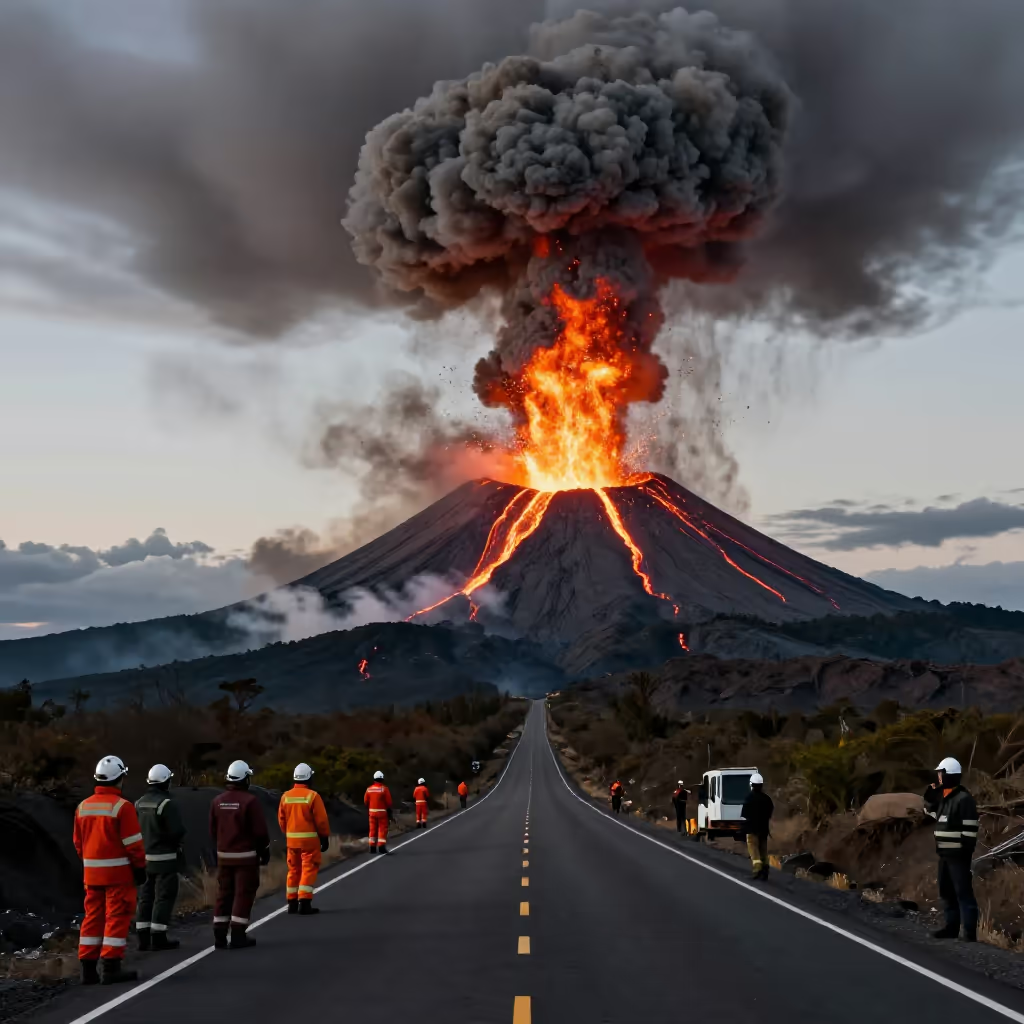
to break out
To begin suddenly and often with great intensity. Used for wars, diseases, fires, or volcanoes.
In der Nacht ist im Lagerhaus ein Feuer ausgebrochen.
A fire broke out in the warehouse during the night.

to burst into tears/laughter
To suddenly and uncontrollably start crying or laughing.
Als sie die gute Nachricht hörte, brach sie in Freudentränen aus.
When she heard the good news, she burst into tears of joy.
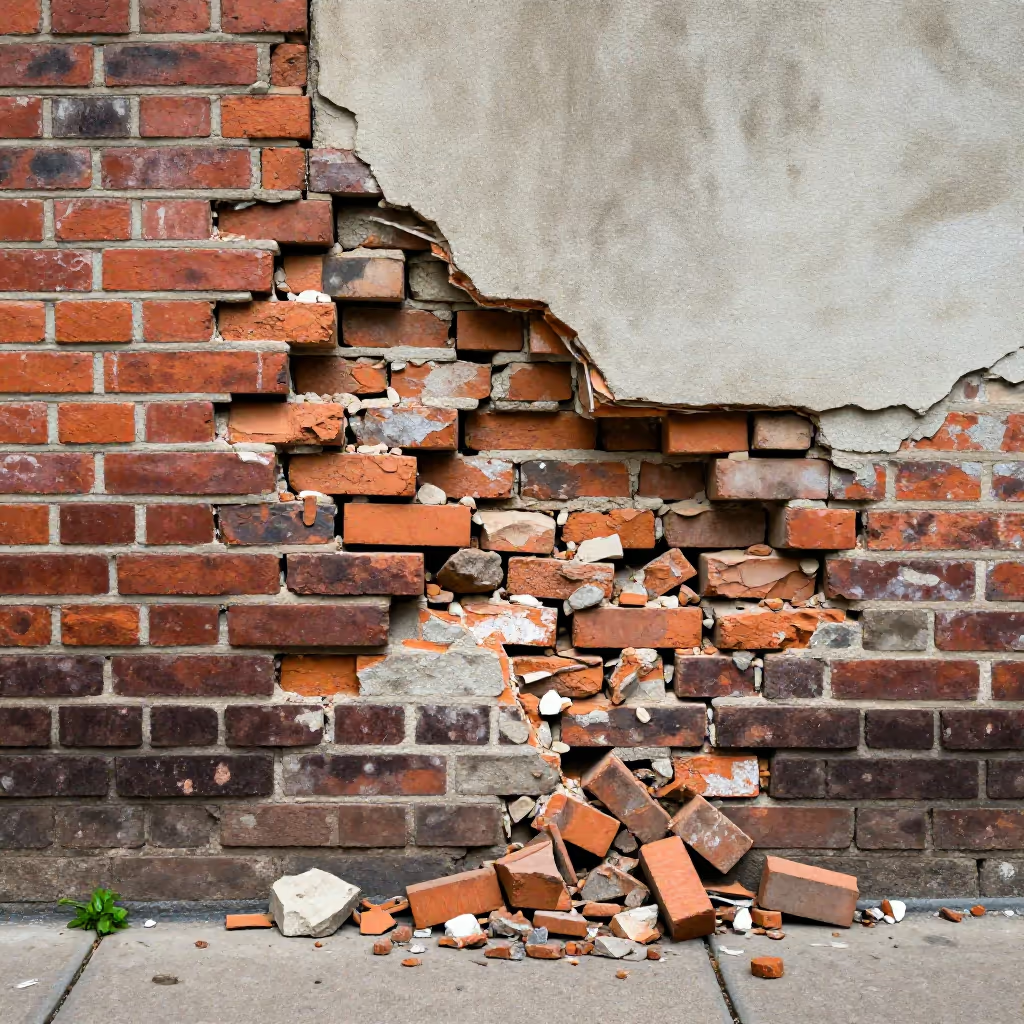
to break off
A part breaks out of a larger structure. This can happen with teeth, walls, or other solid objects.
Mir ist ein Stück vom Zahn ausgebrochen.
A piece of my tooth broke off.
'Ausbrechen' (to break out) is a separable verb. The prefix 'aus' comes at the end in a main clause. In subordinate clauses and in the infinitive with 'zu', the verb stays together.
Der Vulkan bricht unerwartet aus.
The volcano breaks out unexpectedly.
The perfect tense of 'ausbrechen' (to break out) is always formed with the auxiliary verb 'sein', because it describes a sudden change of state or place.
Letzte Nacht ist ein Feuer im Keller ausgebrochen.
Last night, a fire broke out in the basement.
In the meaning 'to begin suddenly', the subjects are typically impersonal, often negative events such as a fire, a war, a disease, a storm, or an argument.
Plötzlich brach ein heftiger Streit zwischen den Nachbarn aus.
Suddenly, a fierce argument broke out between the neighbors.
This meaning is used in fixed expressions to describe sudden emotional reactions. Common combinations are 'in Tränen ausbrechen' (to burst into tears), 'in Gelächter ausbrechen' (to burst into laughter), or 'in Panik ausbrechen' (to panic).
Als er den Witz hörte, brach er in lautes Gelächter aus.
When he heard the joke, he burst into loud laughter.
When a part of something breaks off, the person this happens to is often in the dative. The broken-off piece is the subject of the sentence.
Mir ist gestern beim Essen ein Stück vom Zahn ausgebrochen.
Yesterday while eating, a piece of my tooth broke off.
to arise
When referring to a fire, both words can fit. „Entstehen“ highlights the formation or cause of the fire, whereas „ausbrechen“ emphasizes its often sudden and violent open beginning. Use „entstehen“ when the fire’s origin is important and „ausbrechen“ when it starts unexpectedly.

Plötzlich brach in der Küche ein Brand aus.
Suddenly, a fire broke out in the kitchen.
Durch einen Kurzschluss entstand in der Küche ein Brand.
A short circuit caused a fire to start in the kitchen.