

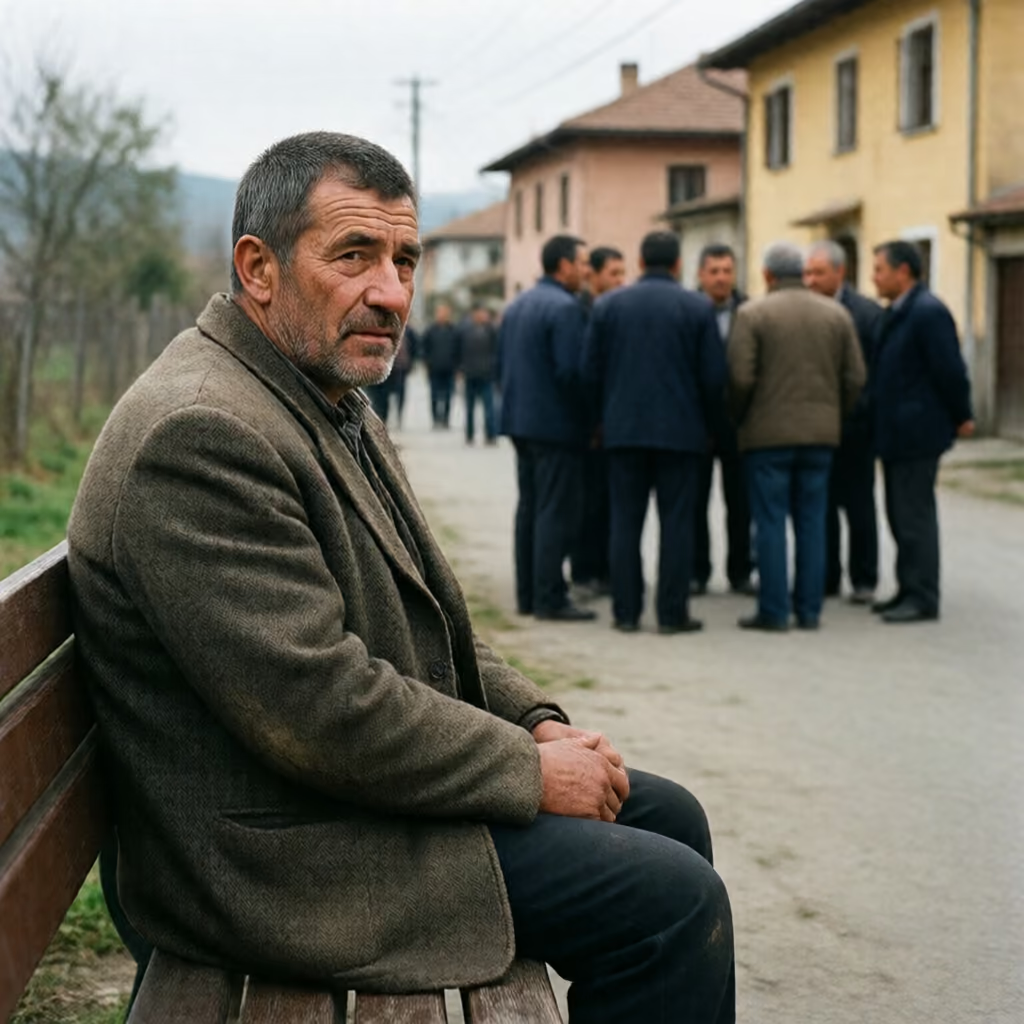
der Ausgestoßene
outcast
A person who is excluded from a community or deliberately rejected by others.
EXAMPLE
Der Ausgestoßene lebte jahrelang allein am Rand des Dorfes.
The outcast lived alone on the edge of the village for years.
outcast
Loading your saved state.
outcast
A person who is excluded from a community or deliberately rejected by others.
Der Ausgestoßene lebte jahrelang allein am Rand des Dorfes.
The outcast lived alone on the edge of the village for years.
'Ausgestoßene' (outcast) is a nominalized participle of the verb 'ausstoßen' (to cast out). The prefix 'aus-' (out) and the stem 'stoßen' (to push) reveal the basic idea of pushing someone out; as a noun, the word refers to the person affected.
Der Ausgestoßene suchte in einer anderen Stadt einen Neuanfang.
The outcast sought a fresh start in another city.
The word is emotionally charged and strongly emphasizes a person's social rejection. It is therefore particularly common in social, religious, or literary contexts.
In dem Roman wird der Ausgestoßene als einsame und verletzte Figur dargestellt.
In the novel, the outcast is portrayed as a lonely and wounded character.
Common phrases include 'als Ausgestoßener leben' (to live as an outcast), 'sich als Ausgestoßener fühlen' (to feel like an outcast), and 'zum Ausgestoßenen werden' (to become an outcast). The word is also often accompanied by details about the community or society from which the person has been excluded.
Nach dem Streit fühlte er sich als Ausgestoßener der Gemeinschaft.
After the argument, he felt like an outcast from the community.