

ausheben
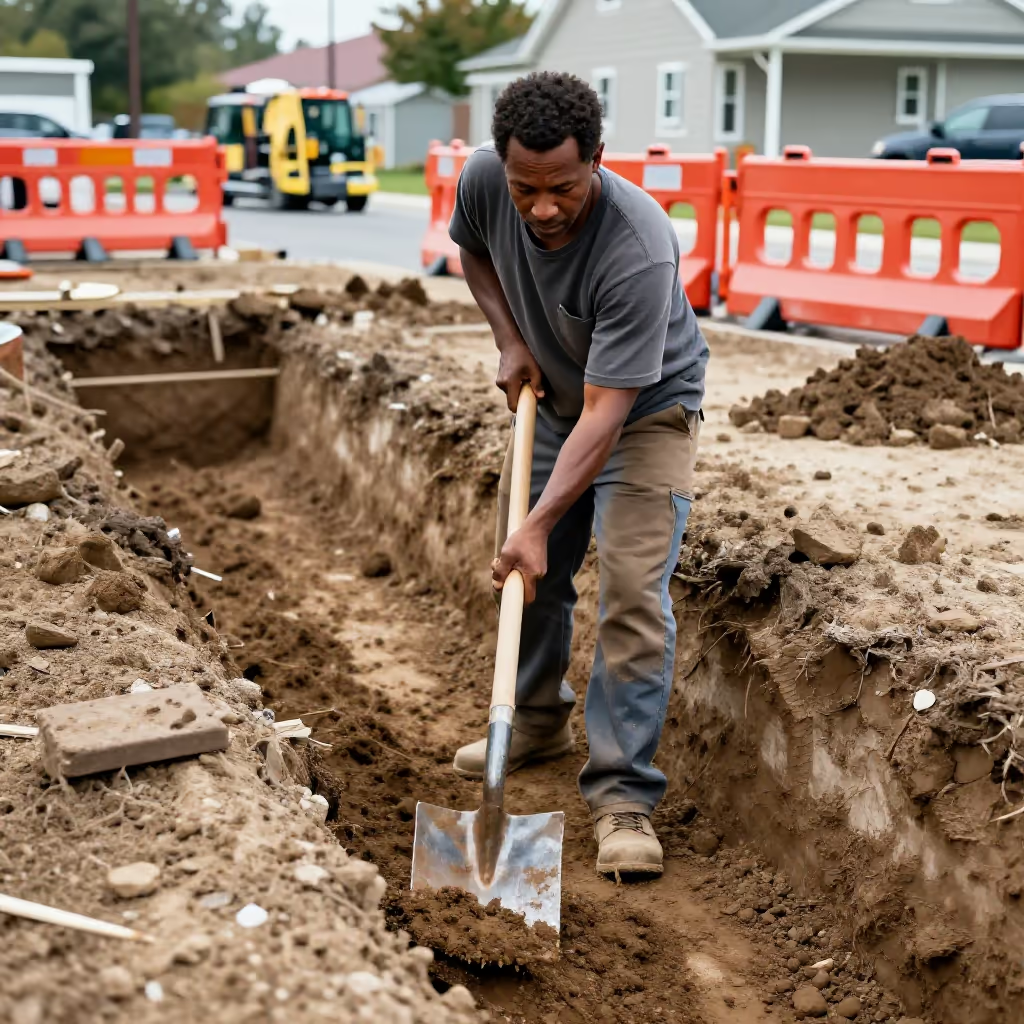
to excavate
To dig a hole or trench in the ground.
EXAMPLE
Die Bauarbeiter haben eine Grube für das Fundament des Hauses ausgehoben.
The construction workers excavated a pit for the foundation of the house.
to excavate / lift out
Loading your saved state.
to excavate
To dig a hole or trench in the ground.
Die Bauarbeiter haben eine Grube für das Fundament des Hauses ausgehoben.
The construction workers excavated a pit for the foundation of the house.
to lift out
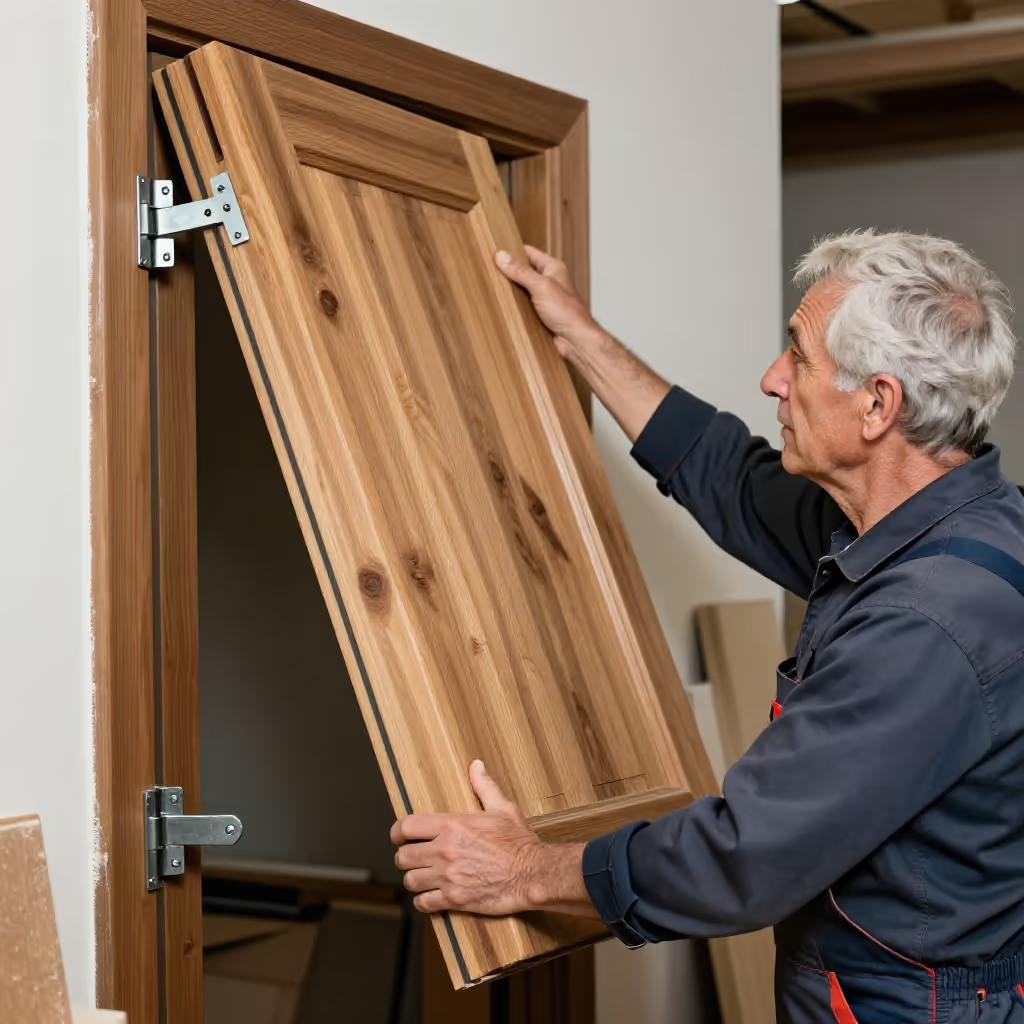
To lift something out of its anchoring or frame.
Um die Tür zu reparieren, mussten wir sie zuerst aus den Angeln ausheben.
To repair the door, we first had to lift it off its hinges.

to raid
(Military, police) To break up an organization or hideout through a raid and arrest its members.
Die Polizei hat ein Drogennest in der Innenstadt ausgehoben.
The police raided a drug den in the city center.

to conscript
(Military, historical) To forcibly recruit soldiers for military service.
Im 19. Jahrhundert wurden viele junge Männer für die Armee ausgehoben.
In the 19th century, many young men were conscripted into the army.
'Ausheben' is a separable verb made up of 'aus' (out) and 'heben' (to lift). The basic idea of 'lifting something out' helps you understand all its meanings, whether literal or metaphorical.
Der Gärtner hob vorsichtig die jungen Pflanzen aus der Erde aus.
The gardener carefully lifted the young plants out of the soil.
When it is about digging work, 'ausheben' is typically used with objects such as 'eine Grube' (a pit), 'ein Loch' (a hole), or 'einen Graben' (a trench).
Für den neuen Baum müssen wir ein tiefes Loch ausheben.
We have to excavate a deep hole for the new tree.
In the meaning 'herausheben' (to lift out), the verb is often used in connection with building elements. A very common phrase is 'eine Tür aus den Angeln heben' (to lift a door off its hinges).
Der Handwerker musste das schwere Fenster aus dem Rahmen ausheben.
The craftsman had to lift the heavy window out of the frame.
The metaphorical meaning 'zerschlagen' (to break up) is used almost exclusively in the context of police, the military, and crime. Typical objects are 'ein Drogennest' (a drug den), 'eine Bande' (a gang), or 'ein Waffenlager' (an arms depot).
Der Spezialeinheit gelang es, das Versteck der Terroristen auszuheben.
The special unit succeeded in raiding the terrorists' hideout.
The meaning 'Soldaten rekrutieren' (to recruit soldiers) is historical. It is used when talking about earlier times when there was conscription or forced muster. In modern usage, it is uncommon.
Während des Krieges wurden viele junge Bauern ausgehoben und an die Front geschickt.
During the war, many young farmers were conscripted and sent to the front.
to call up / to convene
Both words can be associated with calling people up for military service. einberufen refers to the official call-up of a specific person for service, whereas ausheben more often describes forcibly recruiting soldiers. For an official start of military service, einberufen is usually the better choice.

Früher wurden in vielen Dörfern junge Männer für den Wehrdienst ausgehoben.
In the past, young men in many villages were forcibly recruited for military service.
Nach der Untersuchung wurde Jonas offiziell zum Wehrdienst einberufen.
After the examination, Jonas was officially called up for military service.