

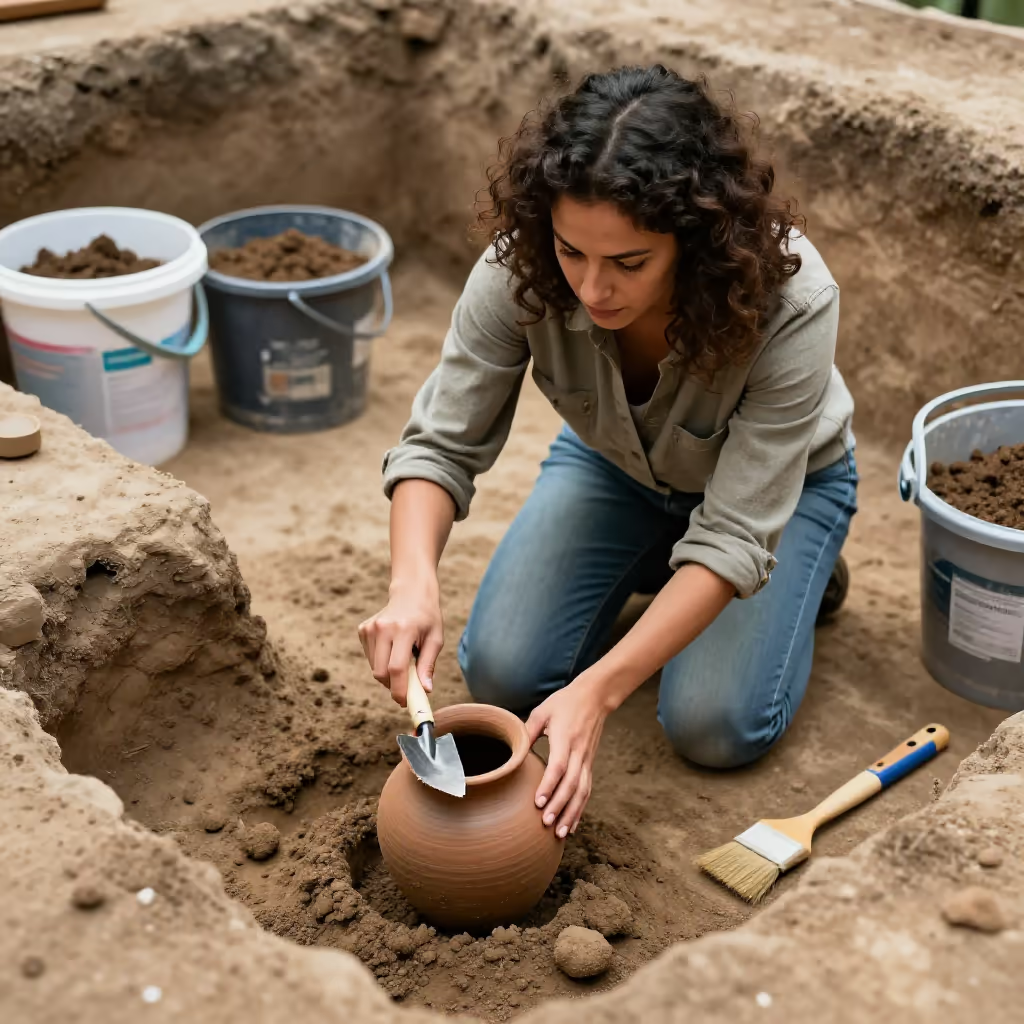
ausgraben
to dig up
To get something out of the ground by digging.
EXAMPLE
Archäologen haben in Ägypten ein altes Pharaonengrab ausgegraben.
Archaeologists have dug up an ancient pharaoh's tomb in Egypt.
to dig up
Loading your saved state.
to dig up
To get something out of the ground by digging.
Archäologen haben in Ägypten ein altes Pharaonengrab ausgegraben.
Archaeologists have dug up an ancient pharaoh's tomb in Egypt.

to dredge up
To bring up an old, often unpleasant story or piece of information again.
Warum musst du bei jedem Streit wieder diese alte Geschichte ausgraben?
Why do you have to dredge up that old story again in every argument?

to dig up
Colloquial for finding or reactivating something or someone after a long time.
Für das Projekt haben wir eine fast vergessene Studie aus dem Archiv ausgegraben.
For the project, we dug up an almost-forgotten study from the archive.
'Ausgraben' (to dig up) is a separable verb. The prefix 'aus-' comes at the end in main clauses. In subordinate clauses, the verb stays together.
Im Garten gräbt mein Hund ständig Knochen aus.
In the garden, my dog is constantly digging up bones.
The verb is made up of 'aus' (out) and 'graben' (to dig). The literal meaning is therefore 'to get something out by digging.' The figurative meanings come from this idea of bringing something hidden to light.
Für die Feier hat sie ihr schönstes Kleid ausgegraben.
For the party, she dug out her most beautiful dress.
The context reveals the meaning. If it is about physical objects in the ground (treasure, bones, plants), the literal meaning is intended. If it is about abstract things (stories, information, secrets), the figurative meaning is intended.
Wir müssen die alten Kartoffeln ausgraben.
We have to dig up the old potatoes.
When it is about bringing up old topics again, 'ausgraben' (to dig up / dredge up) is often combined with negative things or things from long ago. Typical phrases are 'alte Geschichten' (old stories), 'die Vergangenheit' (the past), or 'alte Vorwürfe' (old accusations) ausgraben.
Jedes Mal, wenn wir streiten, gräbst du die Vergangenheit aus.
Every time we argue, you dredge up the past.
to take up / pick up
Both words work when an earlier topic is brought up again. Aufgreifen is neutral and shows that the topic is being discussed further; ausgraben emphasizes that it had been forgotten for a long time and often sounds critical. Use aufgreifen for a factual resumption, and ausgraben for an unpleasant old story.

Der Reporter grub den alten Streit aus der letzten Sitzung wieder aus.
The reporter dredged up the old argument from the previous meeting again.
Die Moderatorin griff den Vorschlag aus der letzten Sitzung wieder auf.
The moderator took up the proposal from the previous meeting again.