

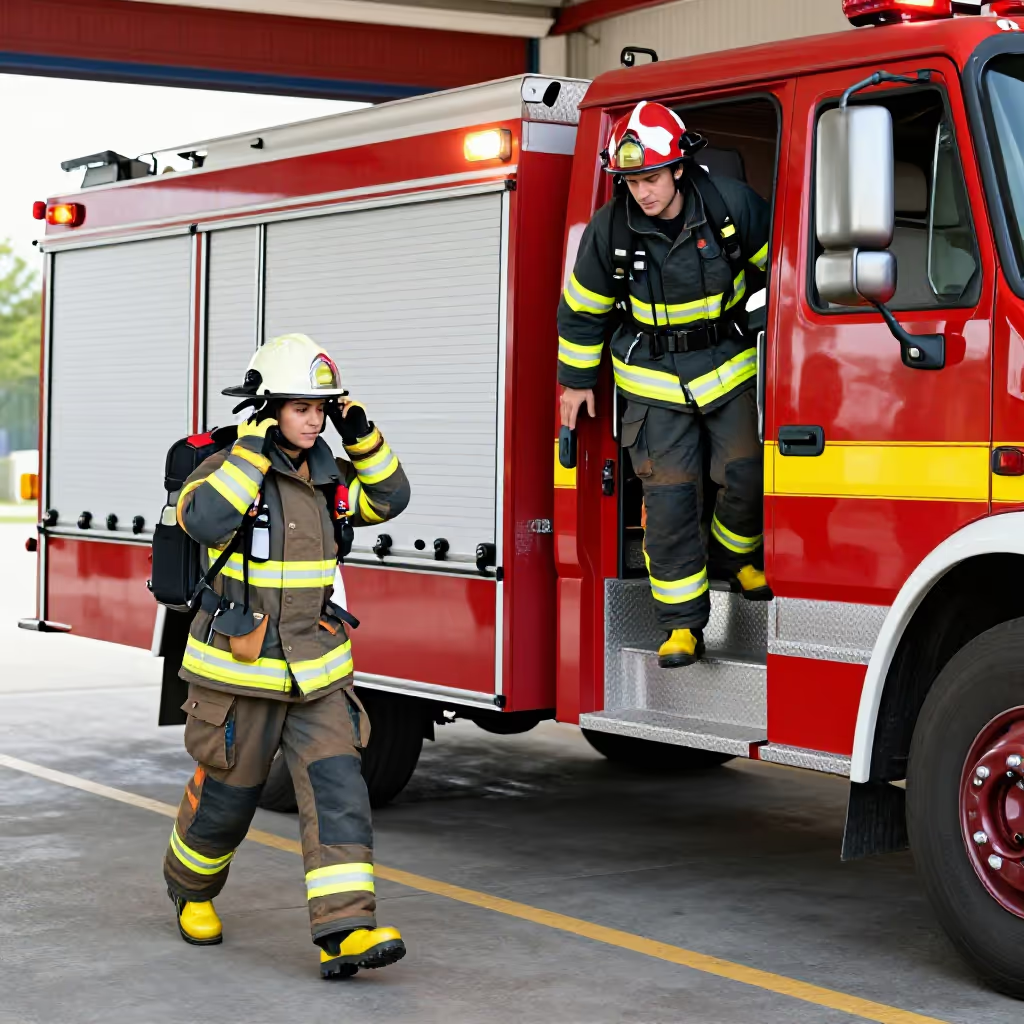
To leave one's location in order to go to an operation or call-out. Mainly used for emergency services such as the fire department and police, or for the military.
example
Die Feuerwehr musste mit drei Fahrzeugen zu dem Großbrand ausrücken.
The fire department had to turn out to the major fire with three vehicles.
Usage tips
Separable verb
'Ausrücken' is a separable verb. The prefix 'aus-' goes at the end in a main clause. In subordinate clauses and in the infinitive with 'zu', the verb stays together.
EXAMPLE
Die Rettung rückt sofort aus.
The rescue team turns out immediately.
Perfect tense with 'sein'
Since 'ausrücken' describes movement away from a place, the perfect tense is formed with the auxiliary verb 'sein' (to be).
EXAMPLE
Die Polizei ist mit mehreren Streifenwagen zum Unfallort ausgerückt.
The police turned out to the accident scene with several patrol cars.
Typical subjects
This verb is used almost exclusively for the deployment of organized forces. Typical subjects are 'die Feuerwehr' (the fire department), 'die Polizei' (the police), 'der Rettungsdienst' (the emergency medical service), or 'das Militär' (the military).
EXAMPLE
Wegen des Sturms musste der Rettungsdienst die ganze Nacht über ausrücken.
Because of the storm, the emergency medical service had to turn out throughout the night.
Register
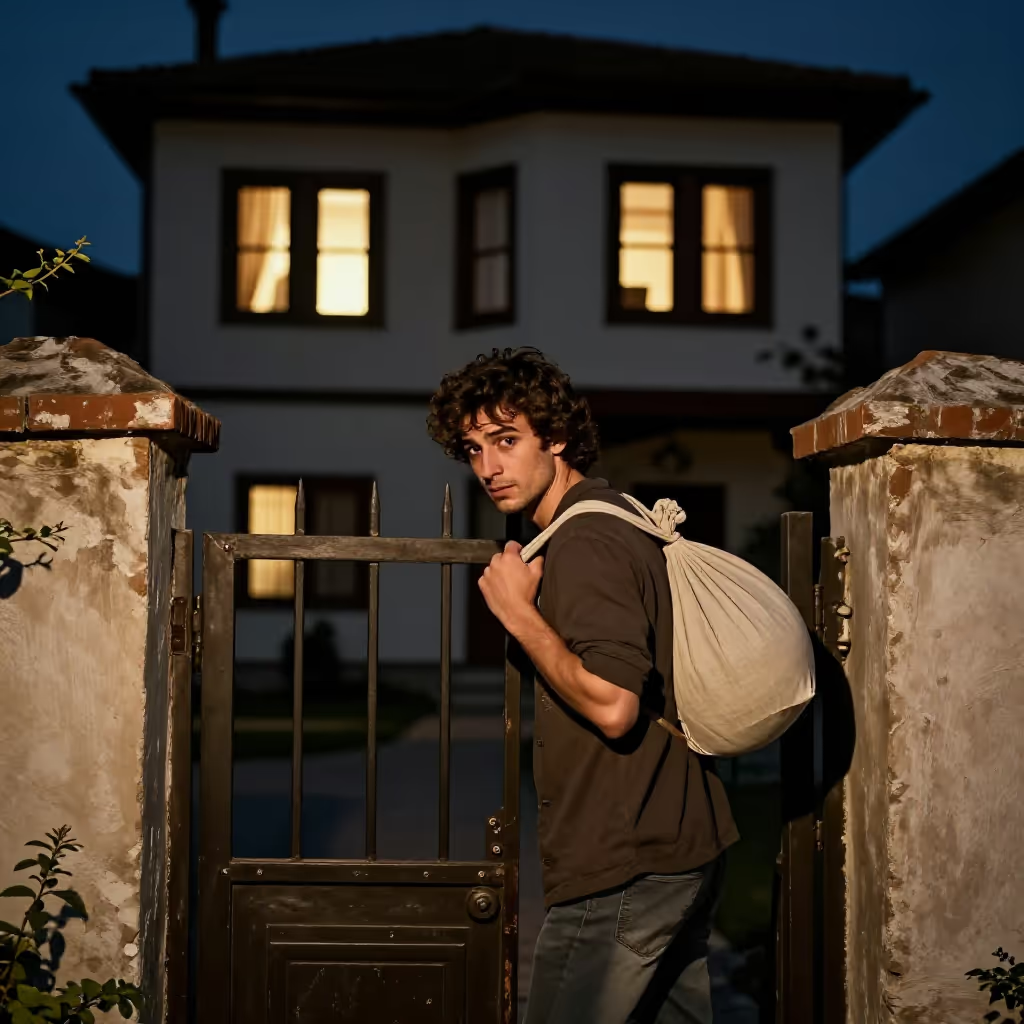
The meaning 'sich heimlich davonmachen' (to sneak away) is outdated. Today, you will only find it in historical or literary texts. It is no longer actively used in modern German.
EXAMPLE
In dem alten Roman versuchte der Dieb, bei Nacht auszurücken.
In the old novel, the thief tried to sneak away at night.
Compare with
near_synonym
ausrücken vs fliehen
to flee
'fliehen' and 'ausrücken' can both mean that someone leaves a place. 'fliehen' is the normal word today when someone gets away from danger, coercion, or a threat. In this meaning, 'ausrücken' has more the sense of secretly disappearing or fleeing, but it is outdated and sounds unusual today. In modern German, 'ausrücken' is usually used for the fire brigade, police, or military when they head out on a call or operation. For a real escape, 'fliehen' is almost always more natural.
ausrücken
In dem alten Roman rückt der Dieb nachts heimlich aus.
In the old novel, the thief secretly sneaks away at night.
fliehen
Die Familie musste vor dem Feuer aus dem Haus fliehen.
The family had to flee the house because of the fire.