

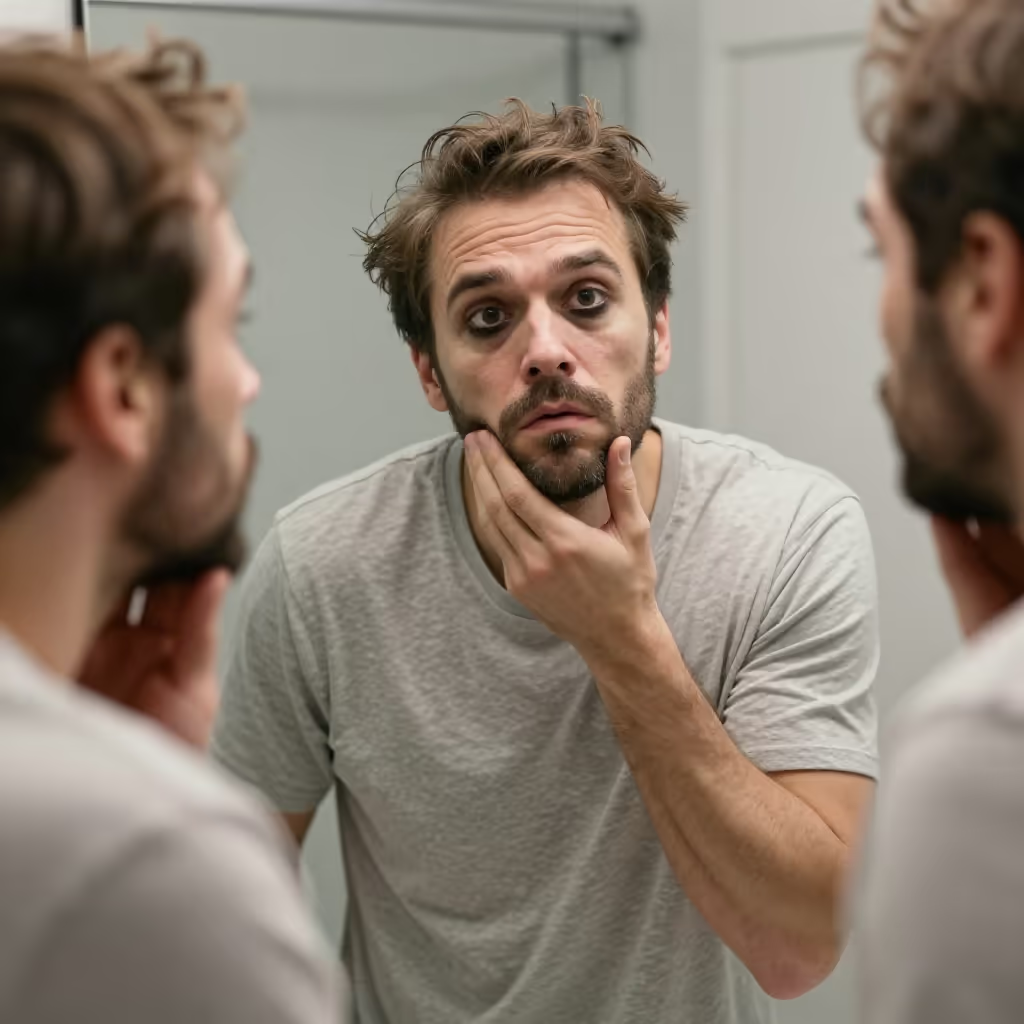
Describes the outward appearance of someone or something, usually in connection with an adverb (e.g., good, bad, tired).
example
Der gut aussehende Mann am Nachbartisch bestellte einen Kaffee.
The good-looking man at the next table ordered a coffee.

Usage tips
Participle as adjective
The word 'aussehend' (looking) is the present participle of the separable verb 'aussehen' (to look). It is used like an adjective to describe the appearance of a person or thing.
EXAMPLE
Ein freundlich aussehender Herr half mir mit dem Gepäck.
A friendly-looking gentleman helped me with my luggage.
Always with an adverb
'Aussehend' (looking) is almost always used together with an adverb that describes the appearance more precisely (e.g., good, bad, tired, strange). The word is used on its own only very rarely.
EXAMPLE
Das müde aussehende Kind wollte nur noch schlafen.
The tired-looking child just wanted to sleep.
Sentence structure
The adjective 'aussehend' (looking) is used before a noun (attributively). If you want to describe appearance as the predicate of a sentence (predicatively), you use the verb 'aussehen' (to look).
EXAMPLE
Der seltsam aussehende Vogel war ein Papagei.
The strange-looking bird was a parrot.
Compare with
confusable
aussehend vs aussehen
to look
'aussehen' and 'aussehend' are both connected to the outward impression of people or things. 'aussehen' is a verb: you use it to say how someone or something looks, for example tired, friendly, or beautiful. 'aussehend' is an adjective and is usually used together with a word like 'gut' (good), 'müde' (tired), or 'krank' (sick), often before a noun. The risk of confusion comes from the fact that the two forms look very similar. In practice: in a normal sentence with a subject, you usually use 'aussehen'; before a noun, 'aussehend' is more likely to fit.
aussehend
Im Wartezimmer saß ein krank aussehender Mann.
A sick-looking man was sitting in the waiting room.