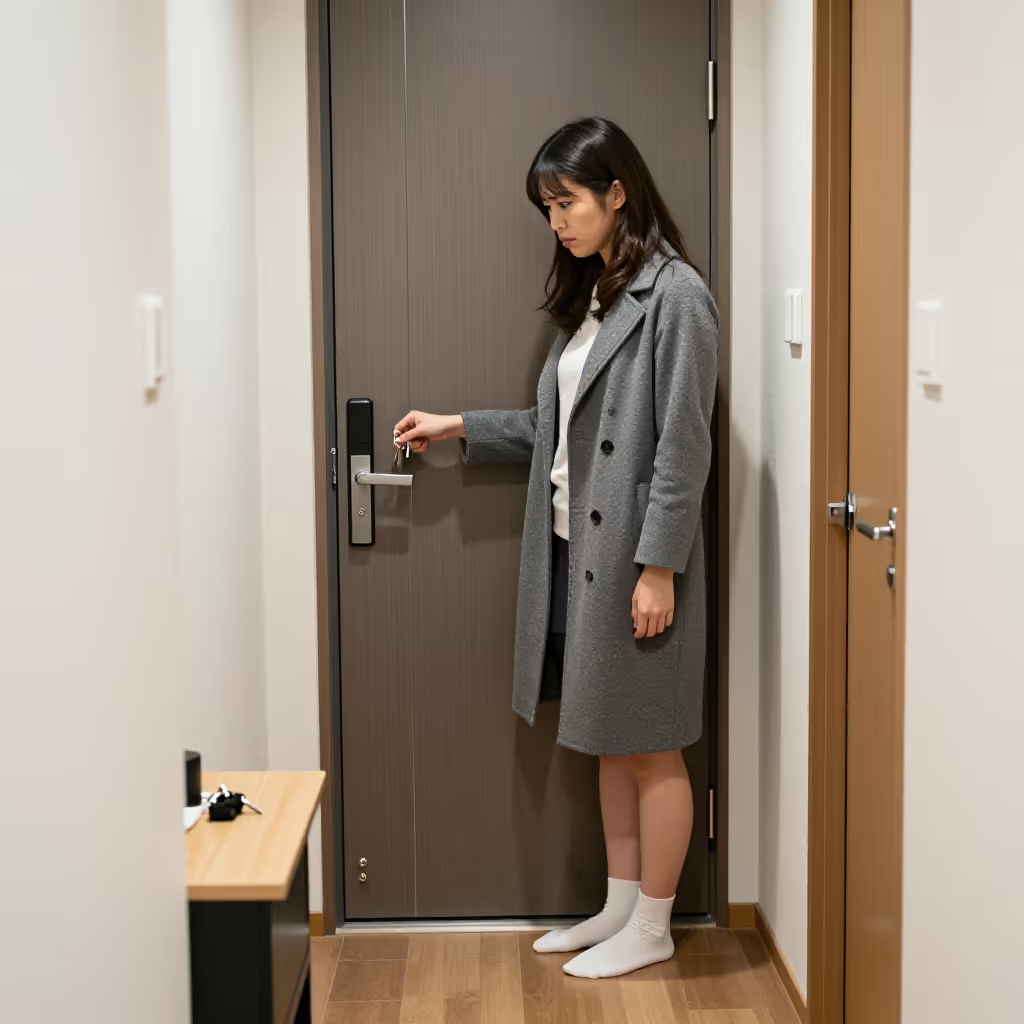
To accidentally deny oneself access to a room or building by closing the door without having a key with you.
example
Ich habe mich aus meiner eigenen Wohnung ausgesperrt, weil der Schlüssel drinnen liegt.
I locked myself out of my own apartment because the key is inside.
Usage tips
Word structure
This verb consists of the prefix 'aus' (out) and the verb 'sperren' (to lock/block). The meaning is very literal: to keep someone or oneself outside by locking or blocking access.
EXAMPLE
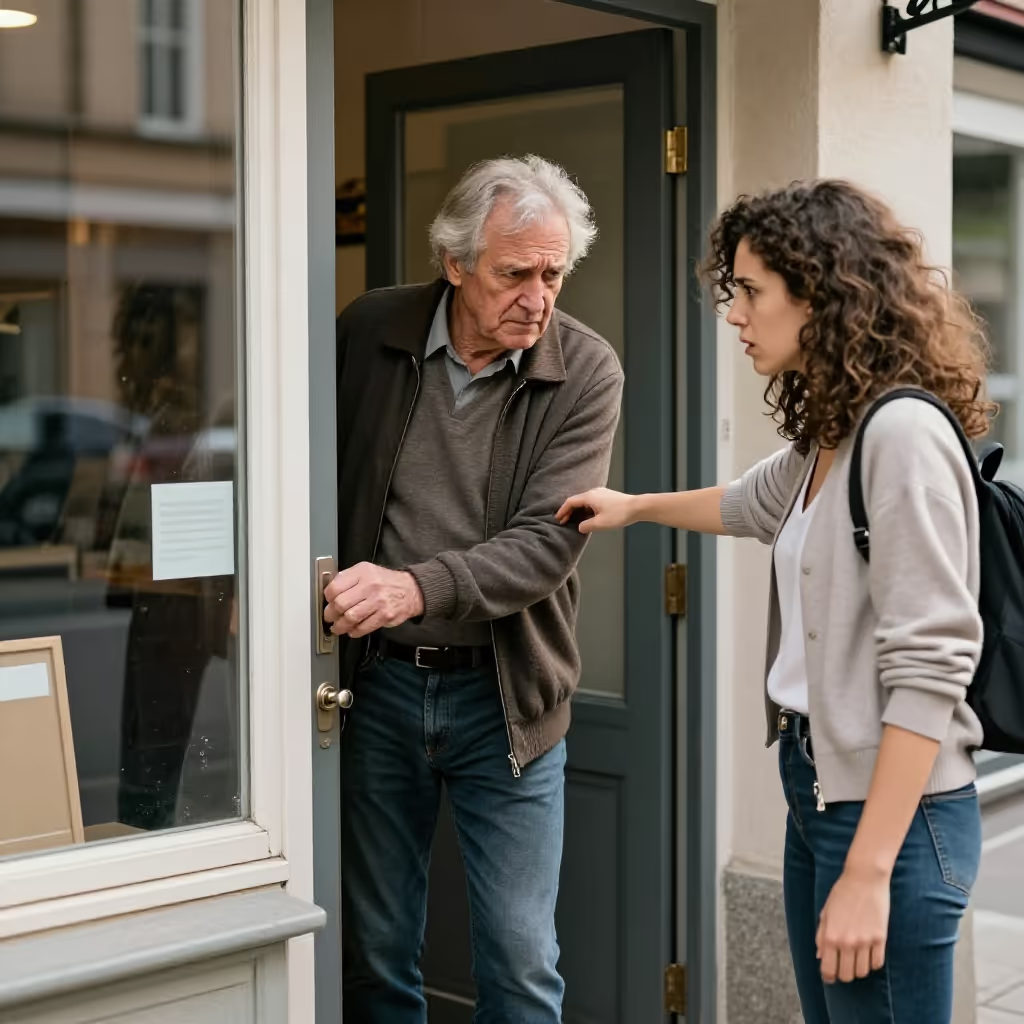
Er hat seine kleine Schwester aus dem Zimmer ausgesperrt.
He locked his little sister out of the room.
Separable verb
'Aussperren' (to lock out) is a separable verb. The prefix 'aus' moves to the end of the sentence in a main clause. In the infinitive with 'zu', 'zu' stands between the prefix and the verb.
EXAMPLE
Pass auf, dass du dich nicht aussperrst!
Be careful that you don't lock yourself out!
Reflexive vs. transitive
The usage distinguishes between intention and accident. 'Sich aussperren' (to lock oneself out) is reflexive and means that you accidentally exclude yourself. 'Jemanden aussperren' (to lock someone out) is transitive and describes a deliberate action against another person.
EXAMPLE
Gestern habe ich mich schon wieder ausgesperrt.
Yesterday I locked myself out yet again.
Preposition 'aus'
When you want to state where you locked yourself out of, you use the preposition 'aus' with the dative.
EXAMPLE
Ich habe mich aus dem Auto ausgesperrt und der Schlüssel ist drinnen.
I locked myself out of the car, and the key is inside.
Technical language
This meaning of 'aussperren' (to lock out) is used almost exclusively in the context of labor law and strikes. It describes a measure taken by the employer.
EXAMPLE
Die Firma hat die streikende Belegschaft ausgesperrt.
The company locked out the striking workforce.
Compare with
confusable
aussperren vs abschließen
to lock / to complete
'abschließen' and 'aussperren' are both connected with a locked door or blocked access. 'abschließen' describes the action: you close a door or room with a key. 'aussperren' describes the consequence for a person: someone cannot get in, often because the door is locked. 'sich aussperren' is especially important: this means you have closed the door and do not have the key with you. So you can lock a door without locking anyone out. 'aussperren' only fits when it is about a person not having access.
aussperren
Ich habe mich ausgesperrt, weil mein Schlüssel noch auf dem Küchentisch liegt.
I locked myself out because my key is still on the kitchen table.
abschließen
Am Abend schließt die Nachbarin den Keller immer sorgfältig ab.
In the evening, the neighbor always locks the basement carefully.