

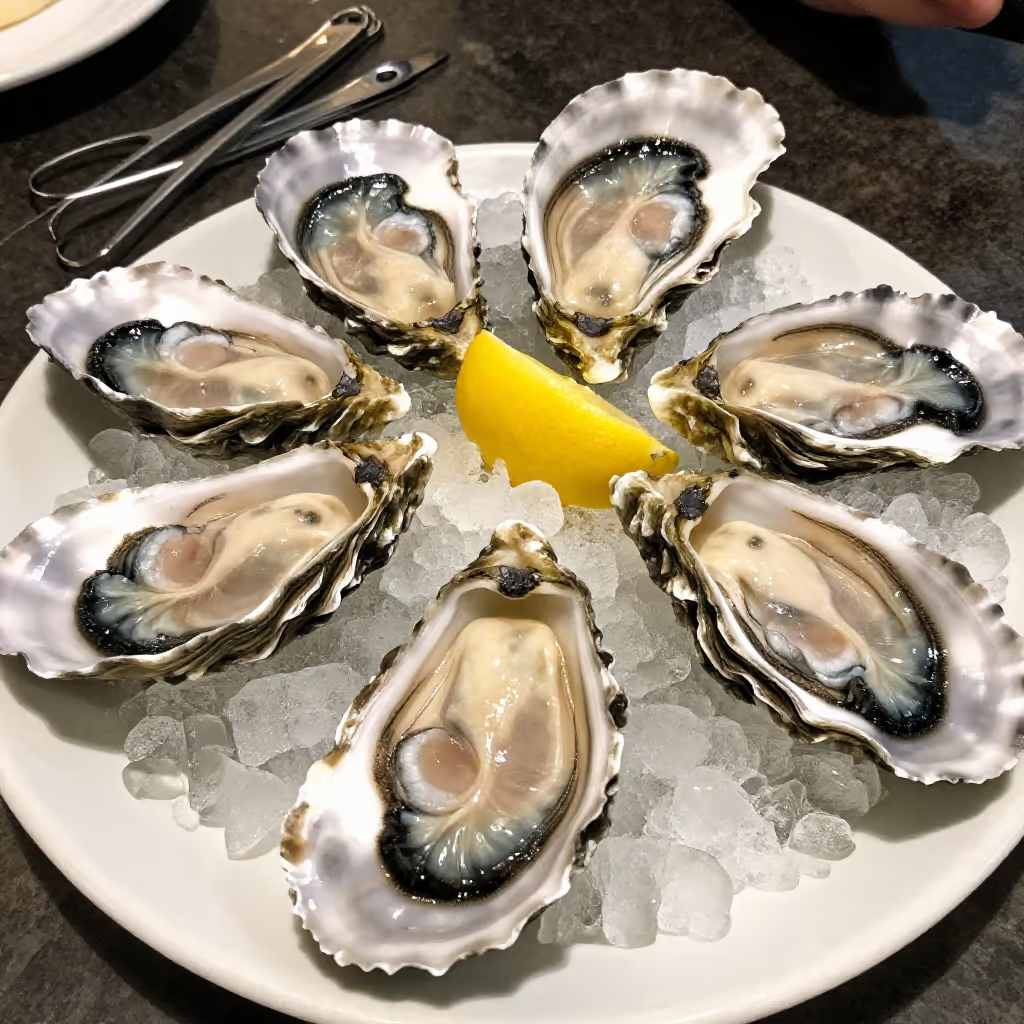
die Auster
oyster
A shellfish that lives in the sea, with an irregular, rough shell, and is often eaten raw as a delicacy.
EXAMPLE
Im Urlaub haben wir frische Austern direkt am Meer gegessen.
On vacation, we ate fresh oysters right by the sea.
oyster
Loading your saved state.
oyster
A shellfish that lives in the sea, with an irregular, rough shell, and is often eaten raw as a delicacy.
Im Urlaub haben wir frische Austern direkt am Meer gegessen.
On vacation, we ate fresh oysters right by the sea.
In a culinary context, 'Auster' (oyster) is often used with certain verbs. You can 'Austern essen' (eat oysters), 'Austern öffnen' (open oysters), or, to emphasize the way they are eaten, 'Austern schlürfen' (slurp oysters).
Er hat zum ersten Mal in seinem Leben eine Auster geschlürft.
He slurped an oyster for the first time in his life.
In German-speaking countries, oysters are considered a delicacy and a luxury item. They are often eaten on special occasions such as New Year's Eve or in upscale restaurants, often together with champagne.
Zum Hochzeitstag bestellten sie eine Platte mit frischen Austern.
For their wedding anniversary, they ordered a platter of fresh oysters.
When describing how oysters are served or eaten, the preposition 'mit' (with) is often used. Typical additions are 'mit Zitrone' (with lemon), 'mit Pfeffer' (with pepper), or 'mit einer Vinaigrette' (with a vinaigrette).
Ich mag meine Austern am liebsten pur, ohne Zitrone oder andere Zusätze.
I like my oysters best plain, without lemon or any other additions.