

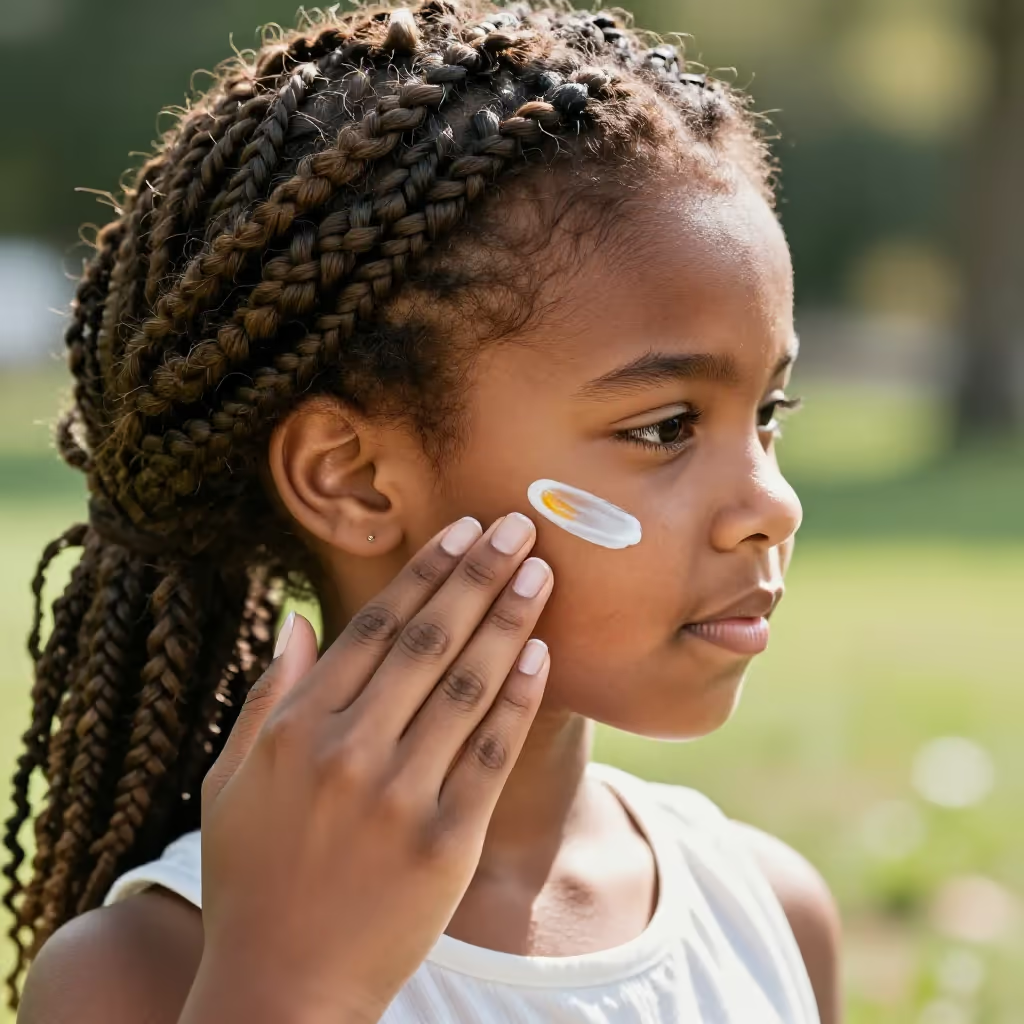
die Backe
cheek
The soft, fleshy part of the face to the side of the nose and mouth. Usually used in the plural, 'Backen' (cheeks).
Die Großmutter kniff ihrem Enkel liebevoll in die Backe.
The grandmother lovingly pinched her grandson's cheek.

cheek / buttock
Loading your saved state.
cheek
The soft, fleshy part of the face to the side of the nose and mouth. Usually used in the plural, 'Backen' (cheeks).
Die Großmutter kniff ihrem Enkel liebevoll in die Backe.
The grandmother lovingly pinched her grandson's cheek.

Which meaning is intended becomes immediately clear from the context. Actions involving the face (kissing, smiling, eating) refer to the cheek. Actions like falling down or sitting refer to the buttocks.
Das Baby hat süße, runde Backen.
The baby has cute, round cheeks.
In connection with the face, 'Backe' (cheek) is often used in the plural. Typical expressions are 'rote Backen bekommen' (to get rosy cheeks), 'dicke Backen haben' (to have swollen cheeks), or 'einen Kuss auf die Backe geben' (to give a kiss on the cheek).
Als sie das Kompliment hörte, bekam sie rote Backen.
When she heard the compliment, her cheeks turned red.
The colloquial idiom 'eine dicke Backe machen' does not mean that the cheek is swollen. It means to be offended or to sulk.
Jetzt mach doch keine dicke Backe, es war doch nur ein Scherz.
Come on, don't sulk now; it was only a joke.
Using 'Backe' (buttock) to refer to the buttocks is purely colloquial. In neutral or formal situations, this usage is inappropriate.
Aua, ich habe mich auf die Backe gesetzt!
Ouch, I landed on my butt!
butt
'Hintern' and 'Backe' can both have to do with the buttocks, but they do not mean exactly the same thing. 'Hintern' means the whole body part you sit on. 'Backe' normally means the cheek on the face. Colloquially, 'Backe' can also mean one of the two buttocks, often in the plural or in very casual language. The words are therefore easy to confuse: a 'Backe' is not automatically part of the butt; it is usually part of the face. For the whole body part, 'Hintern' is clearer.

Nach dem Zahnarztbesuch war seine linke Backe noch ganz dick.
After the dentist appointment, his left cheek was still very swollen.
Beim Schlittenfahren landete Max direkt auf dem Hintern.
While sledding, Max landed right on his butt.