


die Wange
cheek
The area of the face beside the nose and below the eye.
EXAMPLE
Das kleine Kind hatte ganz rote Wangen von der Kälte.
The little child had very red cheeks from the cold.
cheek
Loading your saved state.
cheek
The area of the face beside the nose and below the eye.
Das kleine Kind hatte ganz rote Wangen von der Kälte.
The little child had very red cheeks from the cold.

side piece
In technology and anatomy, the side surface or side part of an object, tool, or body part.
Die innere Wange der Treppe wurde mit Holz verkleidet.
The inner side piece of the staircase was covered with wood.
Whether 'Wange' (cheek) refers to the cheek on the face or the side part of an object becomes clear from the context. If it is about people, body parts, or feelings (e.g., turning red), the face is meant. If it is about technology, architecture, or tools, the side part is meant.
Sie gab ihm einen Kuss auf die Wange.
She gave him a kiss on the cheek.
In connection with the face, 'Wange' (cheek) is often linked to certain situations. Typical phrases are: 'rote Wangen bekommen' (to get red cheeks), 'jemandem über die Wange streichen' (to stroke someone’s cheek), or 'Tränen laufen die Wangen herunter' (tears run down the cheeks).
Als sie das Kompliment hörte, bekam sie rote Wangen.
When she heard the compliment, her cheeks turned red.
The meaning 'Seitenteil' (side piece) is used almost exclusively in technical language, for example in crafts, engineering, or architecture. A typical example is the 'Treppenwange' (stair stringer), the side structural element of a staircase.
Der Tischler montierte die Stufen zwischen den beiden Wangen der Treppe.
The carpenter mounted the steps between the two side pieces of the staircase.
cheek / buttock
Here, Wange and Backe refer to the same soft, lateral part of the face. Wange is the neutral standard-language choice, while Backe in this sense usually sounds colloquial or regional. Wange is therefore more suitable in factual situations, while Backe can also be used in casual conversation.
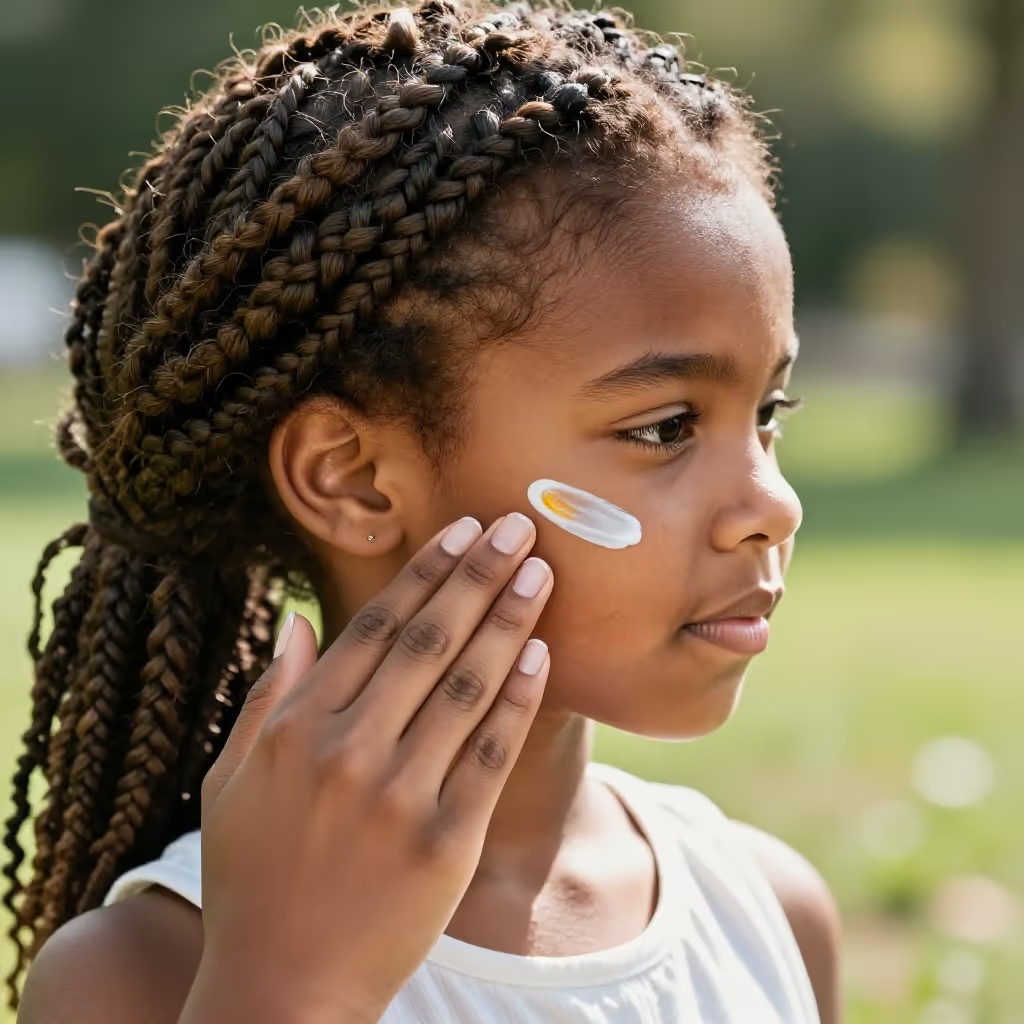
Die Ärztin untersucht die gerötete Wange des Patienten.
The doctor examines the patient's reddened cheek.
Sein Freund sagt, dass seine Backe ganz rot ist.
His friend says that his cheek is completely red.