


baden
to swim
To swim in water for pleasure, usually in a lake, the sea, or a swimming pool.
EXAMPLE
An heißen Sommertagen gehen wir gerne im See baden.
On hot summer days, we like to go swimming in the lake.
to bathe / swim
Loading your saved state.
to swim
To swim in water for pleasure, usually in a lake, the sea, or a swimming pool.
An heißen Sommertagen gehen wir gerne im See baden.
On hot summer days, we like to go swimming in the lake.
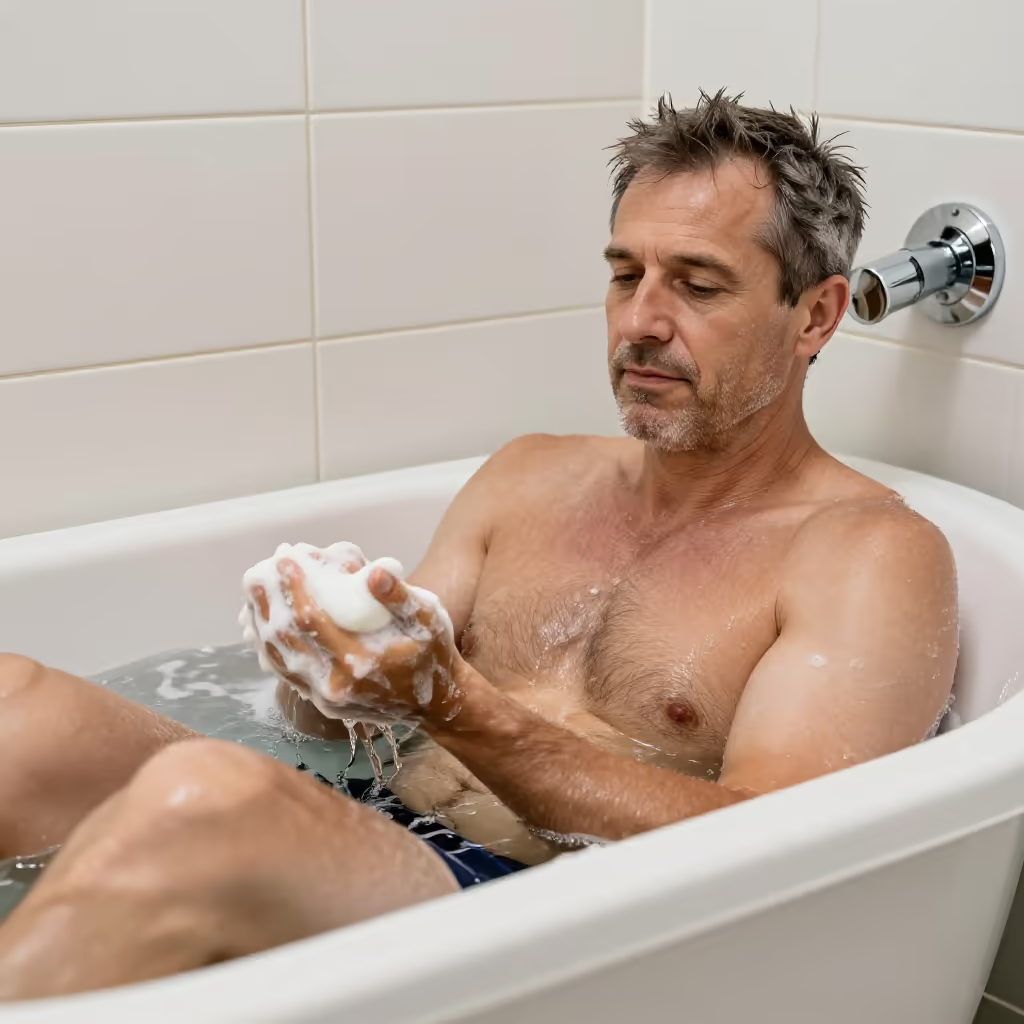
to bathe
To wash oneself in a bathtub filled with water.
Nach dem Sport bade ich immer heiß, um meine Muskeln zu entspannen.
After exercising, I always take a hot bath to relax my muscles.

to have to pay for something
To have to bear the negative consequences of something, often caused by another person.
Mein Bruder hat die Vase zerbrochen, aber ich musste es vor unseren Eltern ausbaden.
My brother broke the vase, but I had to pay for it in front of our parents.

to bask in something
In a figurative sense: to be surrounded by an abundance of something and enjoy it.
Nach ihrem Auftritt durfte die Sängerin im Applaus des Publikums baden.
After her performance, the singer was allowed to bask in the audience's applause.
The verb 'baden' (to bathe/swim) is the origin of many nouns related to water and washing. Examples are 'das Bad' (bathroom), 'die Badewanne' (bathtub), or 'der Badeanzug' (swimsuit).
Nach dem Baden brauchst du ein frisches Handtuch.
After bathing, you need a fresh towel.
You can tell whether 'baden' (to bathe/swim) means swimming outdoors or washing in the bathtub from the place. Phrases like 'im See' (in the lake) or 'im Meer' (in the sea) point to swimming, while 'in der Badewanne' (in the bathtub) means washing.
Die Kinder lieben es, im Meer zu baden.
The children love swimming in the sea.
To express that you are moving to a place in order to swim there, the construction 'baden gehen' (to go swimming) is often used. In the perfect tense it is 'sind baden gegangen' (went swimming).
Am Wochenende sind wir mit Freunden am See baden gegangen.
At the weekend, we went swimming at the lake with friends.
In the idiom 'etwas ausbaden müssen' (to have to pay for something), 'ausbaden' is a separable verb. The prefix 'aus-' stands at the end in a main clause. The expression means having to bear the negative consequences of something.
Er hat den Fehler gemacht, aber seine Kollegin musste ihn ausbaden.
He made the mistake, but his colleague had to pay for it.
The construction 'in etwas baden' (to bask in something) is often used figuratively. It means to enjoy something in abundance, for example 'in der Sonne baden' (to bask in the sun), 'im Applaus baden' (to bask in applause), or 'im Geld baden' (to be rolling in money).
Nach dem Sieg konnte die Mannschaft im Jubel der Fans baden.
After the victory, the team could bask in the fans' cheers.
bathroom / bath
When referring to bathing in a tub, both words describe the same activity but differ grammatically: „das Bad“ denotes the bathing process as a noun. With the verb „baden“, you say that someone is carrying out this activity.
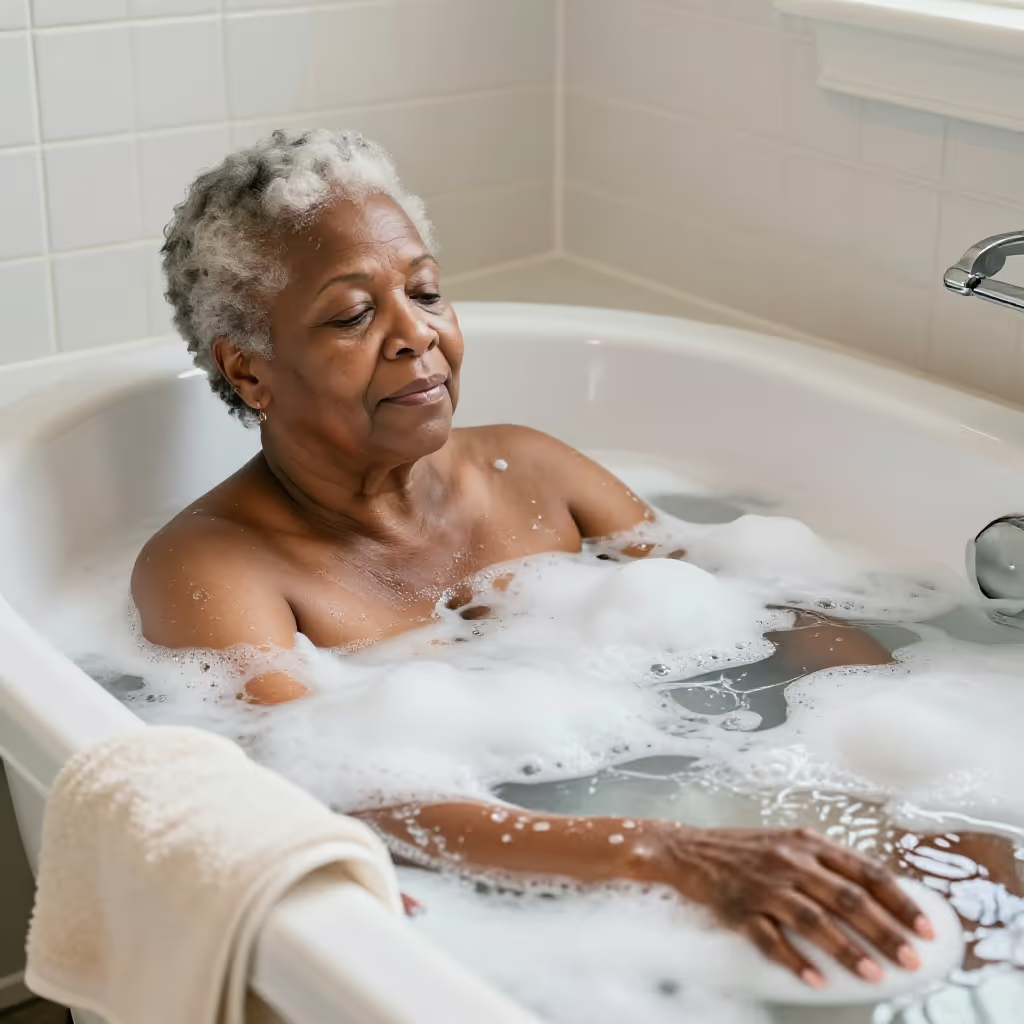
Nach dem Sport bade ich gern in warmem Wasser.
After exercising, I like to bathe in warm water.
Nach dem Sport tut mir ein warmes Bad gut.
After exercising, a warm bath does me good.