

schwimmen
to swim
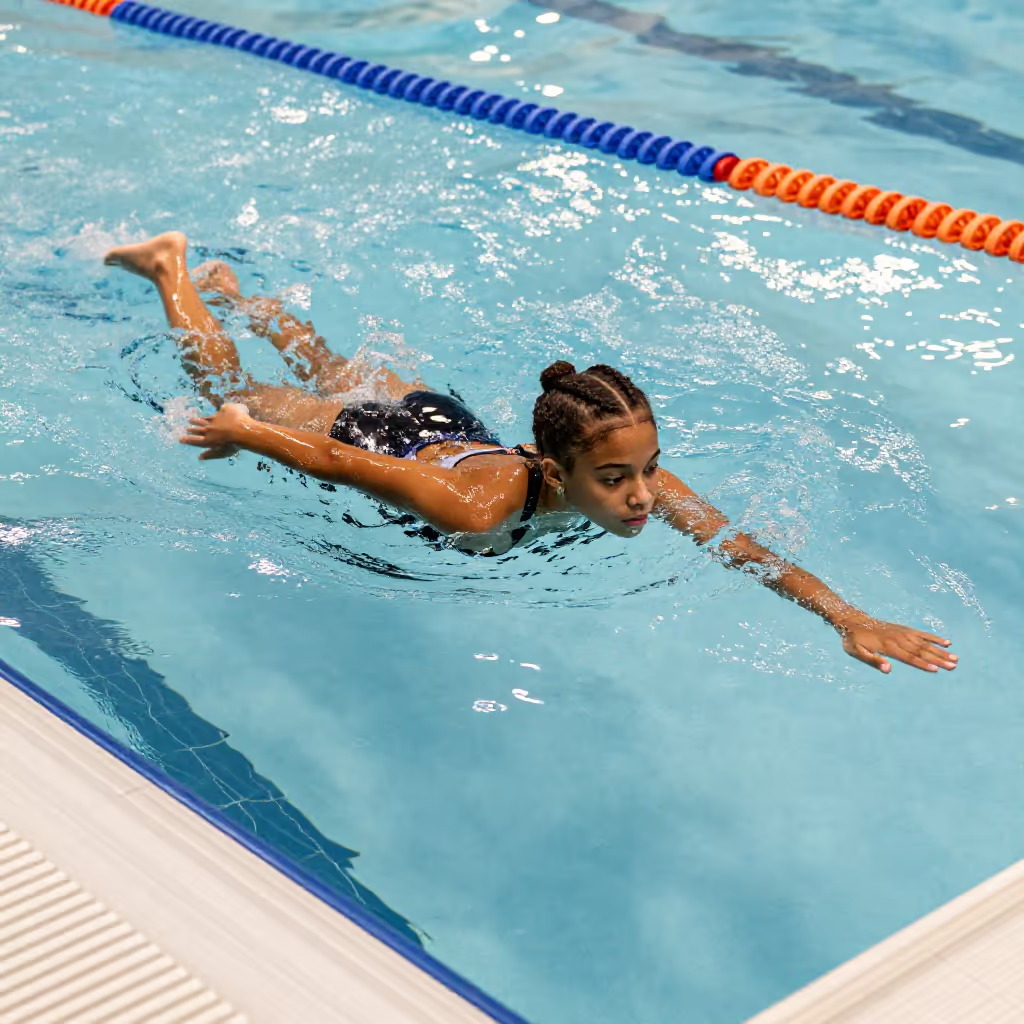
To move through water by moving your arms and legs.
EXAMPLE
Im Sommer gehe ich gerne im See schwimmen.
In summer, I like to go swimming in the lake.
to swim
Loading your saved state.
to swim
To move through water by moving your arms and legs.
Im Sommer gehe ich gerne im See schwimmen.
In summer, I like to go swimming in the lake.
to float
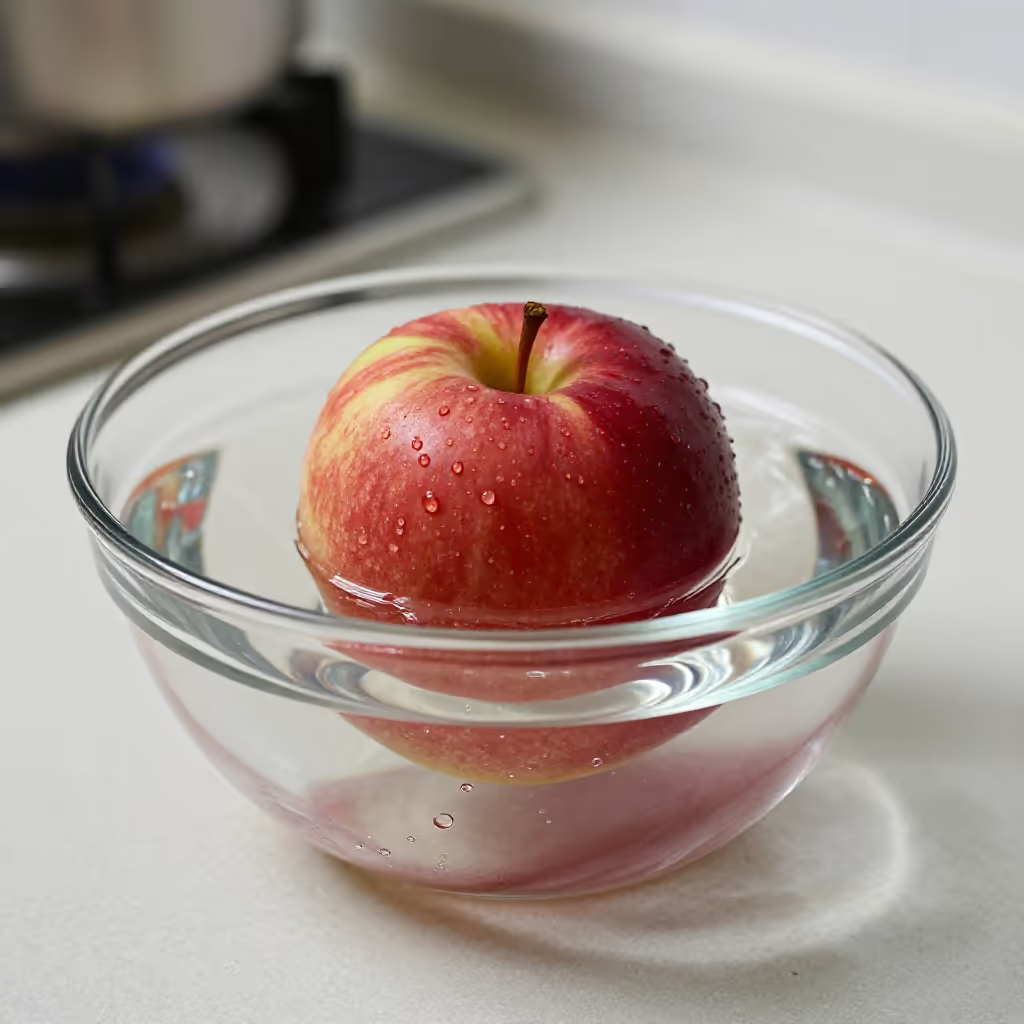
To stay on the surface of a liquid without sinking.
Die Fettaugen schwimmen auf der Suppe.
The drops of fat are floating on the soup.

to flounder
Colloquial: to be unsure, not know something exactly, or have difficulty finding the answers in an exam.
Als der Professor nach Details fragte, kam der Student ganz schön ins Schwimmen.
When the professor asked for details, the student really started to flounder.

to be rolling in money
Colloquial: to be very rich and have a lot of money.
Seit sie im Lotto gewonnen hat, schwimmt ihre Familie im Geld.
Ever since she won the lottery, her family has been rolling in money.
The perfect tense of 'schwimmen' (to swim) is formed with 'haben' when the activity itself is meant. It is formed with 'sein' when movement from one place to another is being described.
Ich habe heute eine Stunde im Pool geschwommen.
I swam in the pool for an hour today.
Whether 'schwimmen' means 'to move through water' or 'to float' depends on the subject. People and animals swim actively. Inanimate things like wood or oil float passively on the surface.
Mein Hund schwimmt sehr gerne im Fluss.
My dog really likes swimming in the river.
Common combinations are 'schwimmen gehen' (to go swimming) as well as places with the preposition 'in', for example 'im Meer schwimmen' (to swim in the sea), 'im See schwimmen' (to swim in the lake), or 'im Schwimmbad schwimmen' (to swim in the swimming pool).
Wollen wir am Nachmittag schwimmen gehen?
Shall we go swimming in the afternoon?
The expression 'ins Schwimmen kommen' or 'ins Schwimmen geraten' means that someone becomes unsure and loses control, especially when answering questions.
Bei der unerwarteten Frage des Chefs geriet er sichtlich ins Schwimmen.
At the boss's unexpected question, he visibly started to flounder.
The figurative meaning 'to be unsure' is used mainly in colloquial language, often in the context of exams or interviews.
In der mündlichen Prüfung habe ich bei der letzten Frage ganz schön geschwommen.
In the oral exam, I really floundered on the last question.
The colloquial expression 'im Geld schwimmen' (to be rolling in money) is a fixed expression. It means that someone is extremely rich.
Nach dem Verkauf seiner Firma schwimmt er im Geld.
After selling his company, he is rolling in money.
to bathe / swim
Both baden and schwimmen can describe a recreational activity in the water. Baden focuses more on enjoying time in the water, while schwimmen emphasizes deliberate movement using the arms and legs. Use baden for enjoying yourself in the water and schwimmen when the movement is important.
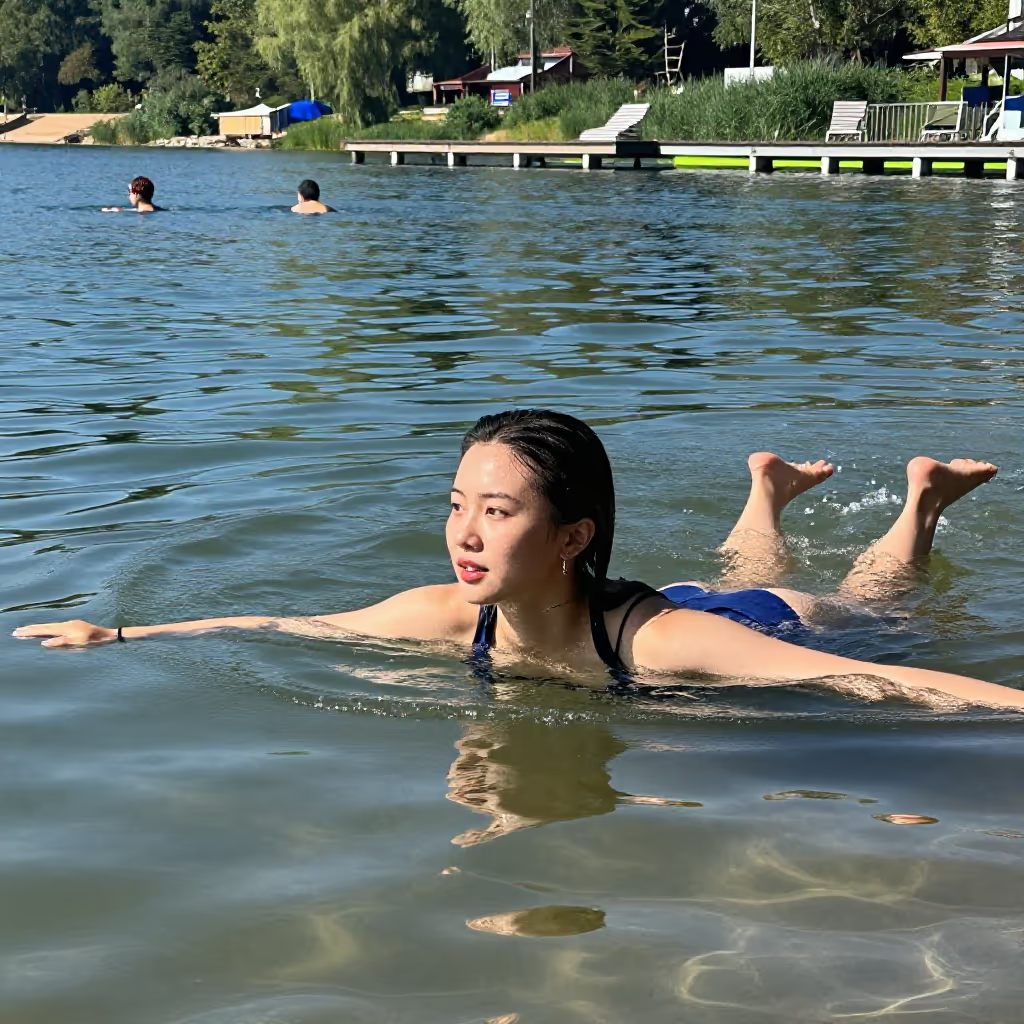
Im warmen See schwimmen die Kinder mehrere Bahnen.
The children swim several lengths in the warm lake.
Am warmen See baden die Kinder den ganzen Nachmittag.
The children spend the whole afternoon swimming in the warm lake.