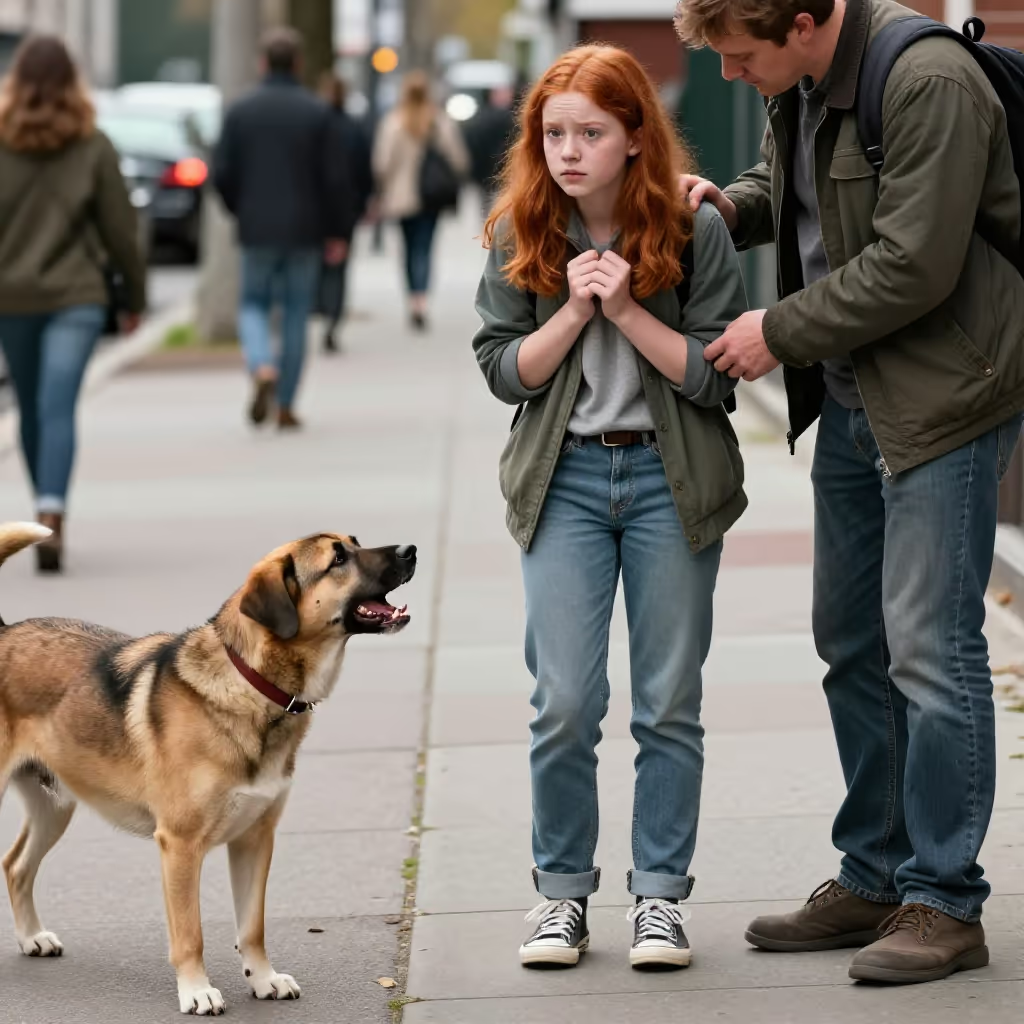
To have a feeling of fear, fright, or great worry. Often used in the impersonal expression 'jemandem ist/wird bang' (someone is/becomes afraid).
example
Mir wurde plötzlich ganz bang, als ich das unheimliche Geräusch im Keller hörte.
I suddenly became very afraid when I heard the eerie noise in the basement.

Usage tips
Dative construction
In the expression 'jemandem ist/wird bang' (someone is/becomes afraid), the person who feels fear is in the dative. The construction is impersonal; the subject is not the person themself.
EXAMPLE
Mir wurde auf einmal ganz bang ums Herz.
All at once, my heart became very anxious.
Preposition 'um'
When you worry about someone or something, you use the fixed structure 'bang sein um' (to be anxious about) followed by the accusative.
EXAMPLE
Ich bin bang um seine Gesundheit.
I am anxious about his health.
Elevated style
The word 'bang' (afraid/anxious) belongs more to elevated or written language. It sounds somewhat more formal or poetic.
EXAMPLE
Dem Seemann wurde bang, als der Sturm aufzog.
The sailor became afraid as the storm came up.
Fixed expression
A common and active use is the expression 'jemandem bange machen' (to frighten someone / to make someone afraid). It means to scare someone or make them afraid.
EXAMPLE
Der große Hund hat dem kleinen Kind bange gemacht.
The big dog frightened the small child.
Compare with
antonym
bang vs mutig
brave / bold
'mutig' and 'bang' are opposites when it comes to fear. 'mutig' describes someone who acts despite fear or danger. 'bang' describes a feeling of fear or great worry. It is often used in expressions like 'mir ist bang' (I am afraid / uneasy) or 'ihm wird bang' (he becomes afraid / uneasy). So the difference is: 'mutig' emphasizes decisive action, while 'bang' emphasizes the anxious feeling.
bang
Vor der Prüfung wurde Milan plötzlich bang.
Before the exam, Milan suddenly became afraid.
mutig
Die Ärztin war mutig und blieb auch in der schwierigen Situation ruhig.
The doctor was brave and stayed calm even in the difficult situation.