


bangen um
to worry about
To have great concern or fear about the well-being or continued existence of someone or something.
EXAMPLE
Die Mutter bangt um ihr krankes Kind.
The mother is worried about her sick child.
to fear / to worry
Loading your saved state.
to worry about
To have great concern or fear about the well-being or continued existence of someone or something.
Die Mutter bangt um ihr krankes Kind.
The mother is worried about her sick child.

to fear
To be afraid of a particular person, thing, or upcoming event.
Viele Schüler bangen vor der Abschlussprüfung.
Many students fear the final exam.
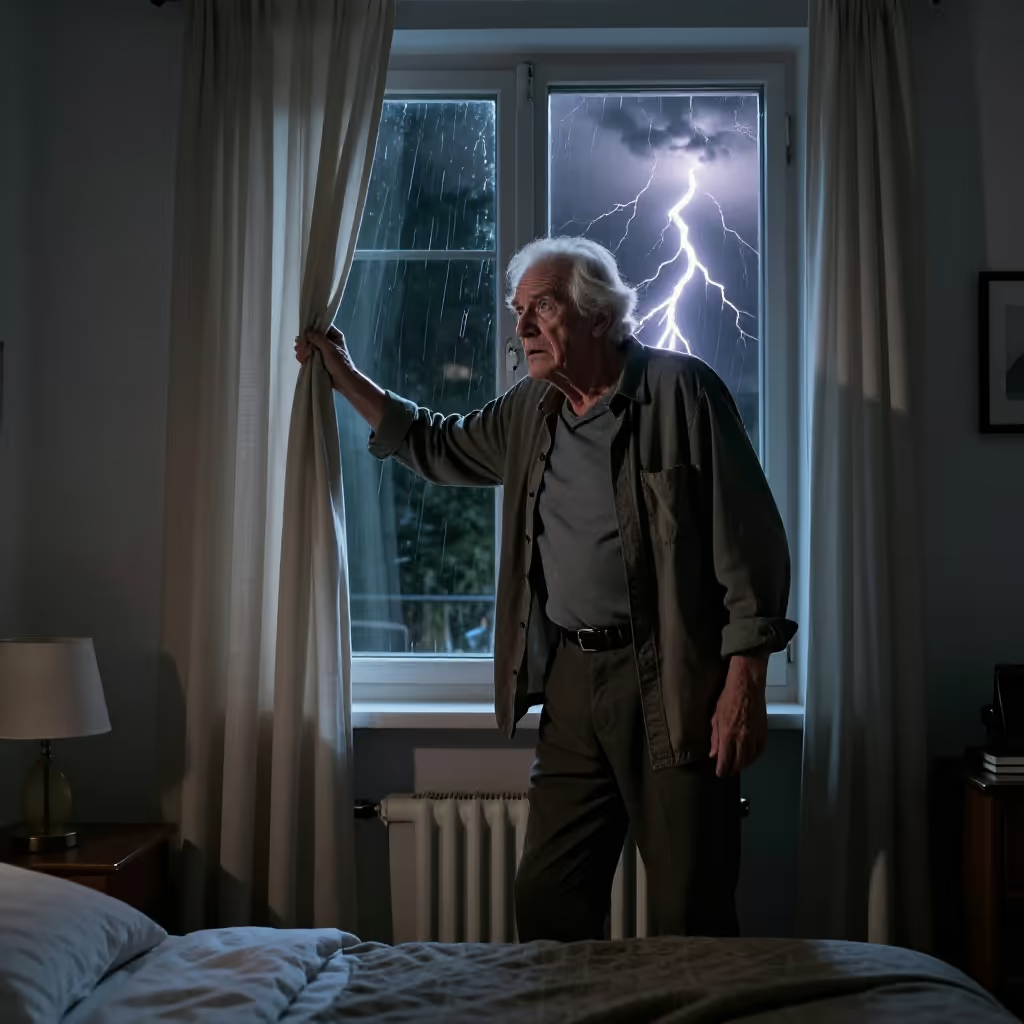
to fear
To feel generally anxious or afraid. This use is often somewhat elevated or literary.
Sein Herz bangte, als er die unheimlichen Geräusche im Keller hörte.
His heart was afraid when he heard the eerie noises in the basement.
The verb 'bangen' (to fear / to worry) almost always needs a preposition. With 'bangen um' (+ accusative), you express concern about someone or something. With 'bangen vor' (+ dative), you express fear of a danger or event.
Die Familie bangt um den vermissten Bergsteiger.
The family is worried about the missing mountaineer.
The verb 'bangen' (to fear / to worry) belongs to the word family around 'bange' (afraid/anxious). The old expression 'Mir ist bange' means 'I am afraid' and shows the close connection.
Mir war bange, als ich allein durch den dunklen Wald ging.
I was afraid when I walked alone through the dark forest.
When you 'um etwas bangen' (worry about something), it often involves the loss of something important. Typical phrases are 'um sein Leben bangen' (to fear for one's life), 'um seinen Job bangen' (to fear for one's job), or 'um die Zukunft bangen' (to worry about the future).
Wegen der schlechten Wirtschaftslage bangen viele um ihren Arbeitsplatz.
Because of the poor economic situation, many people fear for their jobs.
When you 'vor etwas bangen' (fear something), it usually refers to upcoming unpleasant events. Common combinations are 'vor einer Prüfung bangen' (to fear an exam), 'vor einer Operation bangen' (to fear an operation), or 'vor den Konsequenzen bangen' (to fear the consequences).
Der Angeklagte bangte vor dem Urteil des Gerichts.
The defendant feared the court's verdict.
Using 'bangen' (to fear) without a preposition to express general fear is rare and belongs to an elevated, literary style.
In der Stille der Nacht begann er zu bangen.
In the silence of the night, he began to feel afraid.
to fear
Fürchten focuses on a possible unwanted event. Bangen places more emphasis on great concern for someone or something during an uncertain, often prolonged wait and sounds somewhat more elevated. Fürchten is suitable for a specific fear, while bangen is more appropriate for anxious waiting.
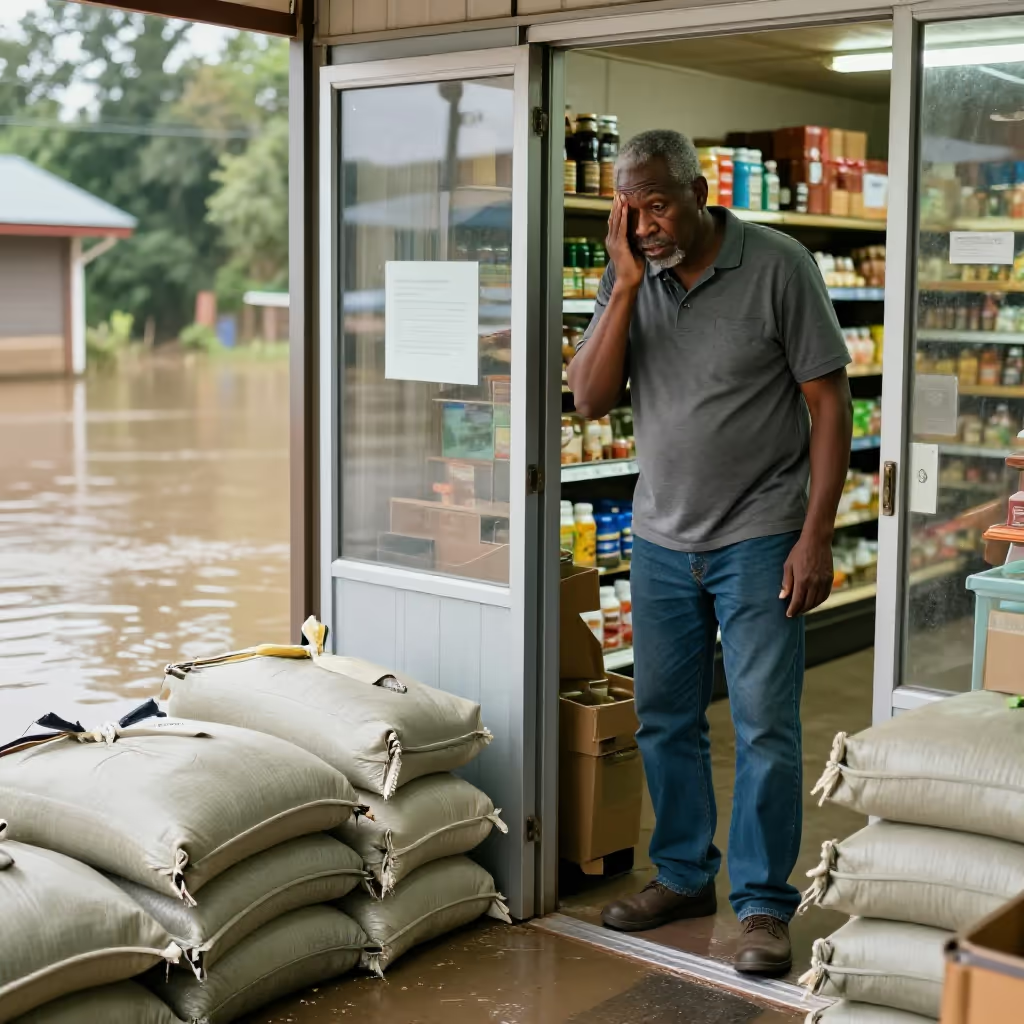
Während der Operation bangt die Familie um das Leben des Verletzten.
During the operation, the family is anxiously waiting and worrying about the injured person's life.
Die Familie fürchtet, dass der Verletzte die Operation nicht überlebt.
The family fears that the injured person will not survive the operation.