


sich fürchten vor
to be afraid of
To be afraid of a specific person, thing, or situation.
EXAMPLE
Mein kleiner Bruder fürchtet sich vor großen Hunden.
My little brother is afraid of big dogs.
to fear
Loading your saved state.
to be afraid of
To be afraid of a specific person, thing, or situation.
Mein kleiner Bruder fürchtet sich vor großen Hunden.
My little brother is afraid of big dogs.
to fear
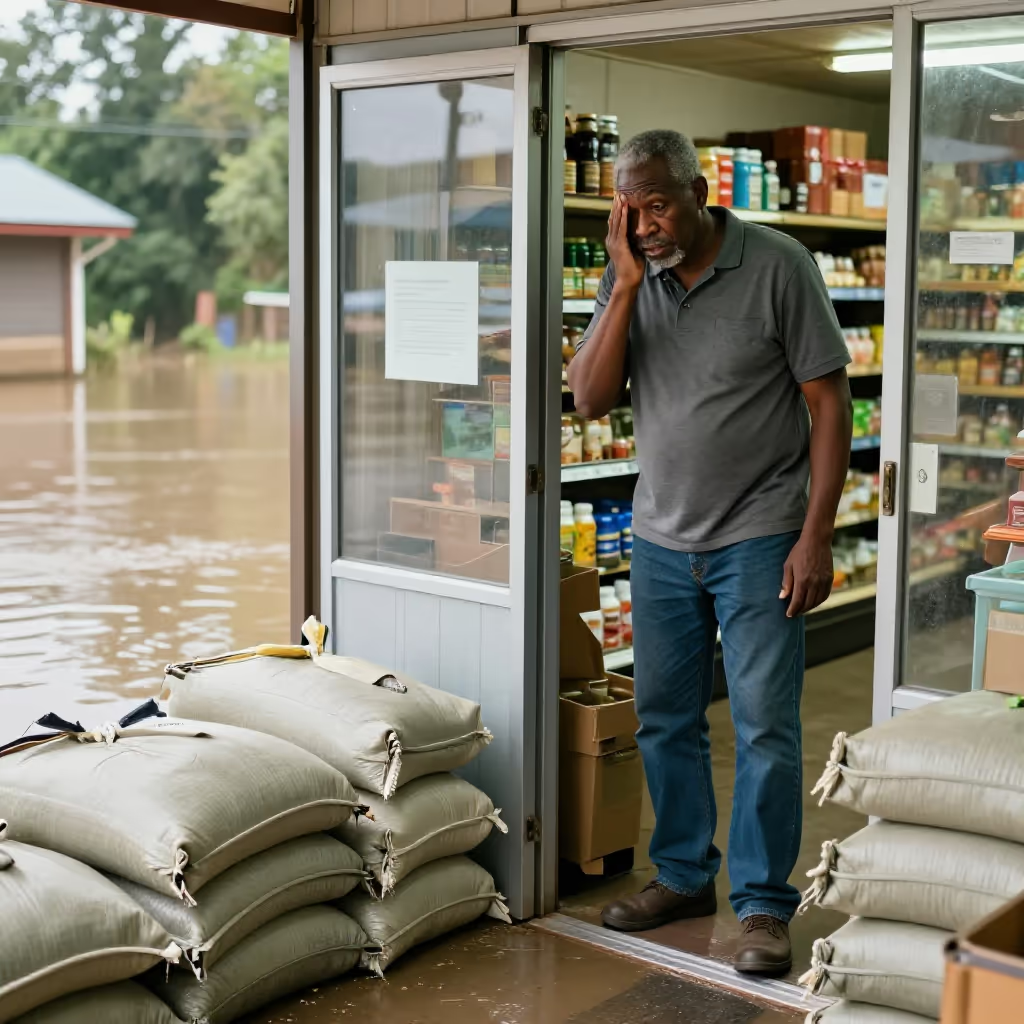
To have the fear or worry that an unwanted event might happen. Often used with a 'dass' (that) clause.
Ich fürchte, dass wir den Termin nicht einhalten können.
I fear that we won't be able to meet the deadline.

to fear
To have great respect or awe for an authority or a higher power. This meaning is rather formal or outdated.
Die Menschen wurden gelehrt, den Zorn der Götter zu fürchten.
People were taught to fear the wrath of the gods.
Remember two central constructions: 'sich fürchten vor + Dativ' (to be afraid of + dative) expresses fear of a concrete thing. 'Fürchten, dass ...' (to fear that ...) introduces a subordinate clause and describes a worry or fear about a situation.
Viele Menschen fürchten sich vor Spinnen.
Many people are afraid of spiders.
When someone is afraid of a specific thing or person, 'fürchten' (to fear) is used reflexively with 'sich' and the preposition 'vor' + dative. The reflexive pronoun is obligatory here.
Sie fürchtet sich vor der Prüfung am Montag.
She is afraid of the exam on Monday.
The phrase 'Ich fürchte, ...' (I'm afraid ...) is often used in everyday language as a polite introduction to bad news or a refusal. It expresses regret.
Ich fürchte, ich kann Ihnen dabei nicht helfen.
I'm afraid I can't help you with that.
to take care / worry
Sich sorgen um and fürchten can both express a negative expectation or uncertainty. Sich sorgen um generally refers to concern, while fürchten usually emphasizes a more specific or more strongly anticipated danger. Use fürchten when the possible unwanted consequence is especially clearly at the center of attention.

Die Eltern fürchten, dass ihr Sohn auf dem Heimweg einen Unfall hatte.
The parents fear that their son was in an accident on the way home.
Die Eltern sorgen sich um ihren Sohn, weil er noch nicht zu Hause ist.
The parents are worried about their son because he still hasn’t come home.