

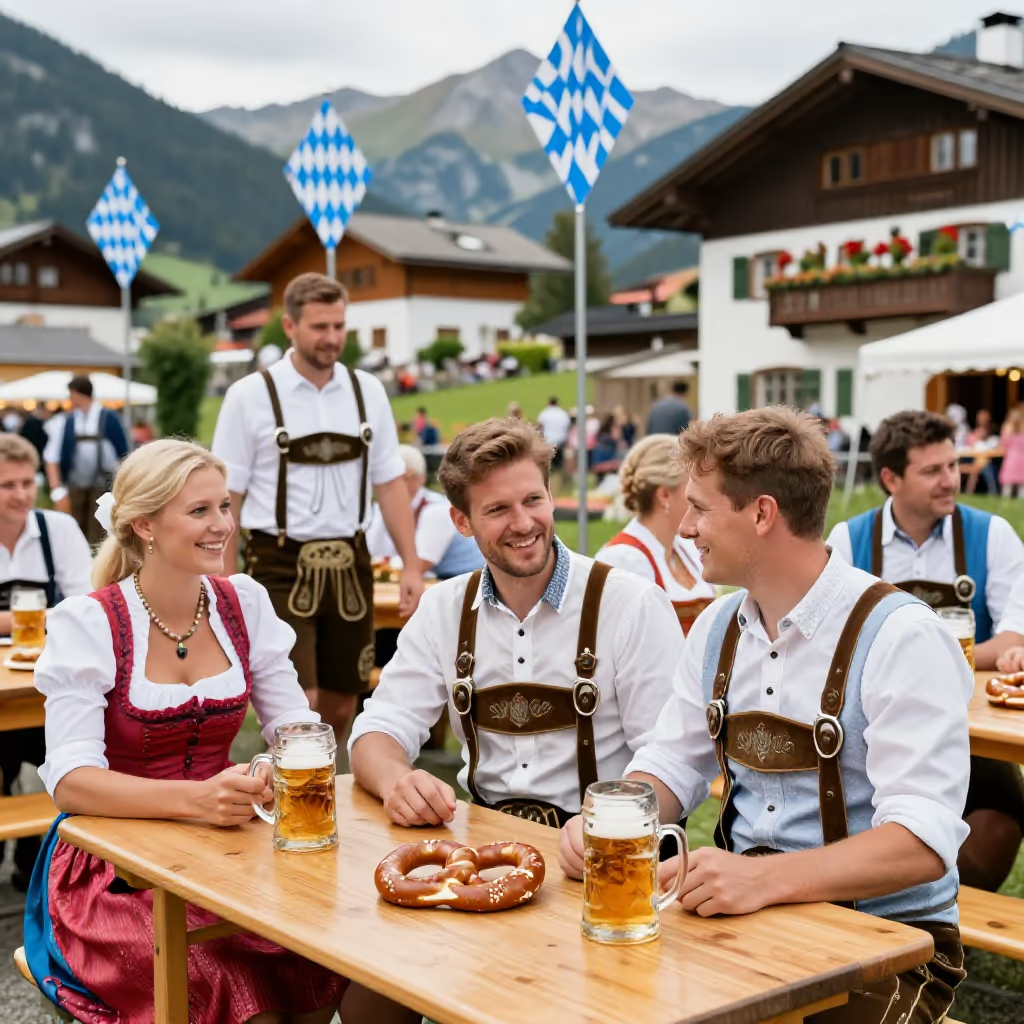
Relating to Bavaria, its inhabitants, its culture, or its language. It is a common, but not the official, spelling of 'bayerisch' (Bavarian).
example
Zum Abendessen gab es eine deftige bayrische Brotzeit.
For dinner there was a hearty Bavarian Brotzeit.
Usage tips
Origin of the adjective
The adjective 'bayrisch' (Bavarian) is derived from the federal state 'Bayern' (Bavaria). The ending '-isch' is often used to form adjectives from geographical names.
EXAMPLE
Er spricht mit einem deutlich bayrischen Akzent.
He speaks with a clear Bavarian accent.
Spelling and style
The spelling 'bayrisch' is a very common variant that is used especially in spoken language and informal contexts. The officially correct form is 'bayerisch' (Bavarian).
EXAMPLE
Wir machen Urlaub in einem bayrischen Dorf.
We are vacationing in a Bavarian village.
Typical combinations
The adjective 'bayrisch' (Bavarian) is often used to describe culture, food, and landscapes. Typical combinations are 'die bayrische Küche' (Bavarian cuisine), 'ein bayrisches Bier' (a Bavarian beer), or 'die bayrischen Alpen' (the Bavarian Alps).
EXAMPLE
Im Bierzelt spielte eine Kapelle bayrische Volksmusik.
A band was playing Bavarian folk music in the beer tent.
Compare with
synonym · confusable
bayrisch vs bayerisch
Bavarian
'bayerisch' and 'bayrisch' mean almost the same thing in terms of content: both refer to Bavaria, its people, culture, or language. The difference is mainly in the spelling. 'bayerisch' is the official and standard German form. 'bayrisch' is also seen often, especially in less formal texts, but it is not the official spelling. The words are easy to confuse because they look very similar and can be used in the same way. If you want to write safely and correctly, usually choose 'bayerisch'.
bayrisch
Sie sagt, dass sie den bayrischen Dialekt sehr gern hört.
She says that she really enjoys listening to the Bavarian dialect.
bayerisch
Für das Fest im Garten kaufen wir bayerischen Käse.
For the garden party, we are buying Bavarian cheese.