


bedrohen
to threaten
To intimidate someone or try to force them to do something by threatening violence or other negative consequences.
Der Täter hat den Kassierer mit einer Waffe bedroht.
The perpetrator threatened the cashier with a weapon.

to threaten
Loading your saved state.
to threaten
To intimidate someone or try to force them to do something by threatening violence or other negative consequences.
Der Täter hat den Kassierer mit einer Waffe bedroht.
The perpetrator threatened the cashier with a weapon.

'Bedrohen' (to threaten) is an inseparable verb formed with the prefix 'be-'. This prefix makes the verb transitive, so it always needs an accusative object: you threaten someone or something.
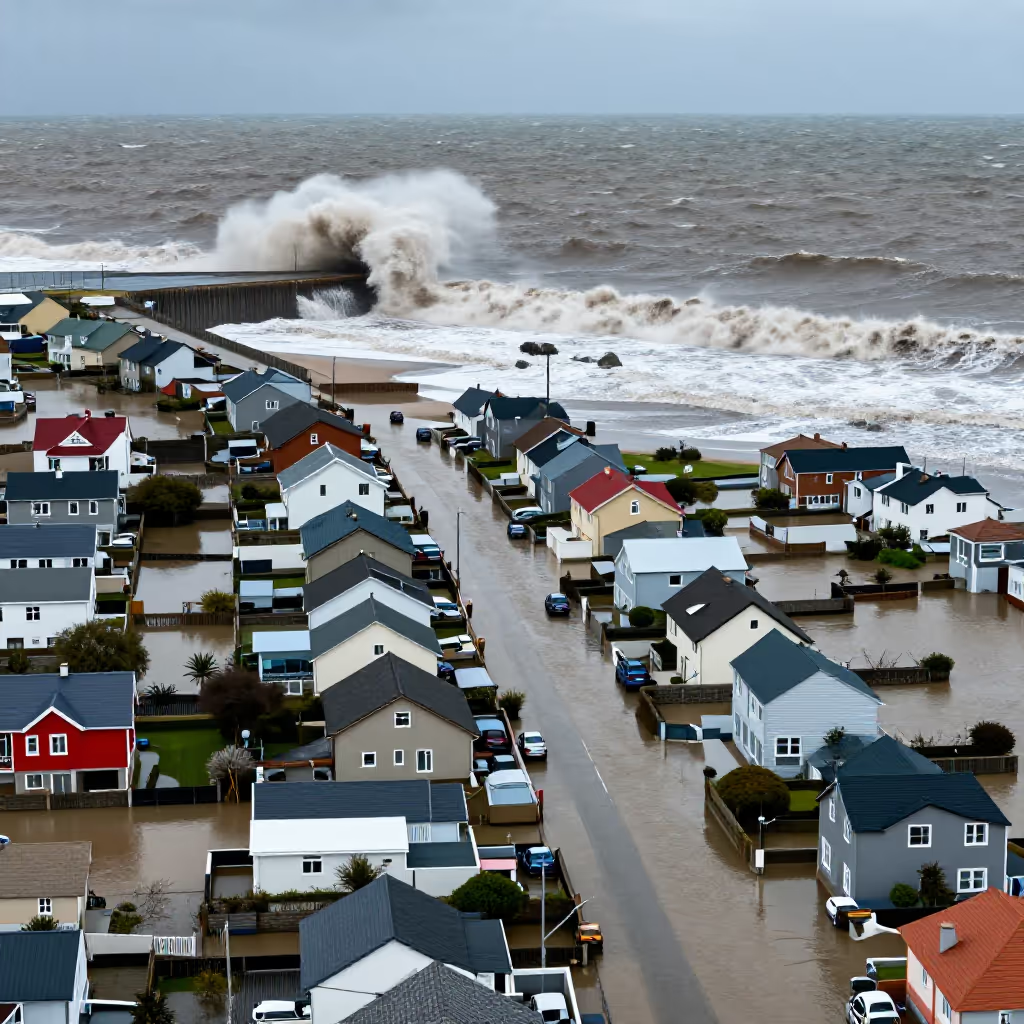
Die Flut bedroht die gesamte Küstenregion.
The flood threatens the entire coastal region.
If you want to state what someone is being threatened with, use the preposition 'mit' followed by the dative. The pattern is: someone threatens someone (accusative) with something (dative).
Der Erpresser bedrohte die Familie mit der Veröffentlichung der Fotos.
The blackmailer threatened the family with the publication of the photos.
In this figurative meaning, the subject is often an abstract danger. Typical subjects are climate change, a disease, unemployment, or an economic crisis.
Die zunehmende Trockenheit bedroht die Ernte der Bauern.
The increasing drought threatens the farmers' harvest.
to protect
'schützen' and 'bedrohen' are clear opposites. 'schützen' means to keep someone or something safe from danger, harm, or destruction. 'bedrohen', on the other hand, means to be a danger yourself or to put someone under pressure through threats. When something is protected, it is meant to stay safe. When something is threatened, its safety, or even its continued existence, is in danger.

Der starke Sturm bedroht die kleinen Häuser an der Küste.
The strong storm threatens the small houses on the coast.
Ein Helm schützt den Kopf beim Fahrradfahren.
A helmet protects your head when cycling.