


gefährden
to endanger
To put someone or something in a situation where harm or danger threatens.
EXAMPLE
Rücksichtsloses Fahren gefährdet das Leben anderer Verkehrsteilnehmer.
Reckless driving endangers the lives of other road users.
to endanger
Loading your saved state.
to endanger
To put someone or something in a situation where harm or danger threatens.
Rücksichtsloses Fahren gefährdet das Leben anderer Verkehrsteilnehmer.
Reckless driving endangers the lives of other road users.
The verb 'gefährden' (to endanger) is derived directly from the noun 'die Gefahr' (danger). It means to put someone or something in danger.
Durch den Sturm war die Stabilität der Brücke gefährdet.
The stability of the bridge was endangered by the storm.
'Gefährden' (to endanger) is an inseparable verb because it begins with 'ge-', but this is part of the word stem. The prefix is never separated. The past participle is 'gefährdet' (endangered), without an additional 'ge-'.
Du gefährdest deine Gesundheit, wenn du so viel rauchst.
You endanger your health if you smoke so much.
'Gefährden' (to endanger) is often used in serious contexts. Typical objects are abstract values such as 'die Sicherheit' (safety/security), 'die Gesundheit' (health), 'das Leben' (life), or 'der Erfolg' (success).
Die Krise gefährdet tausende Arbeitsplätze.
The crisis is endangering thousands of jobs.
to threaten
Both verbs describe a danger. Gefährden emphasizes putting someone or something in a risky situation. Bedrohen foregrounds the serious danger already affecting the existence or continued survival of something.
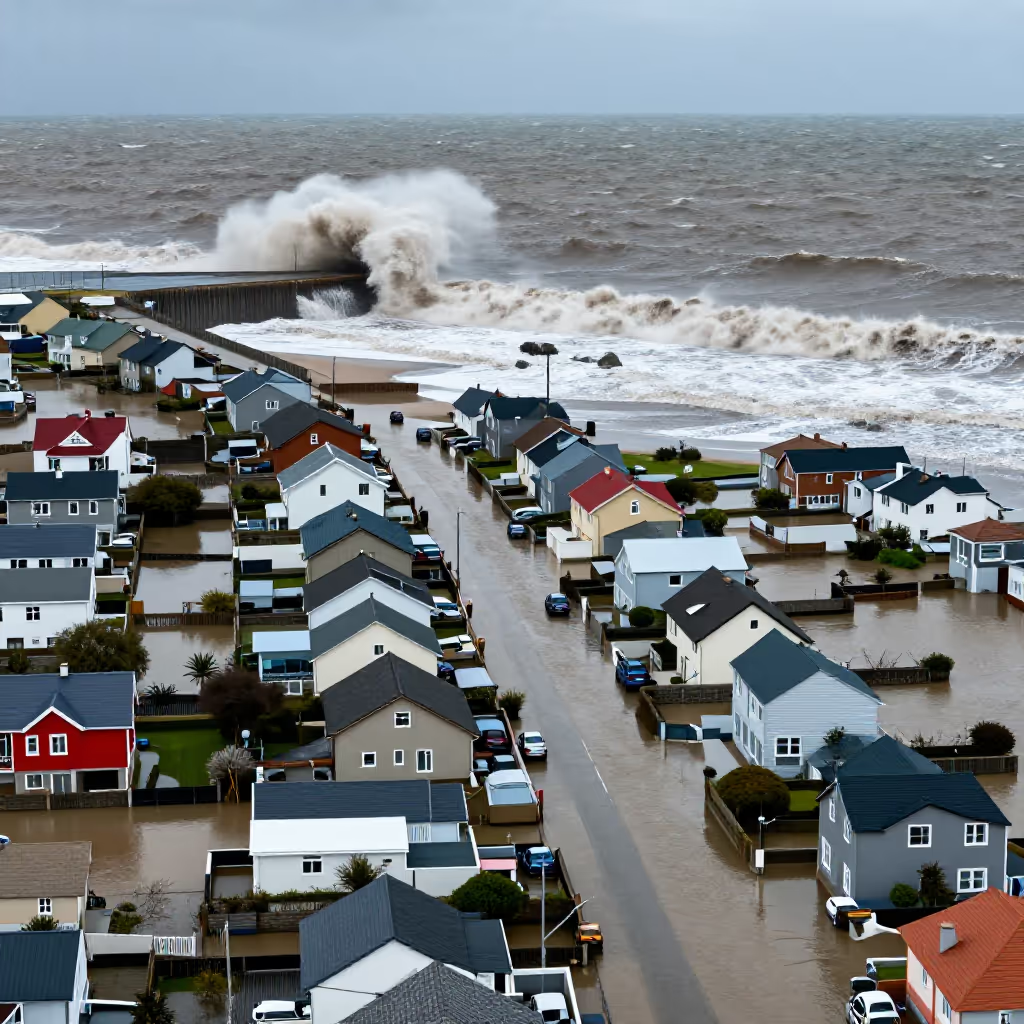
Das Einleiten ungeklärter Abwässer gefährdet den Fischbestand.
Discharging untreated wastewater is endangering the fish population.
Die starke Verschmutzung bedroht inzwischen den Fortbestand des Fischbestands.
The severe pollution is now threatening the continued survival of the fish population.