
A female person who accompanies another person or a group. This may happen for social, professional, or protective reasons.
example
Er erschien zur Gala mit einer eleganten Begleiterin.
He appeared at the gala with an elegant female companion.
Usage tips
Word structure
'Begleiterin' (female companion/accompanist) is the feminine form of 'der Begleiter' (male companion/accompanist). The ending '-in' is used by default in German to form the feminine form of many professions and personal nouns.
EXAMPLE
Der Lehrer und die Lehrerin begleiten die Klasse auf dem Ausflug.
The male teacher and the female teacher accompany the class on the excursion.
Word family
The word belongs to the family of the verb 'begleiten' (to accompany; to go or travel with someone). All words in this family, such as 'die Begleitung' (accompaniment/company) or 'der Begleiter' (companion/accompanist), are connected with this basic meaning.
EXAMPLE
Kannst du mich zum Arzt begleiten?
Can you accompany me to the doctor?
Context clues
You can tell from the context whether a social or a musical 'Begleiterin' (female companion/accompanist) is meant. Words like 'Klavier' (piano), 'Band' (band), or 'Sänger' (singer) point to the musical meaning. Words like 'Reise' (trip), 'Gala' (gala), or 'Termin' (appointment) point to the social meaning.
EXAMPLE
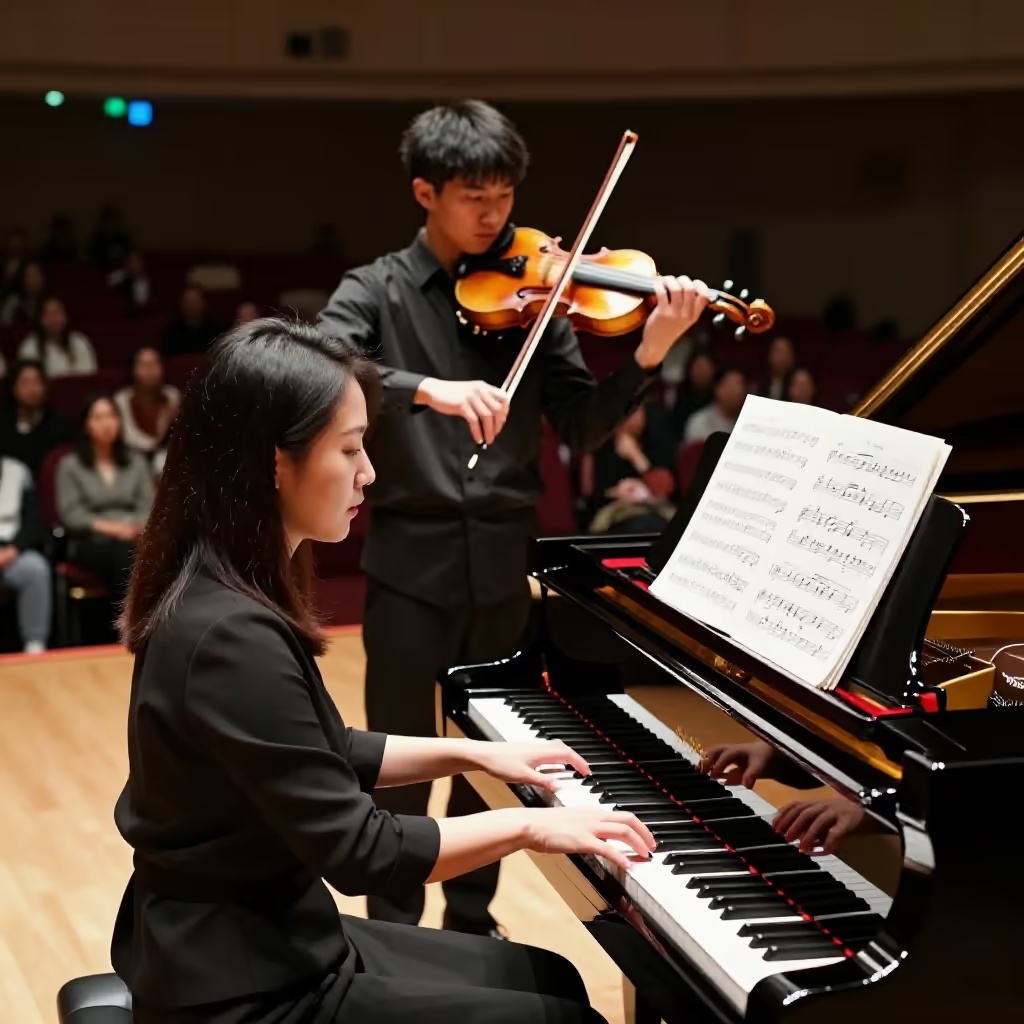
Die Pianistin ist eine gefragte Begleiterin für viele berühmte Geiger.
The pianist is a sought-after accompanist for many famous violinists.
Compare with
near_synonym · confusable
Begleiterin vs Dame
lady / queen / checkers
'die Dame' and 'die Begleiterin' can both mean a woman who comes with someone to an event. 'Dame' sounds social or polite in this context, for example at a ball, a dance, or an official celebration. 'Begleiterin' describes the function more precisely: a woman accompanies another person or a group. This can be for private, professional, or protective reasons. The words can be confused when a woman is next to someone at an event. 'Begleiterin' clearly says that she is accompanying someone; 'Dame' emphasizes more the polite or social role.
Begleiterin
Im Bus sitzt die Begleiterin neben dem alten Mann und hilft ihm beim Aussteigen.
On the bus, the female companion sits next to the old man and helps him get off.
Dame
Beim Tanzkurs begrüßt der Lehrer jede Dame persönlich.
At the dance class, the teacher greets each lady personally.