


beide
both
Refers to two people or things and means the one and the other together.
EXAMPLE
Ich habe Anna und Tom gefragt, und beide haben zugestimmt.
I asked Anna and Tom, and both agreed.
both
Loading your saved state.
both
Refers to two people or things and means the one and the other together.
Ich habe Anna und Tom gefragt, und beide haben zugestimmt.
I asked Anna and Tom, and both agreed.

both
Used as an article-like word before a plural noun to refer to the entirety of a pair.
Er legte beide Hände auf den Tisch.
He placed both hands on the table.

neither of them
Expresses that, of two people or things available as options, neither applies or is chosen.
Keiner von beiden wollte die Schuld auf sich nehmen.
Neither of them wanted to take the blame.
'Beide' can stand alone as a pronoun or directly before a plural noun as an article-like word. In both cases, it refers to exactly two people or things that are already known.
Ich habe zwei Brüder. Beide leben in Berlin.
I have two brothers. Both live in Berlin.
'Beide' is always plural and is declined like an adjective. The ending adapts to the case. For example: 'Ich kenne beide' (I know both of them; accusative), 'Ich spreche mit beiden' (I speak with both of them; dative), or 'Das ist die Meinung beider' (That is the opinion of both; genitive).
Der Lehrer hat beiden Schülern eine gute Note gegeben.
The teacher gave both students a good grade.
To express that neither of two options applies, you use 'keiner von beiden' or 'keine von beiden' (neither of the two). This expression negates the entire group of two.
Welches Kleid gefällt dir besser? Ehrlich gesagt, keines von beiden.
Which dress do you like better? Honestly, neither of them.
two
Zwei (two) and beide (both) can refer to two people or things. Zwei only states the number and can also refer to a subset, whereas beide refers to one and the other together and therefore denotes the complete pair. Use beide when no one or nothing from the pair is left out.
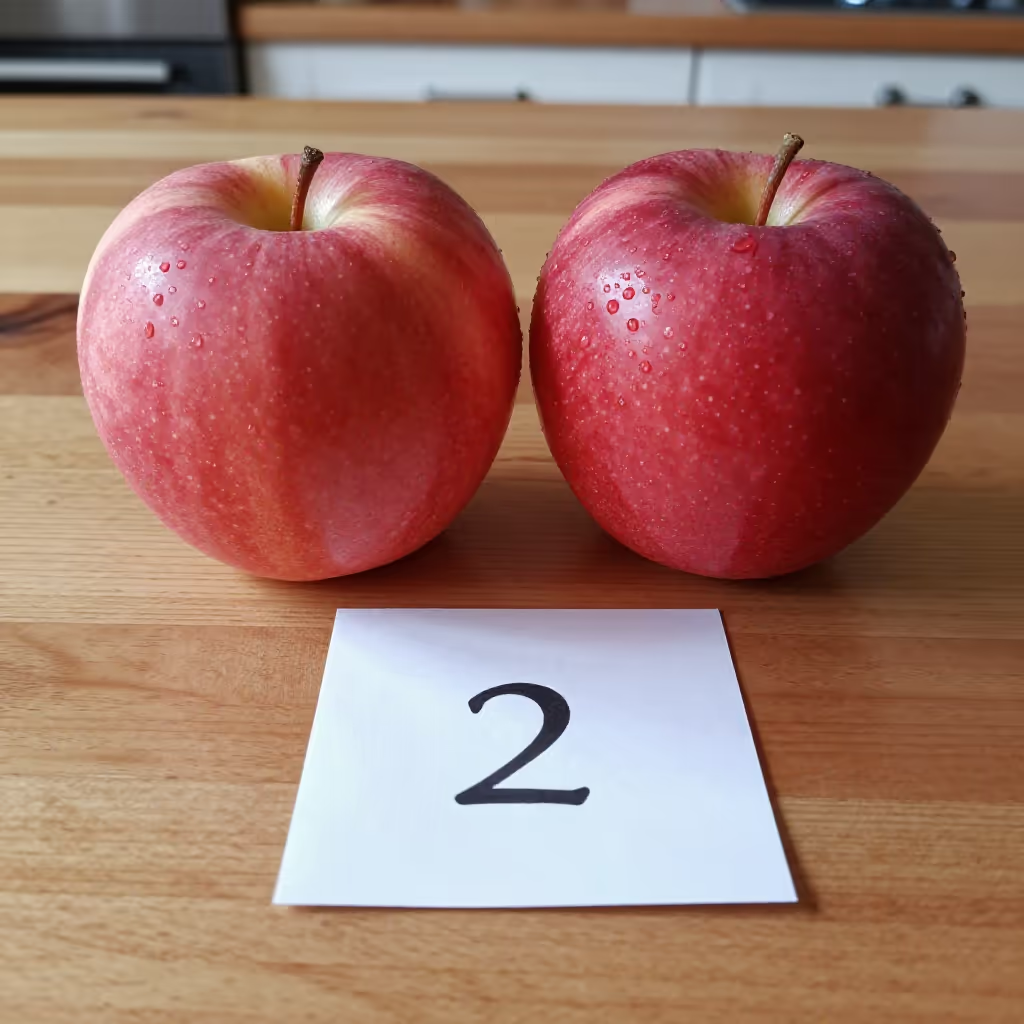
Ich nehme beide Tassen aus dem Schrank, weil nur zwei dort stehen.
I’m taking both cups out of the cupboard because there are only two in it.
Ich nehme zwei der vier Tassen aus dem Schrank.
I’m taking two of the four cups out of the cupboard.