


beiseite
aside
Expresses movement to the side in order to make room or get out of the way.
EXAMPLE
Er trat einen Schritt beiseite, um die Dame vorbeizulassen.
He stepped aside to let the lady pass.
aside
Loading your saved state.
aside
Expresses movement to the side in order to make room or get out of the way.
Er trat einen Schritt beiseite, um die Dame vorbeizulassen.
He stepped aside to let the lady pass.
aside
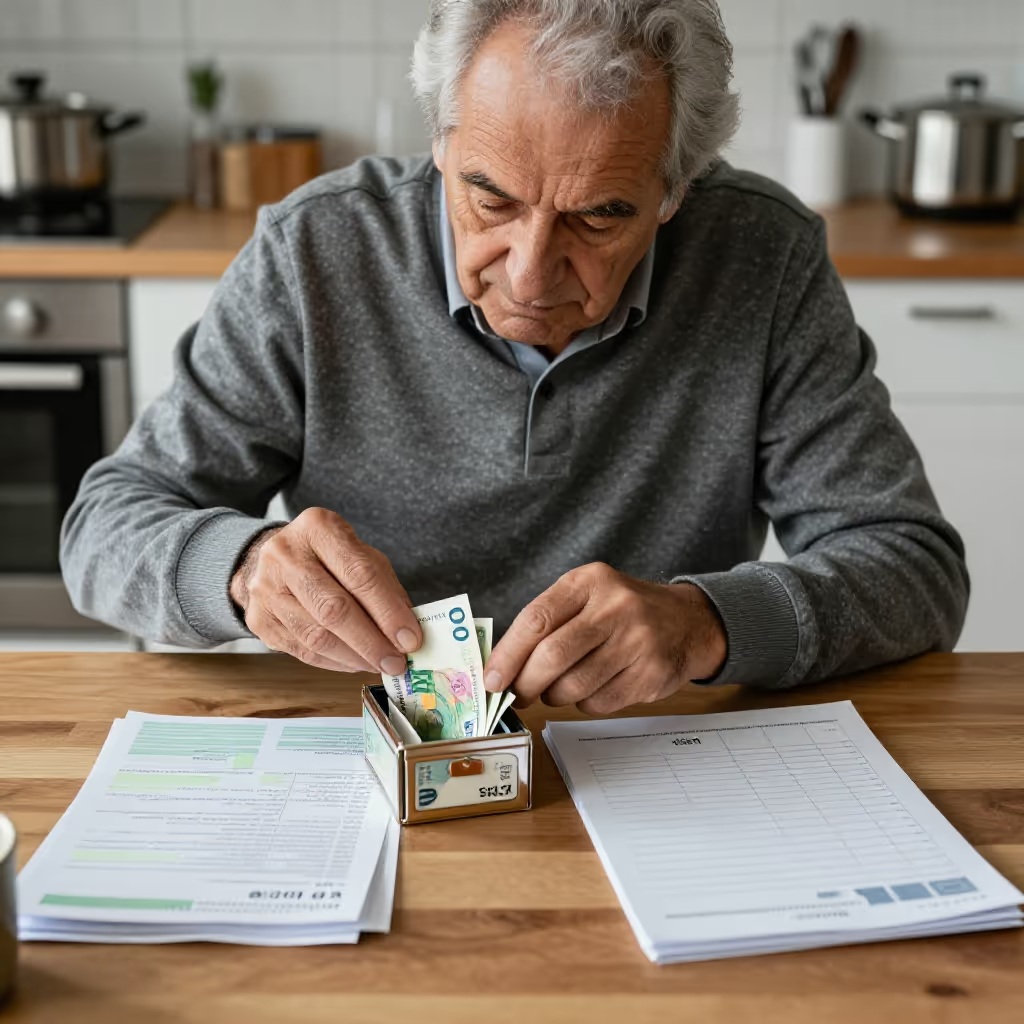
In combination with verbs like 'legen' (to put) or 'schaffen' (to manage), it means to keep something for later use, especially money.
Sie versucht, jeden Monat etwas Geld für ihre Rente beiseite zu legen.
She tries to put some money aside every month for her retirement.

aside
In a figurative meaning, to ignore something or not pay further attention to it, often in phrases like 'etwas beiseite schieben/lassen' (to push/leave something aside).
Lassen wir die persönlichen Differenzen beiseite und konzentrieren uns auf die Arbeit.
Let's leave the personal differences aside and focus on the work.
The adverb 'beiseite' (aside) is made up of 'bei' and 'Seite' (side). The literal meaning 'to the side' is the basis for all its uses.
Kannst du bitte den Stuhl beiseite stellen?
Can you please put the chair aside?
'Beiseite' (aside) is often combined with a verb and then behaves like a separable prefix that stands at the end of the sentence. Examples are 'beiseitelegen' (to put aside), 'beiseiteschieben' (to push aside), or 'beiseitetreten' (to step aside).
Er legte das Buch beiseite und hörte mir zu.
He put the book aside and listened to me.
In the meaning 'to keep something', the combination with 'legen' (to put) is very common, especially when it is about money. 'Geld beiseitelegen' (to put money aside) is a fixed expression for 'to save'.
Sie legt jeden Monat 100 Euro für den Urlaub beiseite.
She puts 100 euros aside every month for the vacation.
The expression 'Scherz beiseite' (joking aside) is very common. It is used to switch from a joke to a serious topic.
Scherz beiseite, wir müssen jetzt wirklich eine Lösung für das Problem finden.
Joking aside, we really need to find a solution to the problem now.
lateral / sideways
Beiseite describes movement to the side to make room or clear the way. Seitlich, on the other hand, merely describes a position or direction at the side. Use beiseite for deliberately moving out of the way, and seitlich for the direction alone.

Nora machte einen Schritt beiseite, damit der Mann vorbeigehen konnte.
Nora took a step aside so the man could get past.
Bei der Übung machte Nora einen Schritt seitlich nach rechts.
During the exercise, Nora took a step to the right.