

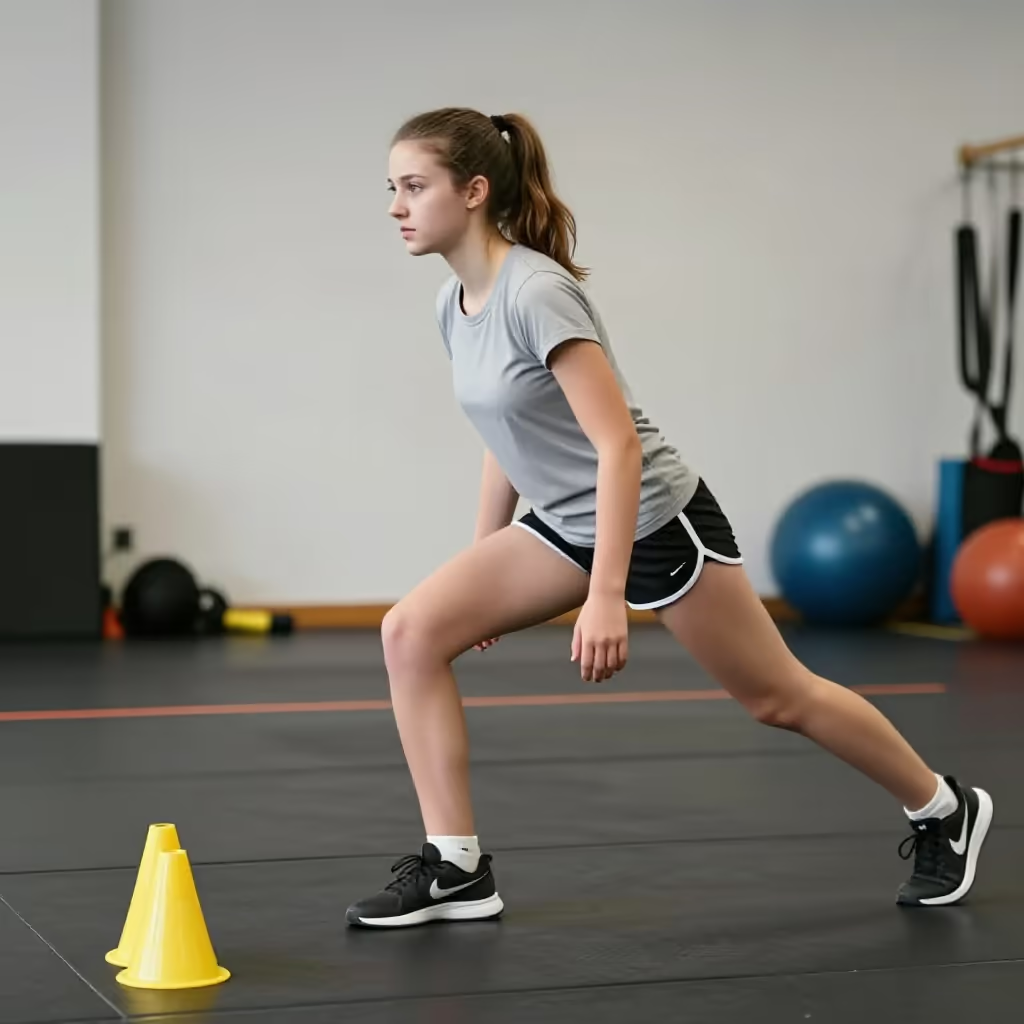
seitwärts
sideways
In a direction to the side; from the center toward the left or right.
EXAMPLE
Er machte einen Schritt seitwärts, um Platz zu machen.
He took a step sideways to make room.
sideways
Loading your saved state.
sideways
In a direction to the side; from the center toward the left or right.
Er machte einen Schritt seitwärts, um Platz zu machen.
He took a step sideways to make room.
The word consists of 'Seite' (side) and the ending '-wärts' (-ward/-wards). This ending always expresses a direction, as also in 'vorwärts' (forward), 'rückwärts' (backward), or 'aufwärts' (upward).
Der Ball rollte langsam den Hügel abwärts.
The ball slowly rolled downward down the hill.
As an adverb, 'seitwärts' (sideways) describes the manner of a movement. It usually comes directly after the verb it modifies and answers the question 'Wie?' (How?) or 'Wohin?' (Where to?).
Die Krabbe bewegt sich seitwärts über den Sand.
The crab moves sideways across the sand.
'Seitwärts' (sideways) is almost always combined with verbs of movement or looking. Typical phrases are 'seitwärts gehen' (to walk sideways), 'seitwärts blicken' (to look sideways), 'einen Schritt seitwärts machen' (to take a step sideways), or 'seitwärts ausweichen' (to dodge sideways).
Er konnte dem Auto gerade noch seitwärts ausweichen.
He was just able to dodge sideways to avoid the car.
aside
Beiseite and seitwärts can both describe movement to the side. Beiseite emphasizes making room or moving out of the way. Seitwärts only indicates the direction of movement, without expressing such a purpose.

Bei der Übung bewegte sich Nora langsam seitwärts nach rechts.
During the exercise, Nora slowly moved sideways to the right.
Nora trat beiseite, damit der Mann vorbeigehen konnte.
Nora stepped aside so the man could get past.